Lime Wants To Bring More E-Scooters To New York City
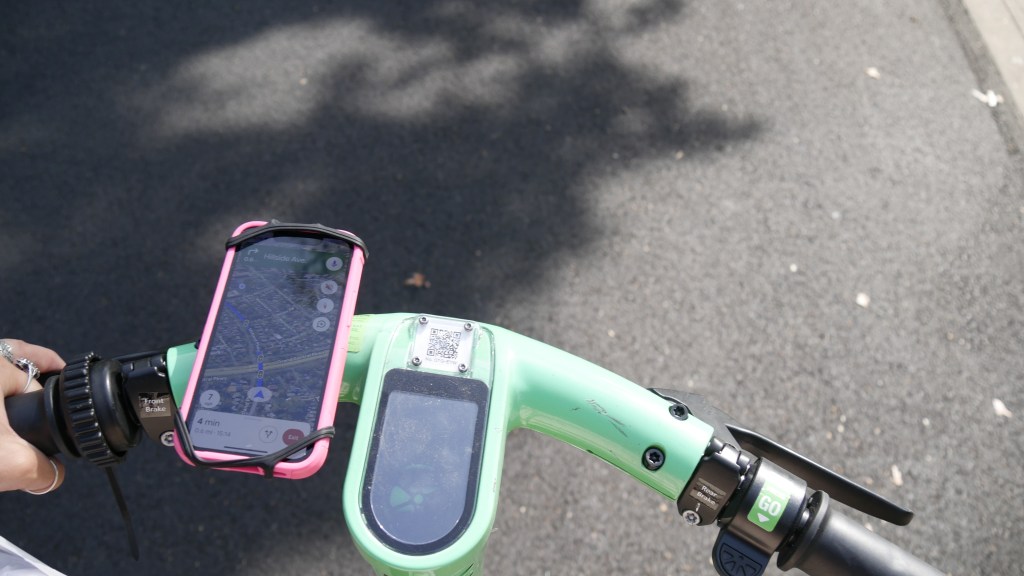
New York City should expand its limited e-scooter share program to better connect more neighborhoods to public transit, according to a new report commissioned by e-scooter provider Lime that shows New Yorkers are safely e-scootering as last-mile transportation.
The report, published by the Rudin Center for Transportation at New York University, analyzed the city’s existing e-scooter share program and compared it to other systems in Paris and Washington, D.C. Its authors found that shared e-scooter programs enhance transportation networks by connecting users to the subway network — and that New York has some catching up to do.
In both D.C. and Paris, the majority of e-scooter trips provided access to transit. In the American capital, 58 percent of trips started, and 72 percent of trips ended, near a Washington Metro station. In the French capital, 65 percent of users self-reported that they used e-scooters to reach public transit.
New York is a different story. Between 2021 and 2025, 41 percent of Lime rides that started and ended in the Bronx service area took place near subway stations. Over the same period of time in the Queens service zone, it was 22 percent. The Bronx zone includes 26 subway stops and the Queens zone has seven.
The report found that while Lime’s overall ridership grew in both the Bronx and Queens, the ratio between trips starting and ending near the subway and overall trips remained largely consistent. A targeted expansion of the city’s scooter share combined with “coordinating transit and micromobility fares,” would increase those percentages in the Big Apple, the report says.
The authors didn’t find a clear link between the New York’s e-scooter program and a decrease in car use. Lime, one of three companies that contracts with the city to run the system, attributed this to the limited size and isolated geography of the current e-scooter program, which currently operates in the East Bronx and Eastern Queens.
“Most folks who have cars will still use them to get to destinations outside of our coverage zone,” said Josh Meltzer, the head of government relations for the Americas at Lime. “We’re also serving parts of the city where car culture is a bit more prominent than areas closer to the core, so the shift will be more gradual.”
Manifest destiny for e-scooters
The NYU report bolsters Lime’s wish to expand west of its service areas in both the Bronx and Queens — and eventually to the rest of the city — in order to connect riders with more of the city’s attractions.
“Neighborhoods west of our current expansion zones would be the lowest hanging fruit,” Meltzer said. “Expanding the program would result in more use-cases for shared e-scooters, opening up access to more educational, professional, cultural and recreational opportunities.”
In the Bronx, a wider service area would link residents to Hostos Community College, Fordham University, the Hip Hop Museum and Yankee Stadium. In the World’s Borough, expanding west would allow New Yorkers to take an e-scooter to the Queens Night Market, Citi Field, or the future soccer stadium in Willets Point.
Neither of the two existing e-scooter zones overlap with the service area of Citi Bike, the docked bike-share program that has an exclusive contract with the city through 2029. Citi Bike, which is owned by Lyft, recently raised fees for the fifth year in a row.
Beyond expansion, Lime wants the city to use e-scooter data to find locations for new protected bike lanes within the service zones. The company suggested that the city work with the company to “co-fund” safety upgrades like daylighting in areas with high scooter travel — a practice the company already follows in London.
“In London today, Lime works closely with regulators to fund new dedicated parking spaces for shared e-bikes and e-scooters,” said Meltzer. “We think there is strong potential for a similar program in NYC, concurrent with an expansion of the program.”
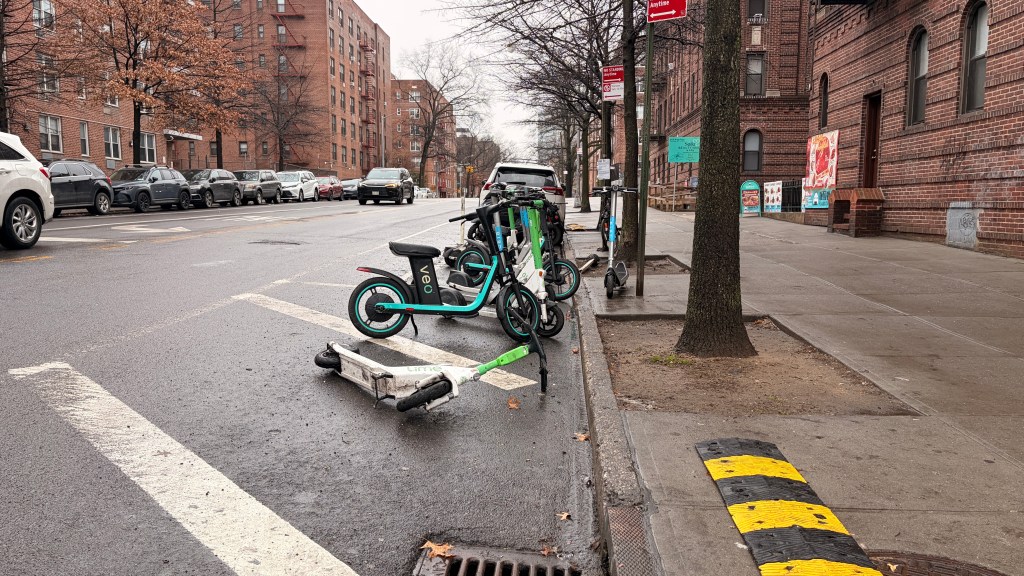
Daylighting — which bans parking at intersections to increase visibility — can be “hardened” or built out with scooter parking corrals, the report said. The Mamdani administration has so far declined to support a “universal” daylighting mandate in the city.
“We also view this as a way to tackle the city’s concerns over daylighting through a pilot program that daylights corners with e-scooter parking spaces, addressing two needs at once: safer, more visible intersections and ample, intuitive e-scooter parking,” he added. “Lime is eager to explore this approach with NYC DOT.”
The report also argued for exploring fare integration through the OMNY app and more before-and-after studies in areas with e-scooter access.
Politics and the perception of safety
The study studied reported crashes involving electric scooters in New York City and found that the shared e-scooters are not disproportionately dangerous when compared to cyclists. Internal data from Lime shows that crash rates are below .01 percent of all trips in New York, Paris, and D.C..
Still, Lime and other electric stand-up scooters have drawn the intense ire of reactionary politicians who oppose micromobility options. The report said “media narratives” and “public concern” frequently exaggerated the risk of e-scooters — a perception problem that “highlight[ed] the importance of infrastructure design, enforcement, and public engagement.”
The public’s reaction to a recent NYU study safety neatly illustrates this dilemma. The study looked at patients who visited Bellevue Hospital’s emergency room after getting in a crash on an electric micromobility device, or from being hit by the rider of one — a choice that entirely omitted people hurt by cars, whose drivers create the vast majority of danger on city streets. Multiple news outlets claimed the study quantified a growing danger involving e-bikes and e-scooters. In reality, the study showed an increase in micromobility ridership and a need for more infrastructure.
For now, the Mamdani administration has no plans to curtail the current e-scooter programs — but declined to say whether it intends to expand their relatively meager footprints.
“E-scooter sharing is popular because it’s a safe and convenient way to connect to mass transit among New Yorkers who may live far from a train,” said DOT spokesperson Mona Bruno. “We look forward to continuing our scooter sharing programs with these communities.”

Read More:
Streetsblog has migrated to a new comment system. New commenters can register directly in the comments section of any article. Returning commenters: your previous comments and display name have been preserved, but you'll need to reclaim your account by clicking "Forgot your password?" on the sign-in form, entering your email, and following the verification link to set a new password — this is required because passwords could not be carried over during the migration. For questions, contact tips@streetsblog.org.