Keep New York Moving: Antonio Reynoso’s Six-Point Plan for Transit That Matches Our Reality

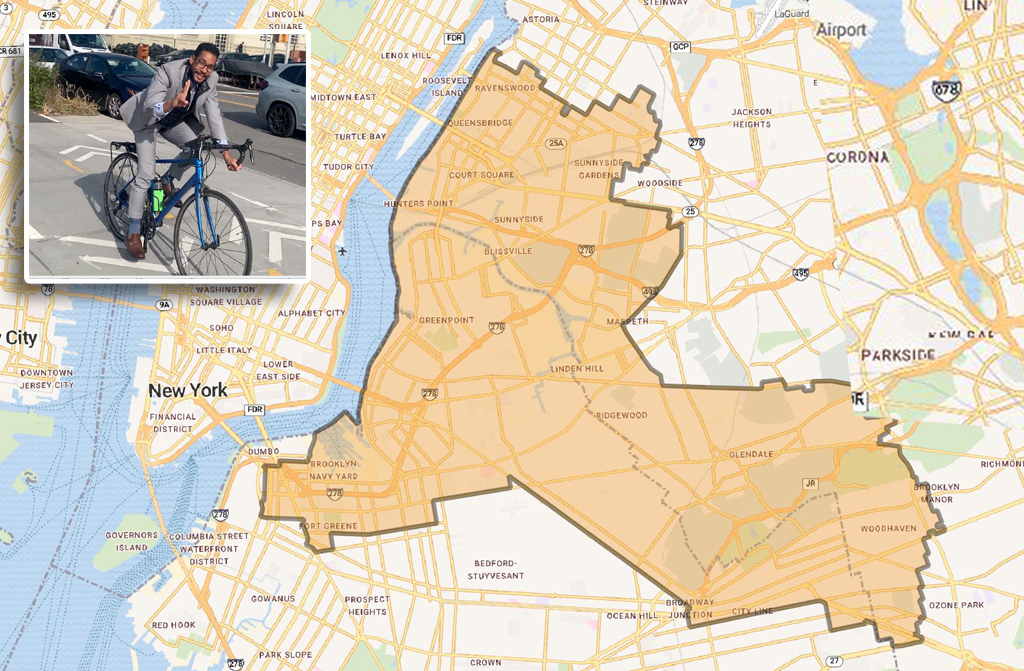
Editor’s note: Streetsblog recently published the federal transit agenda of Assembly Member Claire Valdez, one of the candidates vying to replace U.S. Rep. Nydia Velázquez in New York’s Seventh Congressional District. Today, we’re posting a plan from another candidate, Brooklyn Borough President Antonio Reynoso, who boasts a lengthy record of backing livable streets initiatives. We’ve also offered this opportunity to a third candidate in the race, Council Member Julie Won.
As a lifelong New Yorker, public transit is a part of my everyday life. I ride the subway, I bike and I walk my sons to school every morning. Like millions of New Yorkers, I rely on this system that is both essential and too often strained to its limits.
Throughout my career, I’ve fought to make our streets and transit system safer, more equitable and more reliable. I’ve supported congestion pricing, championed safe streets and backed projects like the McGuinness Boulevard redesign to better serve our community. Now, I’m ready to take that fight to Congress.
New York City alone accounts for over 40 percent of all public transit trips across the United States. Our transportation issues at home should be treated as a national issue. And yet, our federal government still does not fund public transit to the level we need to save the lifeblood of New York City.
Instead, about 80 percent of federal surface transportation funding goes to highways. That imbalance has real consequences. It gave us highways like the Brooklyn-Queens Expressway, a highway that split my North Brooklyn community in half, isolating neighborhoods and burdening residents with pollution and traffic, instead of transit projects like the Interborough Express.
Meanwhile, our subway signals are decades past their prime. Delays are constant. Fare hikes and service cuts hit working-class New Yorkers who have no alternative the hardest. This is not just a transit problem, it is an equity problem.
When New York City’s transit system struggles, the entire national economy feels it. Every major industry depends on workers who rely on our trains, buses and streets to get to their jobs. That’s why it was so alarming when Donald Trump froze nearly $18 billion in federal funding for critical transit projects, including the Second Avenue Subway and the Gateway Program. The White House tried to justify the attack by pointing to New York’s use of DEI-based contracting standards, practices that are fundamental to New York’s values. Fortunately, the courts overturned the ruling and the funds were released. But this will not be the last time a president tries to use federal transit funding as leverage against New York.
Our transit system cannot be held hostage to political games. Congress must treat transit as the essential infrastructure it is. I have a plan to do so:
1. Provide Federal Operating Support to Reduce Fares
Right now, federal transit funding can be used to build stations, but it cannot be used to operate them. Highways, however, get billions every year for operations and maintenance. Congress must create a national operating support program to fill this gap. We tried this during COVID, and it worked. Federal funding kept fares down and
prevented service cuts. A small yearly investment from Congress would reduce pressure on fare hikes, let New York City run more frequent service and stabilize the MTA’s finances.
2. Expand Federal Transit Offices to Every State
There is a Federal Highway Administration office in every state. There are only 10 Federal Transit Administration offices in the entire country. We must treat public transit with the same level of importance as our highways and expand these offices to every state. Doing so will allow the federal government to work hand-in-hand with local transportation planners. Rather than the onus being on individual cities and states to ask for federal transit funding, this will make the federal government a partner in expanding and improving public transportation across the country.
3. Bring all MTA stations up to ADA standards
Less than 30 percent of MTA stations are ADA accessible. The All Stations Accessibility Program (ASAP) is a strong start, but Congress must expand funding to ensure the Americans with Disabilities Act is fully realized in our transit system. ASAP is a good start to getting our cities up to an accessible standard, but we need to expand funding for this program.. The Americans With Disabilities Act is an essential federal law, and the investment from our government should reflect that.
4. Create a Dedicated Federal Fund to Modernize NYC’s Subway Signals
New York City’s outdated subway signals are one of the top three causes of delays. Why? Because 40 percent of them were installed before World War II. The technology is so outdated that trains must keep far more space between them than modern systems require. Replacing these signals will cut delays and speed up service for millions of riders.
I will fight for funding to be allocated based on infrastructure age and level of ridership.
5. Protect Federal Funding for Safe Streets, Bike Lanes and Walkable Communities
My focus is not limited to trains. Millions of New Yorkers rely on walking and biking every day to get to their destination or to connect to their nearest public transit stop. Unsurprisingly, the Trump administration has slashed funding for these projects nationwide, targeting programs that help cities build safer streets and reconnect neighborhoods, predominantly communities of color, that were divided by highways decades ago.
The administration cut billions from the Neighborhood Access and Equity Program created under the Inflation Reduction Act, including at least $750 million dedicated specifically to bike lanes, trails and pedestrian improvements. These investments
improve safety and make it easier for working people to get around without relying on a car.
Anyone who has ridden a bike on the busy streets of Brooklyn and Queens knows how important protected bike lanes and safer intersections are. They do not just make it easier to get where you need to go, they reduce car reliance and improve air quality in neighborhoods already burdened by traffic. Congress must restore and expand federal funding for pedestrian and bicycle safety and treat active transportation as the essential infrastructure it is.
6. Tie Transit Investment to Housing Growth Around Stations
Transit works best when people can actually access it! With billions of dollars of investment coming to projects such as the Inter-Borough Express rail line, city land use rules must allow more housing around stations, especially on underused commercial corridors. Along the IBX route alone, a transit-oriented development strategy could support roughly 70,000 new homes and make it easier for working families to live near jobs and reliable transit. Congress should reward that kind of planning by prioritizing federal transit funding for projects that pair new service with housing growth and accessible neighborhood design.
These investments would cost a fraction of what we currently spend on highways. This is not about scarcity, it’s about priorities.
Every New Yorker and the visitors who fuel our economy deserve reliable, affordable and accessible ways to get around. A stronger federal commitment to transit would modernize our infrastructure, lower costs for riders and reinforce one of the most important economic engines in the country.
I’ve been a transit rider my entire life, and I’ve been an advocate for better transportation throughout my career. Now, I’m ready to bring that determination to Congress and fight for the investments New Yorkers deserve.
Streetsblog has migrated to a new comment system. New commenters can register directly in the comments section of any article. Returning commenters: your previous comments and display name have been preserved, but you'll need to reclaim your account by clicking "Forgot your password?" on the sign-in form, entering your email, and following the verification link to set a new password — this is required because passwords could not be carried over during the migration. For questions, contact tips@streetsblog.org.