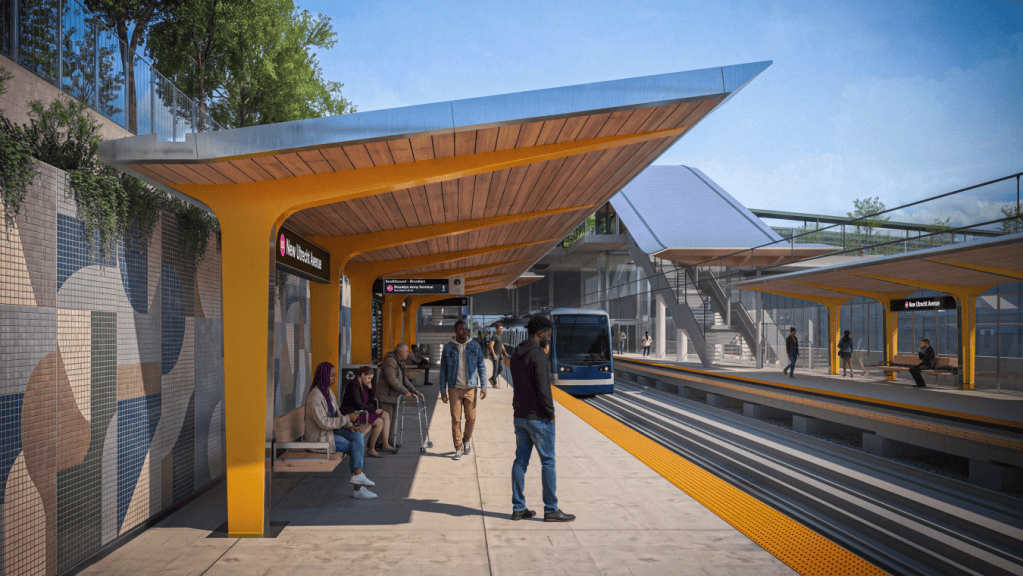
Opinion: Don’t Design Grand Army Plaza For 2007 — Build It For The Future
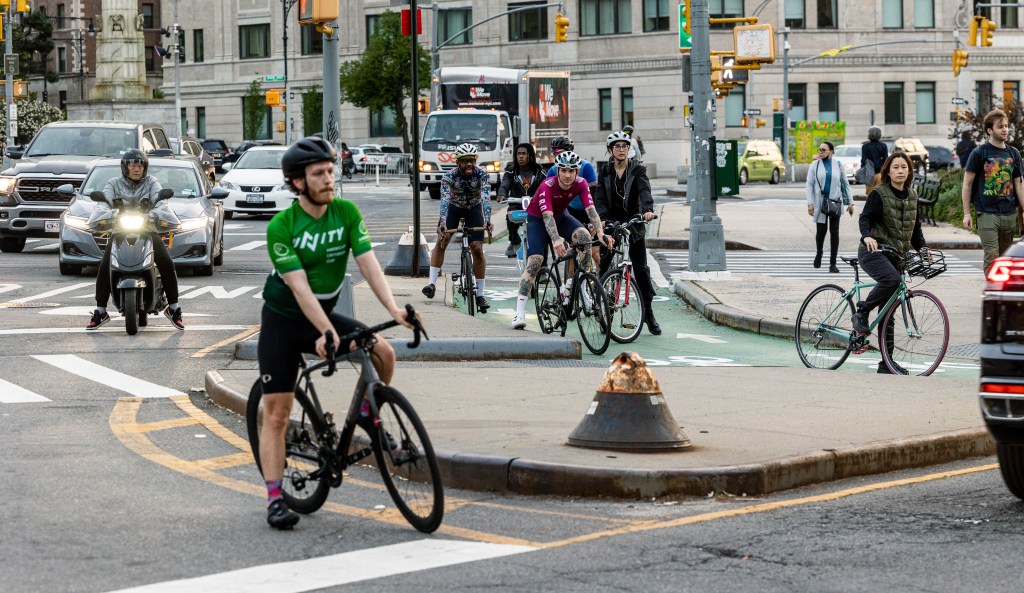
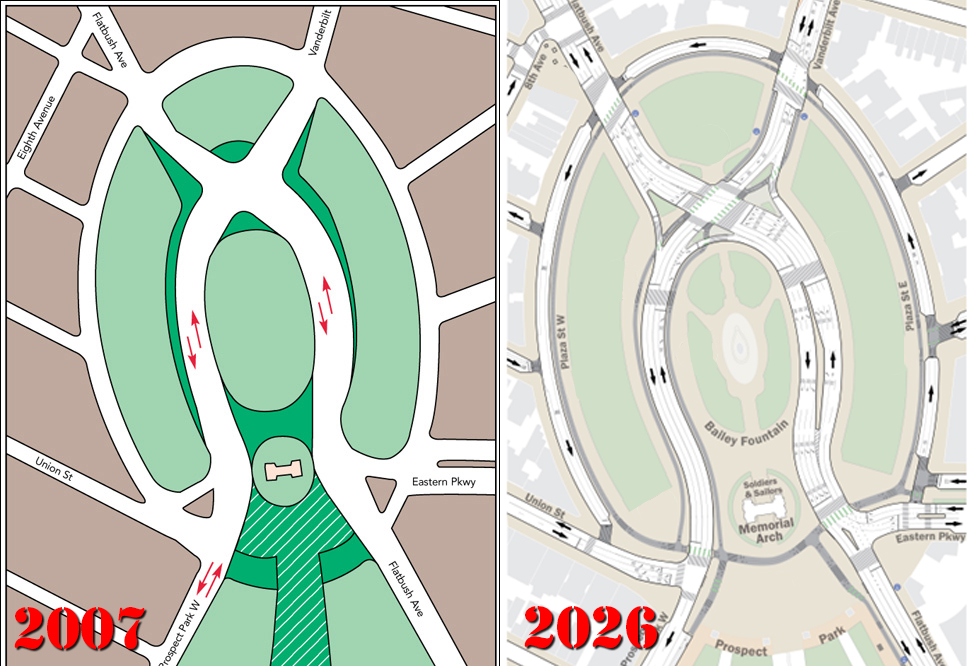
It was exciting to hear last week that the city is going to redesign Grand Army Plaza. When it’s complete, the plaza’s new design will be one of the most significant street transformations since the pedestrianization of Times Square in 2009.
However, it’s not really news — it’s actually olds, as in 20 years old.
I’m certainly grateful that the last 20 years of tenacious advocacy and gradual improvements finally brought us to this point. But a growing city needs vision: We must look ahead to the changes likely to occur in Brooklyn and across the city over the next 20 years and plan accordingly. What if, instead of building for the city we have, we build for the city we want?
We now have the leadership to meet the moment and think big. Not only did Mayor Mamdani ride to City Hall on the promise of improving transit — and literally rides to City Hall and elsewhere on a Citi Bike — but Department of Transportation Commissioner Mike Flynn has already pushed forward a slew of projects that will dramatically improve pedestrian safety, cycling rates and transit efficiency.
Recently, on DOT’s in-house podcast Curb Enthusiasm, Flynn even questioned the long conventional (aka car owner) wisdom that sets aside virtually all city streets for free automobile storage. That was a sign of significant culture change at the upper echelons of the department.
With these two courageous and forward-thinking leaders, the most dynamic livable streets duo since Mike Bloomberg and Janette Sadik-Khan, DOT should do more than dust off old designs; it should build a new Grand Army Plaza that can not only serve the city for generations to come, but also be an inspiration for cities all over the country and even the world.
Getting us there starts with seeing Grand Army Plaza not as a defined geographic area bound by specific streets or measured in acres, but as the symbolic center of Brooklyn, a magnet that attracts people from all over the borough. Given its importance and historic significance, the entire area should be designed in a way that discourages driving.
As good as it is, the current plan doesn’t do that. For example, it leaves the intersection of Vanderbilt and Flatbush intact, allowing Vanderbilt to remain a pipeline that pumps cars through residential neighborhoods before spilling them into Grand Army Plaza.
Flatbush Avenue will also remain a traffic sewer, but could be reimagined to extend the current plan for a center-running busway through downtown Brooklyn to Grand Army Plaza further south. Among other excellent suggestions, planner Annie Weinstock recommends replacing the Plaza’s southbound inner road with a two-way bike lane, in order to “provide a much more direct connection from Vanderbilt to Prospect Park.”
On Plaza Street, which encircles Grand Army Plaza, there’s an opportunity to think bigger than protected bike lanes that might not be wide enough to keep up with rising cycling rates. The entire loop could become a Dutch-style fietsstraat, or “bicycle street,” where all but local and essential car traffic is filtered out, cyclists have priority over drivers, and pedestrians are safe to cross just about anywhere. (At the very least, the proposed raised and parking-protected bike lane could be doubled in width — if the city is willing to eliminate the parking on the inner part of the street.)
All of the above could be combined with the implementation of a “low-traffic neighborhood” design in Park Slope and Prospect Heights, further discouraging car travel through some of the city’s most walkable, bikable and transit-rich neighborhoods. Add more seating, public restrooms and shade features in the newly reclaimed asphalt, and even kiosks that could serve refreshments, and Grand Army Plaza could be so much more than a pleasant place to walk or bike through. It could be a pleasant place to linger.
Concerns aside, it’s worth re-emphasizing that the current plan is a dream come true, at least based on expectations many New Yorkers have developed over years of incremental changes to city streets. But it’s important to recognize that today’s plans don’t always serve tomorrow’s needs. A nearby example serves as a cautionary tale.
In 2010, the city proposed redesigning Flushing Avenue along the Brooklyn Navy Yard, adding a protected two-way bike lane. At the time, bike volumes on the corridor were just 313 per day on weekdays and 337 on weekends based on 12-hour counts, although they were rising. A jersey-barrier-protected bike lane would quickly follow, but it wasn’t until 2018 that a raised, curb separated two-way bike lane would be installed, with the entire project finished in December 2021.
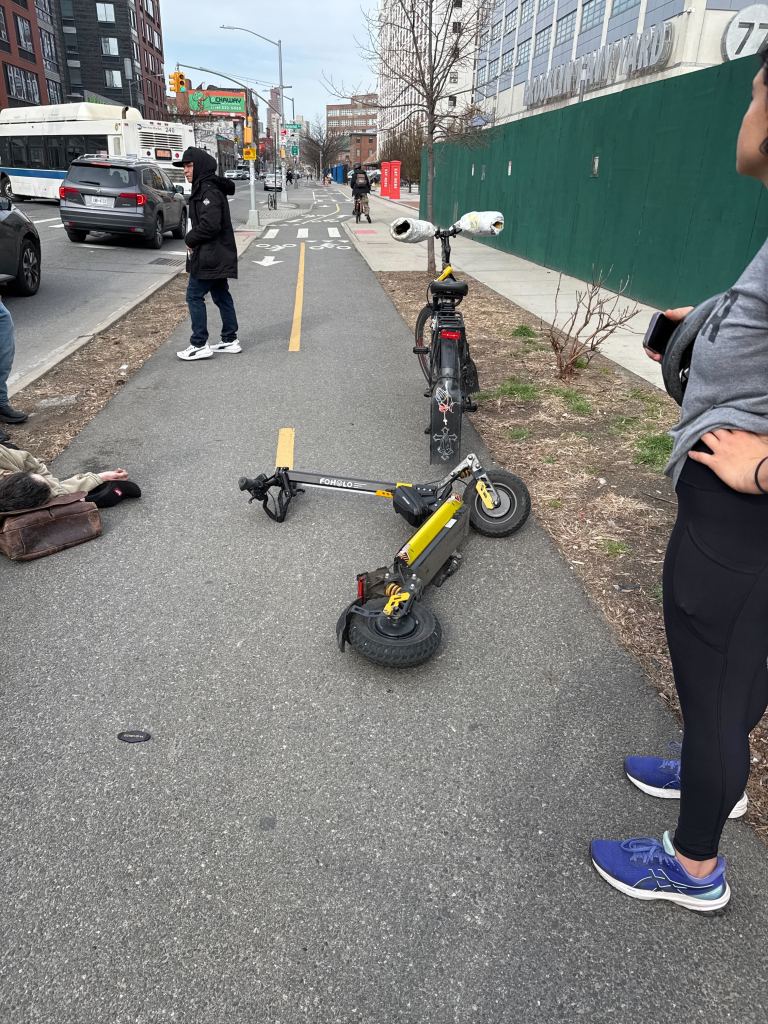
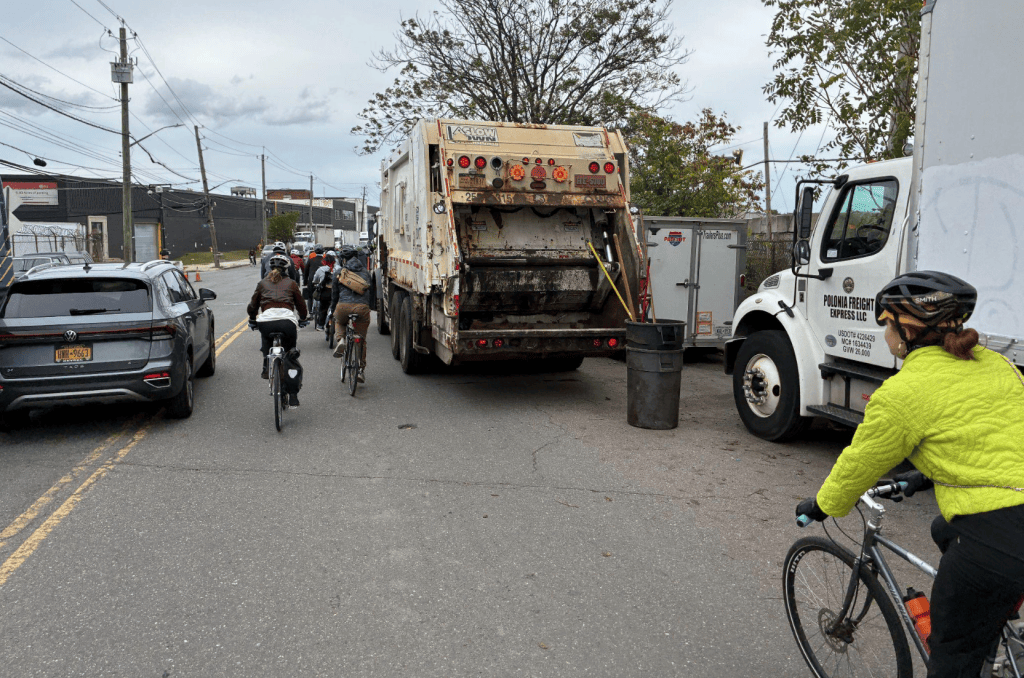
The bike lane was a vast improvement over what was there before, but a lot changed in the decade-plus it took to build the current version of Flushing Avenue, including the launch of Citi Bike, large-scale development along the waterfront, the rise of e-bikes and app-based food delivery, and, of course, the explosive growth in cycling in general. As the project was being completed, Covid-19 upended traditional commuting patterns, meaning that a bike lane that was designed to accommodate traffic mostly going in one direction during the morning and in the other in the evening was suddenly carrying bike traffic in both directions at all hours of the day. And on weekends? Fuggedaboudit.
Today, just five years after the project was completed, the Flushing Avenue bike lane is functionally obsolete (see also: Kent Avenue). At only four-feet wide in each direction — far narrower than the Dutch minimum of 7.5 feet for a one-way bike path — the experience of riding it is uncomfortable bordering on dangerous. Side-by-side riding, such as a parent riding with a child or two friends hoping to have a conversation, is impossible. Getting stuck behind another rider is a common and annoying experience, needlessly pitting people against each other. Given the risk of head-on collisions with opposing bike traffic, much of it fast-moving e-bikes, attempting to pass someone is dicey.
Had the bike lane been planned for the bike boom that the city wanted to encourage instead of for just a few more cyclists than there were 16 years ago, Flushing Avenue might not have an expensive and outdated design that will continue to become less useful. (Even the good people at the Brooklyn Greenway Initiative have said that long period between the initial proposal and the bike lane’s completion “hopefully will lead to future-proof standards in greenway projects to come.”)
None of this is to say that DOT should go back to the drawing board or delay transforming Grand Army Plaza. Safety can’t wait. However, at this stage it shouldn’t be too much to ask for a Grand Army Plaza that does more than reflect ideas from 20 years ago, as bold as they may be. We should demand something that represents a vision of the city New York can become and will be many decades into the future.

Read More:
Streetsblog has migrated to a new comment system. New commenters can register directly in the comments section of any article. Returning commenters: your previous comments and display name have been preserved, but you'll need to reclaim your account by clicking "Forgot your password?" on the sign-in form, entering your email, and following the verification link to set a new password — this is required because passwords could not be carried over during the migration. For questions, contact tips@streetsblog.org.