Mamdani Embraces 20-Year-Old Plan to Create A Car-Free Link Between Prospect Park And Grand Army Plaza
Ain’t it Grand!
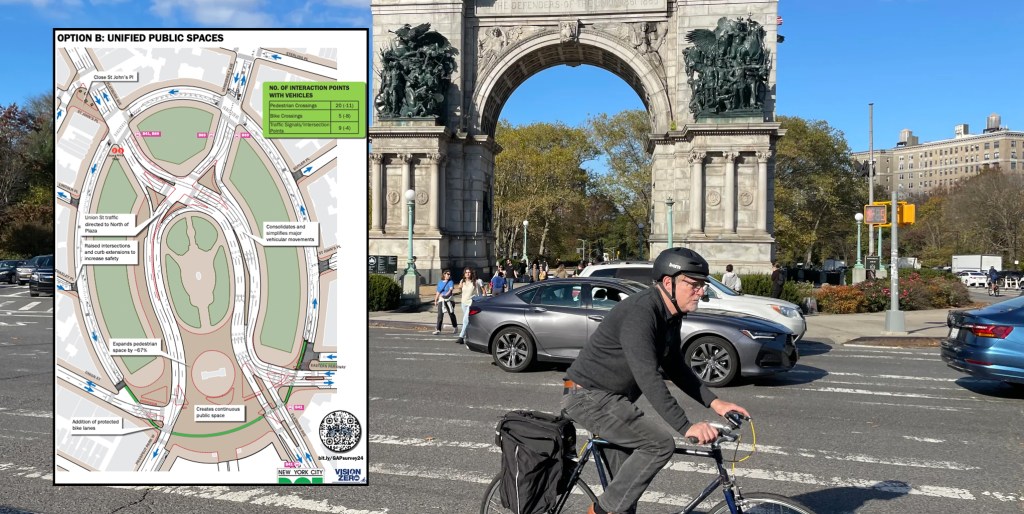
Grand Army Plaza will become a grander plaza that’s fully connected to Prospect Park, Mayor Mamdani said on Monday — embracing a 20-year-old plan for a safer, more people-first space.
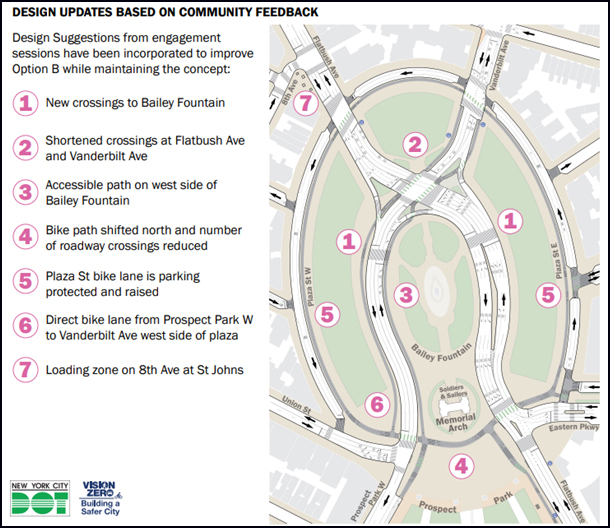
On Monday, Mamdani and Department of Transportation Commissioner Mike Flynn unveiled a familiar-looking redesign to connect the plaza containing the ceremonial Soldiers’ and Sailors’ Arch and the adjacent Bailey Fountain to Prospect Park’s northern entrance. The design eliminates motor vehicle traffic between Union Street and Eastern Parkway to allow for much safer, calmer and more rational pedestrian experience.
If the project actually breaks ground this time, Mamdani and Flynn will be delivering on an idea that Brooklyn advocates — including a young Mike Flynn — began discussing in earnest in 2006, when Park Slope and Prospect Heights residents formed the Grand Army Plaza Coalition.
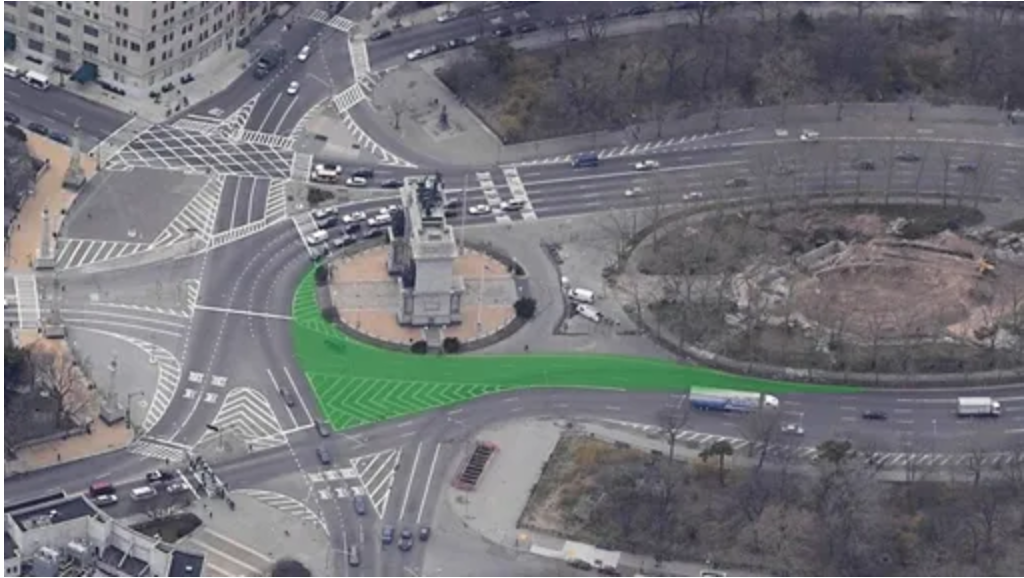
DOT’s latest plan simplifies the traffic flow in and around the plaza by removing drivers’ ability to travel all the way around the inside of its traffic circle (to view the current layout, click here). Northbound and southbound drivers on Flatbush Avenue would use the east side of the inner circle. Southbound drivers coming from Vanderbilt Avenue and northbound drivers coming off of Union Street would occupy the west side of the circle:
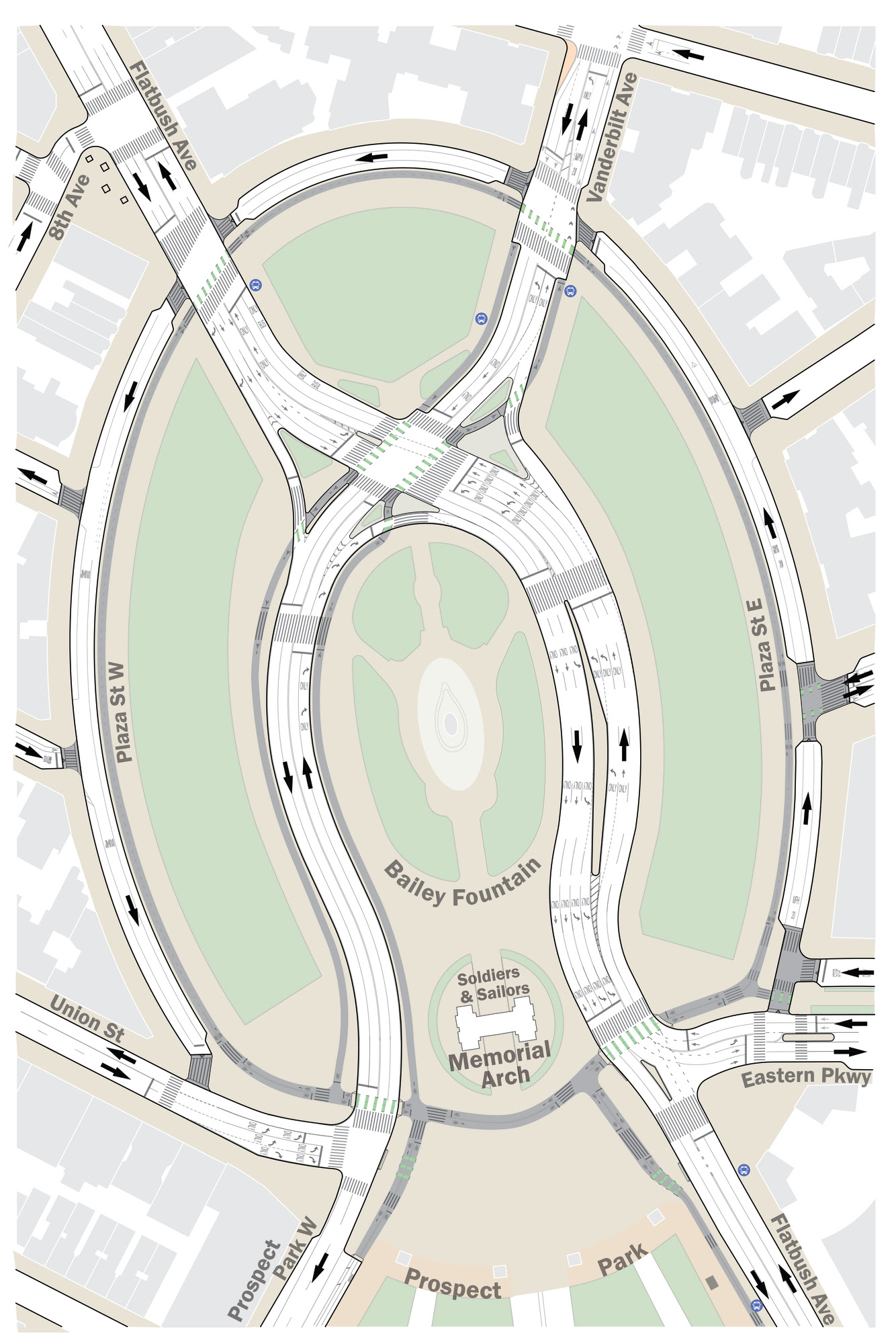
Besides unifying the plaza and park, DOT will also add and upgrade bike lanes in the area. Painted bike lanes on Plaza Street East and Plaza Street West will become raised and parking-protected, while DOT will also add raised and parking-protected northbound and southbound bike lanes on the Vanderbilt-to-Union segment.
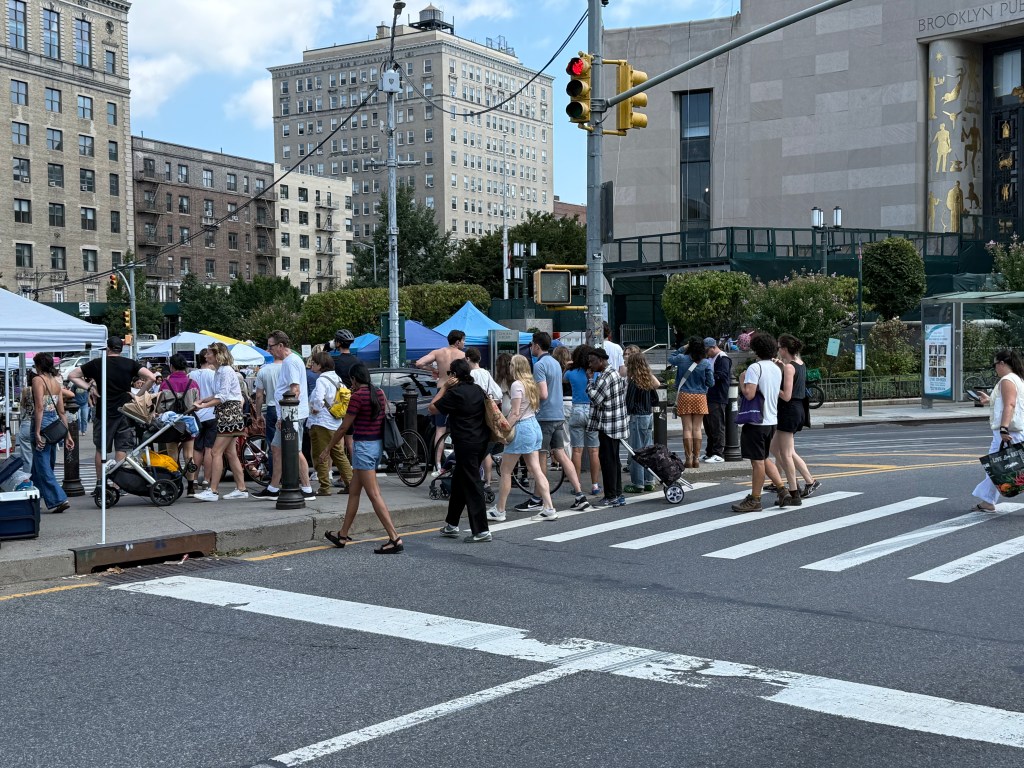
The redesign will dramatically simplify where and how people can cross the street: DOT will entirely eliminate the notorious concrete triangle on Flatbush Avenue between the park and the Brooklyn Public Library that becomes dangerously crowded every weekend.
The new design also closes a slip lane from the inner circle to Union Street to simplify crossing from Union Street to Eastern Parkway, which today requires traversing multiple pedestrian islands.
Mamdani’s announcement was first reported by the New York Times, and culminated four years of recent outreach begun by the Adams administration, and then filed away in a drawer after then-Mayor Eric Adams lost interest in street redesigns. DOT began talking to Brooklynites about making wholesale changes to the traffic circle back in 2022.
DOT initially offered three possible designs, from very light touches to completely connecting Prospect Park and Grand Army Plaza in the manner announced on Monday.
“Anyone who’s tried to cross here knows how dangerous and chaotic the streets can be,” Mamdani said in a statement. “This redesign is long overdue and will provide a sense of ease and enjoyment to one of Brooklyn’s most important public spaces.”
The city still has no target date for when construction will start or end, and has yet to finalize its budget, DOT spokesman Vin Barone told Streetsblog.
That could leave the project susceptible to the same morass that has sunk prior plans. During the Bloomberg era, Grand Army Plaza was in even worse shape than it is today, with almost every square inch of the area reserved for cars and trucks. The Grand Army Plaza Coalition recruited Danish urban designer Jan Gehl to look at the mess — and Gehl proposed unifying the southernmost piece of the plaza with Prospect Park in a way that resembles what Mamdani announced on Monday.
GAPCO’s proposal got a little traction, but in 2011, the campaign managed to persuade city leaders to expand the pedestrian space at Prospect Park’s north entrance, add bike lanes to Plaza Street East and Plaza Street west and add a number of pedestrian islands, creating the version of the plaza we know today.
The Adams administration briefly considered doing something, holding visioning sessions in 2022, but after the brief tremor of excitement, DOT concluded by 2024 that the city did not actually have the funds to design and build a major capital project.
Adams’s dilly dallying had an impact — in a negative way. From January 2022 to December 2025, the streets in and around Grand Army Plaza were the scene of 128 crashes and 106 injuries.
On Monday, one longtime advocate for Brooklyn’s marquee public space marveled that the city has come far enough that its leaders now embrace such a wholesale rejiggering of the area, albeit two decades later.
“This would have been our dream 20 years ago,” said Aaron Naparstek, Streetsblog’s founding editor-in-chief and GAPCO member. “There wasn’t even a crosswalk between the front of the park and Grand Army Plaza. This plan was the crazy, unrealistic idea 20 years ago. So it’s kind of cool. It’s hard for me not to see it as anything other than kind of amazing that it’s happening.” (Mike Flynn was on the GAPCO mailing list at the time, Naparstek said.)
DOT will kick off community outreach for the design — which will give an opportunity for possible tweaks that reduce space for cars even more.
Urban planner Annie Weinstock’s has proposed banning southbound traffic from Vanderbilt Avenue through the inner circle and creating dedicated bus lanes on the Flatbush Avenue segment of the circle.
The DOT will host in-person information sessions at the plaza (rain date in the Central Branch library) on April 23, from 4 to 6 p.m. and on April 25 from 10 a.m. to 1 p.m., and a virtual outreach session from 6 p.m. to 7:30 p.m. on April 29.

Read More:
Streetsblog has migrated to a new comment system. New commenters can register directly in the comments section of any article. Returning commenters: your previous comments and display name have been preserved, but you'll need to reclaim your account by clicking "Forgot your password?" on the sign-in form, entering your email, and following the verification link to set a new password — this is required because passwords could not be carried over during the migration. For questions, contact tips@streetsblog.org.