INTERVIEW: MTA Chair Janno Lieber Talks to Streetsblog to Mark Four Years at the Top
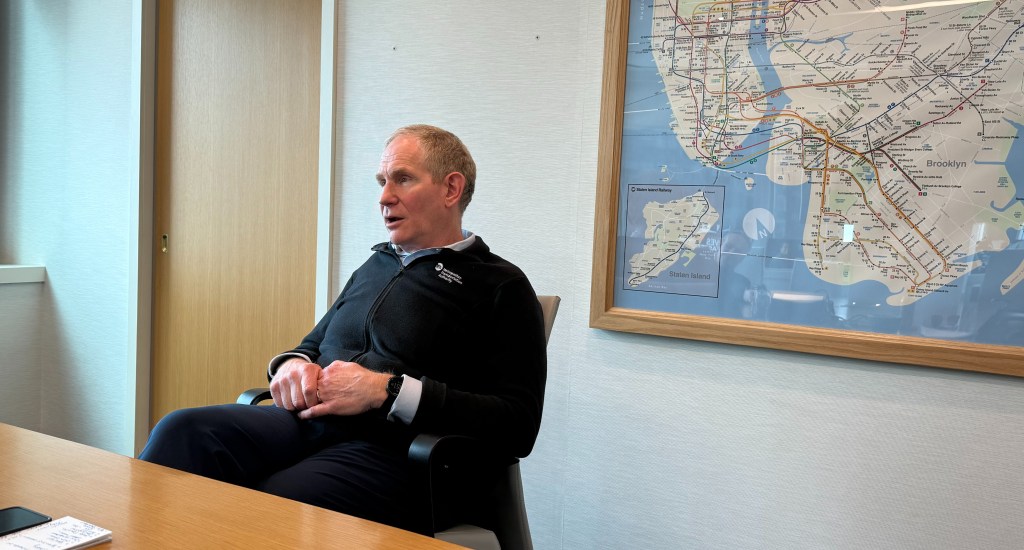
On Tuesday, Janno Lieber started his fifth year as the MTA’s permanent Chairman and CEO — the longest stretch that a single person has held the agency’s top spot since Peter Kalikow’s reign in the early 2000s.
In his time atop the MTA, Lieber has worked to find the agency’s footing amid fiscal uncertainties, the cancellation and resurrection of congestion pricing and public arguments over fare evasion and public order. Unshackled from the mercurial interference of Andrew Cuomo, Lieber’s MTA has regained the direction and confidence it lost under the former governor.
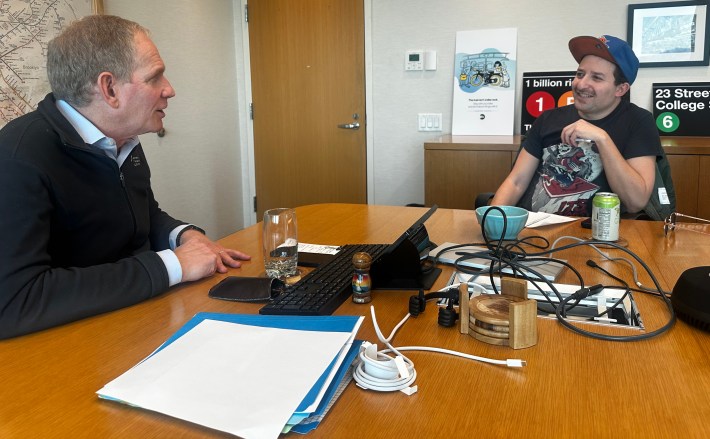
Lieber sat down with Streetsblog last week at the MTA’s headquarters in Lower Manhattan to talk about what consistent leadership at the top means for riders, what’s next for congestion pricing and the agency’s need to be more realistic with bus riders.
(This transcript has been edited for length and clarity)
Janno Lieber: What are we doing here, Colon?
Streetsblog: Do you not like this job?
Lieber: I effing love this job. And that’s because since I was a kid, I’ve been super passionate about all the stuff that we share in New York. The things that matter most to me in New York are transit, parks, libraries, the things that get rid of the inequalities that still persist in New York and maybe have gotten worse, and that make New York a place that everybody can participate in.
I’m really passionate about that issue, and I’m really passionate about how transit is what makes all the things that make New York dynamic possible, which is density, access to all kinds of places. My mother comes from Detroit, I grew up going to Detroit for vacations. Wanting to go downtown to watch pro wrestling or do something else, my grandmother lived in the north end of the city. You had to walk over and get on the Woodward Avenue bus, and it didn’t come very frequently.
When I was at US DOT, as part of the 1997 revision of the big authorization bill, it was the first bill after [Senator Daniel Patrick] Moynihan did [the Intermodal Surface Transportation Efficiency Act] in 1991. We did the first Welfare-to-Work paradigm, so I was very involved in seeing just what it was like to be in an old city where you couldn’t get to the jobs. Detroit, all the jobs were north and in some extent, west of the city. And people, if they didn’t have an automobile, and that’s a lot of poor people, they didn’t have access. So I love that New York is the great transit city in the United States, and that we’ve really, I think, put it in much better shape than it was coming out of the pandemic. That’s been this incredible joy and privilege, not to overstate it, for me, and I really think we’ve done a pretty good job.
Streetsblog: You recently passed Tom Prendergast in longevity in the job, what does consistent leadership at the top mean for how the agency works?
Lieber: Listen, the consistency is not just me. The consistency is having Gov. Hochul, somebody who makes a lot of big decisions that affect the MTA. So we’ve had consistency in the second floor of the executive chamber, and it’s a pro-transit consistency. I think that is as important as my quote unquote longevity. But a lot of the things that we’ve been able to accomplish are because we have had the time to execute improvements to internal management, how we do things over time. I have regular meetings with Demetrius [Crichlow, New York City Transit President] and his team about how we are attacking subway delays, what do we have to do to reduce those. Some of that is physical infrastructure and all the state of good repair stuff we talked about in the capital program, power structure, yada yada.
But if we’re seeing more frequent situations when you have some kind of an emergency and protocol, for whatever reason, doesn’t get complied with, and they shut down all of the tracks, the local track and the express track in both directions, we have the opportunity to go and work with the Fire Department and make sure that their managers understand the protocols for how to deal with an emergency without shutting down all of service. It gives us time to work on, as well, the challenges that the individual lines have. Demetrius and his team have been looking at the north end of the A train, like how do the C and A train operate and the merges there and what’s going on at 207[th Street], or at Dyckman Street. It gives you the time to work on very specific stuff that with attention and consistent accountability and metrics and strategies improve service. That, to me, that’s been the benefit.
And the other is, frankly, we have the time to see some of the work that you do produce results, whether it’s rebuilding the workforce, because we were down 1,000s of people at the end of Covid, and that has allowed us to develop a strategy for getting people back and and so on, and to build on the momentum from individual strategies.
It’s also allowed us to gain credibility with the construction marketplace about these things that you’re doing have actually allowed us to take a bite out of cost. You’re issuing more even-handed contracts, you’re not throwing all the risks on the contractor side, and then over time, you get pricing benefit from that, there’s more certainty among the contractors that we’re not going to just cancel outages and tell them to eat it. So it does take time for the moves that we think are just good government, good management, to produce results and consistency at the top is a factor. I wouldn’t want to overstate it, but I do think it’s made a difference.
Streetsblog: You talked about these internal management things where if you’re around a while, you can say to Demetrius, we’re going to really hone in on things you’re dealing with outside agencies to try to put things in a way that makes them easier to work with. So for riders, maybe if they don’t even necessarily think about it, it sounds like it’s something that can benefit them to some degree, if somebody is able to be here that long.
Lieber: I mean, listen longevity doesn’t help if you suck at the job. But I like to think that we got here, we charted a course, we knew what we wanted to accomplish. We wanted to bring riders back, because we wanted to bring the city back to life. And that wasn’t just the whole back to the office thing, it was also back to the theater and back to retail and back to the arts and culture. We knew that that was a big challenge and it was going to take a little while and consistency to do that.
We knew we had to build credibility for our ability to fix the system and improve it and expand it, modernize it, because the MTA had a less than stellar track record as a project manager. We knew we had to improve the image and reality of safety in the system, because our riders tell us that’s their number one priority every day. And if you’re going to do this, you can’t just walk in take a flier and move along in a year or so. It requires some time to see, to be sure that you’ve got policies they’re moving the right direction and to execute.
So I’m for longevity in this job, but there’s also no question that that there’s a balance. I don’t have the illusion that you want to turn into Robert Moses and sit around for 60 years, controlling an empire. You want to bring in new perspectives. There’s a sell-by date, which emerges on the horizon. I don’t know when it is, but you should also be realistic that at some point, having a different perspective, having folks in leadership who have a different approach, may have benefit as well. You don’t want to get stale.
Streetsblog: The one overarching thing that has eaten up a lot of your time here, and a lot of my time on this beat, is congestion pricing, and you just had a big one year celebration of it. And think I’m as happy as anybody about the fact that it happened. But one thing we’re dealing with right now is there are some people who looked at it and they say, I don’t necessarily feel a difference, is it working? You have this locked in agreement with the FHWA, who obviously are not going to allow you to do something like raise the toll or make any kind of major changes. Do you think there’s anything more you can get out of the system, as it is, before we get to 2028, and the agreement says the toll goes up to $12?
Lieber: It’s an interesting question I haven’t really puzzled on a lot. Maybe I’m still thinking it’s the first year, but I have to say, how often does government do something really complicated, plan, try to project all of the issues and consequences and side effects, and it comes out basically almost exactly as projected, except the downsides don’t eventually. This is a big shot in the arm I hope, for New Yorkers’ confidence that we can make take on big issues and make progress, take a big swing and deliver something that people recognize.
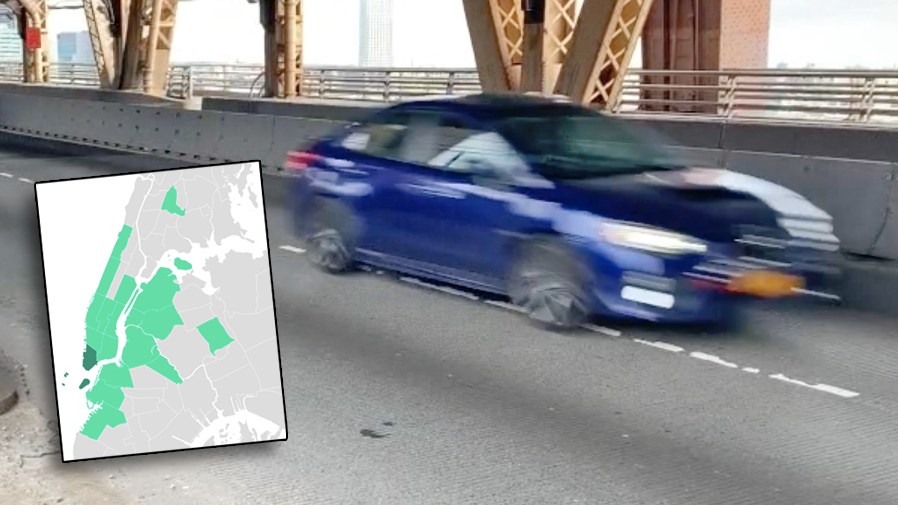
There’s always people who are saying, oh, I don’t see it, or it’s not beneficial to me. But there, there is enormous quieting of the kvetching from, for example, New Jersey, in large part because people are saving 50% of the time to get through the Holland Tunnel. And people coming from the Long Island side are having the incredible speed improvements on the Queensboro and the Williamsburg bridge. People who are riding buses across those crossings, the Lincoln and Holland Tunnels have a ton of express busses. I think there are a lot of people seeing the benefits, which is why you’re seeing kind of a quieting of a lot of the debate. Obviously, when the President sounds off, there’s another round of discussion and commentary about whether it’s successful or not. But mostly you’ve seen an acceptance, I think, by even a lot of people in the formerly opposition camp that this has been a success.
We would like to save people a ton of time, which is Kathy Hochul’s favorite thing for government to do. We’d like to see more speed benefits inside the CBD and that involves some more study of how to accomplish that with our buses. Whether it’s being more realistic about the running times, having better traffic enforcement, continuing to advance the [Automatic Camera Enforcement] agenda, which has been so successful. Those are the kinds of things that we’re going to focus on, but we see real benefit in terms of the time savings for people who are on buses or in automobiles, to get in and out of the city.
There’s some tabloid outlets that will always cover the the trucker who says it’s too complicated for me to divvy up the cost of the $20 toll among my 10 delivery customers, so I’ll just charge all of them $20. There’s going to be people who want to play that game and pretend it’s changing, but all of the metrics say that it’s nonsense, that people are saving time and it’s actually limiting some of the drag the traffic has on our economy, which the partnership documented in great detail, both people wasting time in traffic and goods and materials wasting time in traffic. We see this as an unqualified success, and we’re also proud to like do something that increases people’s confidence in government
Streetsblog: Is it something this year, you guys are going to be talking with City Hall about their bus priority projects in there? Obviously, the other day, Mike Flynn showed up and said, Madison Avenue is happening this year, so getting them involved in some way?
Lieber: Absolutely. They are our partners in so many things, but nowhere more than the question of, how does the surface transportation system work, which they control an enormous majority of. It’s a good dialog, and we’re sharing information with them about the projects that maybe didn’t get done in the last administration for whatever reason that we ought to put at the top of the list since you guys want to move buses faster.
We also want to see progress on the bus side of the accessibility agenda, you know, something that hasn’t been talked about as much, but little further out from the CBD, there’s a lot of bus stops that need to be made accessible, because the bus system is already fully accessible. We need, you know, folks who were in those were in that community to be able to use the bus system fully. So we’re already talking about all that keep moving.
Streetsblog: Obviously you will not find a website outside of Streetsblog who will make more hay about bus projects. But there is a MTA side of managing of the buses. You have ways to keep the bus on the road. You have dispatchers getting buses out on their supposed schedules, or keeping them as close as possible, having people understand where their buses are. Sometimes a bus is stuck in traffic when it’s 10 blocks away. But sometimes it just disappears off the app. So what are you trying to improve on there?
Lieber: We need to be communicating much better with bus riders. Part of that is the [Real Time Passenger Information] system, the signs that are on the bus stop signs that tell you how long until the bus arrives. That is a city operated system, and it ain’t great. And we talked, going back to Meera Joshi, a lot about you guys have to make these investments. This is a bus analogy to our request that the city deal with the storm sewer capacity issue that keeps backing water up when there’s torrential rainfall. The initial indication is that they are very aware of it, and they want to address that.
We need to improve the MTA app, and we’re working hard on it. We expect to put out an updated edition, for lack of a better term.
Streetsblog: I’m a beta tester.
Lieber: Okay, so you know about that, you have early exposure to what we’re trying to accomplish. There has historically been a problem with what we call ghost buses. Those are scheduled buses that appear on the app and don’t actually show up at the bus stop. That’s been an issue that I’ve been yipping on our friends in the bus world and in the technology world about. We have to do a much better job of communicating bus schedules and expectations to our bus customers, and part of that is also re-examining the run times, because there are a lot of run times in the system which are not keeping with the reality of the way the traffic is working, even post-congestion pricing. And no secret, we’re trying to update the bus network. All those things are designed to deliver, what you are talking about, which is less frequent demoralizing, underperformance of the bus system.
And it’s not a secret, the mechanical maintenance of the buses needs to continue to be improved so that we fill all the runs, that we don’t have buses sitting in depots because they didn’t get work done, or we’re short of the number of buses that we need to provide the scheduled service. Demetrius has appointed Frank Farrell as the new head of buses permanently, he’s been acting in that job. He’s done a lot to really dig in on this issue of how well are we doing, a good or bad or mediocre job in the maintenance depots to make sure that we can put service on.
And in addition to the management of service, using technology through the bus command center, rather than having guys stand on the corner who can’t see where all the busses are, relying on the road supervisors. So we’re very acutely aware of the need to improve, I would say customer confidence and customer expectation satisfaction in the bus system. I think we made some progress. But a ways to go there.
Streetsblog: You mentioned these redesigns, Queens finally happened. What have you learned from that in terms of the politics of it, and post-implementation, what people like or don’t like?
Lieber: The big learning, Dave, is something that you didn’t need the Queens bus network redesign to learn: there’s a tension between the speed of service and the satisfaction people get from having a bus stop as close to their home as possible. We’re trying to navigate, pardon the expression, that tension as we shape the new route system. New York has three times as many bus stops, three times as frequent in the sense of how widely spaced they are, versus a lot of the rest of the world and first-class cities. That has historically inhibited the speed of bus service. There’s a little bit of a Goldilocks approach, which is, we’re not going to go all the way to what the rest of the world does by having bus stops much much more widely spaced. But not stopping every block is obviously a benefit, and we’re trying to navigate that.
The other is that, I think that you can’t please everybody, but consistent dialogue with communities, multiple iterations, multiple phases of that dialogue does build credibility for the outcome. The outcome may not be perfect, we’re always going to be re-examining and revising and hopefully improving, but the fact that in the Queens bus network redesign, we did three versions of the plan before we got to the final plan, and we took comments every time, and we actually listened to the comments and made some changes. Not everything, but made meaningful changes in response to comments from, regular humans as well as elected officials and community leaders, it bought us credibility so that when we implemented it, I wouldn’t say there was zero resistance, but it was pretty well received. In New York, when there aren’t people yelling, yelling, yelling about change, that’s a pretty good sign, because people generally resist change with something like a bus route or things that affect their daily lives.
We also learned from the Andy Byford-era version, which was resource constrained and said we can’t spend more money on bus service, there’s a new plan, whatever it is it has to be less expensive. And we took that constraint away, and that made, I think, for a much more productive outcome.
Streetsblog: I’m sure people would read what you said about the bus stop spacing, that you’re trying to find a way that’s not exactly what the rest of the world does but not stop every block and they would go, ‘Well, why can’t we do it the way that the rest of the world does?’ Is this a negative example of New York exceptionalism? Is this something that you’re trying to just respond to the population that we have here, what people are used to?
Lieber: I think there’s a couple things that go into that. One is, we have a positive part of the Goldilocks solution, creating different strokes for different folks. We created the Rush routes, which are the widely-spaced version that connects the communities that are bus-dependent to rail. So we have a version of what you and I might call an international standard. But in New York, the other variable is that bus system is disproportionately used by older people, people with mobility issues, because our, our, our subway system is still not fully accessible, and used by kids. So, so a little bit of rachmones my grandmother would say. No Yiddish in the Colon family?
Streetsblog: I don’t know that one.
Lieber: Rachmones is, like, a little bit of sympathy. The bus population, I think, is different than in the rest of the world. It’s not just a mass transit system. It’s a mass transit system for a particular New York mix, in a city where there’s still a lot of people who are in a hurry but who don’t own automobiles and depend on the bus system and have mobility issues. So we were trying to sort of balance it. And then the truth is, there’s also community input you have to respect. To some extent, you’re not just going to say, well, this is the way it’s done in the rest of the world, and blow off the opinions of New Yorkers. That’s what that dialogue is about. And we reflect that in when I think of is a little bit of a Goldilocks solution.
Streetsblog: Penn Access was one of the more unhappy moments last year. Is there any update on that in terms of, are we going to get service in 2027?
Lieber: We had to have a full airing of the Penn Access issue, not because the MTA wants to fight with Amtrak, but because unlike Amtrak, we have a regular, scheduled cycle where we report to our capital program committee, to the board on the status of projects, especially megaprojects. We couldn’t just pretend nothing was going on. Sometimes I hear from Amtrak, well, why’d you have to blow us up? And my answer is, because I have to report to the board. And by the way, the [Independent Engineering Consultant] was separately bearing down on this project, saying this project is suffering from the delays that Amtrak has has impacted it with.
So I didn’t have any choice but to be forthright with the public as well as my board about what happened. What we’ve said to Amtrak is, we don’t have to fight about money and accountability for the delay in the public forum. Let’s put that through the grievance and arbitration process. What matters now is, how are we going to get to 2027? We’ve shown Amtrak very detailed scheduling and engineering and operational plans for 2027 service, which is not every train we hope and expect to operate in the fullness of time on the Hell Gate line, but we’ve shown them exactly how we can get the service going so people from Co-op City and Parkchester and so on can get to jobs within the city, or go north for jobs or education, and they’re looking at it.
Our proposal to them would mean that nine trains per hour run on the Hell Gate line in the peak, and otherwise it’s six or seven trains an hour in the off-peak, which is including all the Amtrak trains. Amtrak runs four trains an hour. On a whole mess of sections of Metro North, we run 20 trains an hour on a two-track railroad. There’s no reason why we shouldn’t be able to do nine trains an hour on Amtrak territory. We’ve shown them exactly how it works, and we’re waiting for them to get back to us so we can hopefully start to build it. That’s that’s where we are.
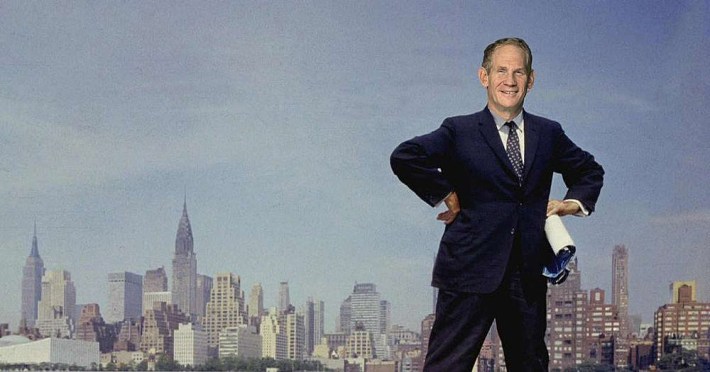
Streetsblog: I found an old interview with you. You described yourself as a hardcore New Yorker. Do you think it helps you put yourself in a place, or understand the day- to-day experiences of riders? Also on the other side of the coin, people say the MTA doesn’t want to learn from other places, so does that attitude prevent that?
Lieber: If I’m accused of being too much of a New York parochialist, I will take the punishment, because I am that. I grew up riding mass transit, the bus to school. I used the mass transit system all through high school. My parents both worked. I was what they used to call a latch key kid. My interest in the system is very personal, and it goes back to when I was seven-years-old. I started riding the bus to school.
By the way, I met Babe Ruth’s widow on the bus. She looked at me, she’s like, ‘You like baseball, kid?’ I was reading a baseball book, and she said, she said, You know who Babe Ruth is?’ She lived on Riverside Drive until she died, I think, in the 80s.
So yes, I am. My experience of mass transit, my opinions about the mass transit system are very much based on my own experience, not past, but present. You know this, I still ride the subway all the time, a lot more than bus, but I still ride the express bus back to Brooklyn from over here on State and Battery Place. I try to stay familiar with what’s going on in the different parts of the system. And I think of it as a strength. I stand on platforms and roll my eyes when the numbers go up, we’re running service in the peak and instead of being three-minute service on the 4 or the 5 from Atlantic, where I come in a lot, this morning it was a six-minute headway, and I rolled my eyes, and I texted the [Rail Control Center] what’s going on?
Streetsblog: You can do that, I don’t think I can.
Lieber: There’s usually an explanation. And frequently they’ll catch up, but yeah, it’s very personal to me. And when I see it, you know, I’m not picking up garbage for TV. Everything about the system matters to me. Whether people feel safe, that it feels like the system is running, whether it feels, I won’t call ‘clean’ because we’ve got a long way to go but whether it feels respectable enough, whether there’s a sense of things are in control or out of control, those all matter to me so much. And I experience it all the time, bring my point of view to bear.
Streetsblog: You worked at the New Republic in the 1980s as an intern. Which is a very funny idea: Janno Lieber, New Republic intern.
Lieber: Reporter-researcher, that’s the euphemism for intern, I wrote articles.
Streetsblog: So, as a former ink-stained wretch, you deal with this all the time. What do you what do you think of the transit press?
Lieber: I sometimes give you individually, collectively, a hard time, but I think that it’s the same as what I say about the transit advocacy community. It’s very similar. Organized civic groups in New York City have declined. They’ve in many cases, gone out of business or faded from memory or faded in importance and impact. In their place has arisen a network of urban-oriented and especially transit-oriented advocacy groups, and they had a huge impact on the all of what we’ve been able to accomplish in the fact in the past few years.
Likewise, the fact that we’ve got a coterie of transit reporters who actually know the beat and get deep enough into this stuff to to cover it pretty well. Sometimes that’s painful for us, because the press is never shying away from poking at government and pointing out government’s shortcomings. So maybe we get more than our share of negative press, but in the long run, having an educated beat press is a net plus. And I’m not going to put the shine on you, but the emergence of news outlets like Streetsblog, The City, even the consistent interest of, who would have thunk it, Bloomberg and the financial press in the US has been, broadly speaking a source of strength and helped create momentum for the agenda that we’ve pursued at the MTA, which is more credibility, better service, better and more financial security, more support from other other players of government. I think it’s been a net plus.

Read More:
Streetsblog has migrated to a new comment system. New commenters can register directly in the comments section of any article. Returning commenters: your previous comments and display name have been preserved, but you'll need to reclaim your account by clicking "Forgot your password?" on the sign-in form, entering your email, and following the verification link to set a new password — this is required because passwords could not be carried over during the migration. For questions, contact tips@streetsblog.org.