Skip to Content
Streetsblog New York City home
Log In
Streetsies 2025

Streetsies 2025: The Best from Albany

It's that time of year again! Albany often disappoints, but state officials got a few things right, we guess...

How about some floral bouquets for the good work that did happen in Albany this year?

Please donate.Click here to donate.

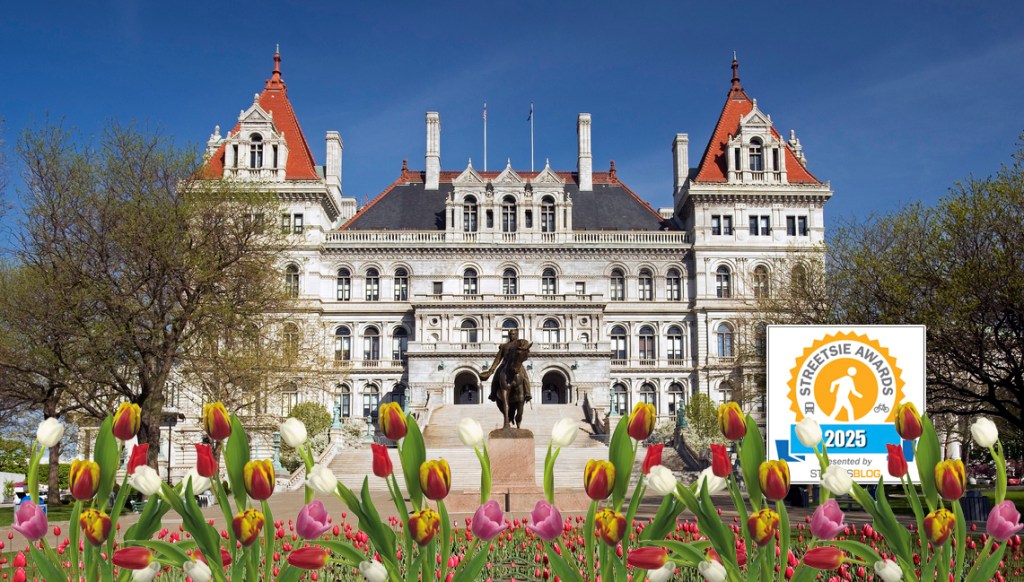
ALBANY — The State Capitol, o, how she gives and takes. This year, leaders in Albany were up to their elbows in transportation policy, with major roadway projects state Department of Transportation officials undertook, maintaining the MTA and even taking care of legislation in the statehouse.

Some things could have gone better, but a few decisions are up there as the best choices out of state government this year. (And remember, all our end-of-year Streetsies coverage is archived here.)

They funded the MTA capital plan!

Well, better late than never. After months of speculation over how, the state fully funded the MTA’s 2025-29 major reconstruction plan in the latest state budget. To do so, there was an increase in the payroll mobility tax in the MTA region — New York City, the lower Hudson Valley and Long Island — and some tinkering with the transit authority’s financials. The $68.4 billion is intended to fund future projects and maintain its system.

Granted, funding major aspects of state government shouldn’t warrant a pat on the back since, ideally, keeping the state running is why New Yorkers send lawmakers to Albany in the first place. But lawmakers went into session this year without a plan to meet the MTA’s funding needs and pulled a rabbit out of their hat before things got grim. 

Speed camera reauthorization

Reauthorizing New York City's speed cameras — which have been proven to increase safety — seems like a no-brainer, but you still have to do it right?

Gov. Hochul signed legislation, S.8344/A.8787, into law this June that reauthorized New York City’s school zone speed camera program for another five years, ensuring the life-saving program remains in place until 2030.

Legislation focused on street safety often runs into roadblocks, but the legislature mustered healthy, bipartisan voting majorities in both houses, and the governor was quick to sign the bill, sponsored by state Sen. Andrew Gounardes and Assembly Member Deborah Glick.

Metro-North expansion

Hochul and MTA leadership did the unthinkable and set in motion an expansion of the Metro-North’s Hudson Line all the way to the Albany-Rensselaer stop heretofore reachable only with Amtrak.

When service begins, it will only offer one round-trip between Grand Central Station and Albany, but it represents a big shift in possibilities for Capitol Region travelers who have to contend with random Amtrak price hikes or a lack of seats.

This may unintentionally be a masterful piece of employee-retention by the governor, creating one more option for travel for the legion of lawmakers, staffers and even reporters who make their way to Albany during session and help make state government hum.

State DOT sees reason on the Cross Bronx

The state Department of Transportation was poised to use a planned repair of the Cross Bronx Expressway to expand the roadway, but reversed course following intense pressure from community members and lawmakers — and the glare of Streetsblog’s coverage. 

The widening was originally sold as a “traffic diversion” structure that could take advantage of federal grants, but in reality would have created an additional highway over a Bronx greenspace, creating a toxic situation literally and figuratively.

Sure, it would be nice if DOT officials didn’t need shame and an advocacy campaign to reconsider unpopular and harmful road design projects, but as they say in sports, a win is a win.

MTA signal upgrades approved

MTA board members approved signal upgrades on the A and C lines in December and are using congestion pricing cash to fund it. New Communications-Based Train Control signal systems will be installed along the routes tracks between Jay Street-MetroTech in Brooklyn and Ozone Park-Lefferts Blvd. in Queens.

It essentially swaps fixed track signals with wireless ones that communicate train locations more efficiently.

The project will cost roughly $1.4 billion and is expected to cut down on wait times for riders, now that train operators will have a better idea of train traffic once the previous, nearly century-old, signals are replaced.

Forgetting that this will save riders time by cutting down delays, it's also one of the shining of examples of what congestion pricing cash can do to empower the state.

Stay in touch

Sign up for our free newsletter

More from Streetsblog New York City

Streetsies 2025 (And Friday Video!): Vote for Your Favorite Clips of the Year

A New York Met, the birth of "No Kings," and Cuomo running a stop sign are just some of the best things we caught on camera this year.

December 26, 2025

Memo to Mamdani: Support the QueensLink for Better Mass Transit

The Rockaways needs the transit benefits of QueensLink. Our contributor hopes the new mayor puts his weight behind the concept.

December 26, 2025

How Mamdani Can Deliver a Bigger Dream for Buses

To truly upgrade the New York City's bus system, the Mamdani administration needs to think even bigger than "fast and free."

December 26, 2025

Streetsies 2025: The Worst From Albany

Albany had its fair share of screw ups in 2025. Take a gander at the worst to come out of state government this year.

December 26, 2025

Friday’s Headlines: Boxing Day Edition

Yesterday was Christmas, but we still have a full news digest for you today.

December 26, 2025

Thursday’s Headlines: Merry Christmas Edition

Day off today, but we'll be back tomorrow.

December 25, 2025
See all posts