Streetsblog provides high-quality journalism and analysis for free — which is something to be celebrated in an era of paywalls. Once a year, we ask for your tax-deductible donations to support our reporters and editors as they advance the movement to end car dependency in our communities.
If you already support our work, thank you! If not, can we ask for your help?This year’s fundraiser includes a special gift for our biggest supporters. Don’t miss out.
Together, we can create a more livable, walkable, bikeable, equitable and enjoyable city for all. Happy holidays from the Streetsblog team!
It took a Dutchman to put New York’s decades of dysfunction in stark relief.
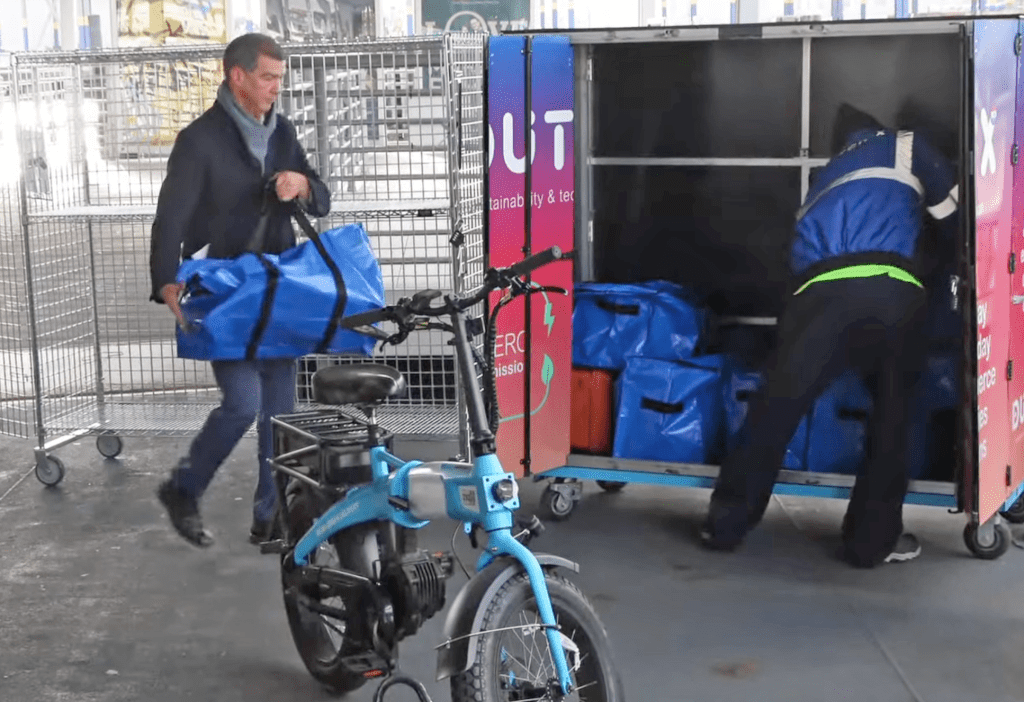
Marcus Hoad, the co-founder of the cargo bike company DutchX, was on hand at Thursday’s launch of the city’s first “Blue Highways” route — using the Hudson River to take small packages via ferry from the Brooklyn Marine Terminal to Pier 79 on Manhattan’s west side, where the goods were loaded onto cargo bikes, not trucks, for final delivery.
“In New York, we measure progress by what we finally stop doing,” Hoad said.
So on Thursday, we finally started stopping: several hundred orders of “cosmetics, fashion, lifestyle, and small household products,” according to the Department of Transportation, were not delivered with trucks that cause congestion, ruin air quality and degrade street safety. They were delivered with a DutchX cargo bike.
“With Blue Highways,” said DOT Commissioner Ydanis Rodriguez, “the ‘middle miles’ move by water and the ‘last mile’ moves with sustainable modes like cargo bikes. This is how we get trucks off our streets and cleaner air into our lungs. … We cannot plan for 1950. We must plan for 2050.”
Those middle miles seemed to be covered quite easily yesterday. “The freight we moved took 25 minutes from Brooklyn,” said NY Waterway President and CEO Armand Pohan. “I defy anyone to do that by truck.”
The DutchX bikes don’t need any additional infrastructure beyond the existing ferry ramps, according to the DOT. And, for now, the NY Waterways ferry won’t be also carrying passengers, but future routes might put freight on the same boats as commuters.
It’s all early days, but as that Dutchman said, it’s nice to see progress.
In other news:
Let’s start with an apology: We are sorry that we forgot to include our daily honor roll of contributors to our December Donation Drive in yesterday’s headlines — so today, we make amends: Thanks, Terry! Thanks, John! Thanks, Ryan! Thanks, Matthew! Thanks, Rafael! Thanks, Ann! Thanks, Wheels! Thanks, Fred! Thanks, Jill! Thanks, Ryan! Thanks, Sebastian! Thanks, Daisy! Two of those generous donors qualified for our special gift this year (you know who you are!). Don’t miss out.
Times architecture critic Michael Kimmelman dove into the whole “Abundance” argument over why America can’t seem to build anything anymore. But unlike other superficial pundits who blame Big Government for the rise of NIMBY power, Kimmelman pointed out that Europe — which put the “big” in Big Government — eats our lunch. “Why has Europe succeeded where America has stalled?” Kimmelman asks. “When it comes to public investment in transportation and other infrastructure, European voters and the governments they elect, despite the growing fissures, remain committed to a notion of the public good. The United States since the 1970s has largely turned over housing and even much public infrastructure to the private sector.”
NY Mag did a deep dive on the protesters who seek to prevent ICE from operating in public space.
As we reported the other day, Council Speaker Adrienne Adams decided not to allow the universal daylighting bill to come to a vote. On Thursday, activists vented. (amNY)
There’s always an Art News angle: Zohran Mamdani’s favorite museum is the subway.
A Coach bus driver went on a Manhattan rampage. (NY Post)
Supporters of the Court Street bike lane have set up a website to help focus attention on the local businesses that seek to make the neighborhood less safe.
Tabloid legend Gersh Kuntzman has been with New York newspapers since 1989, including stints at the New York Daily News, the Post, the Brooklyn Paper and even a cup of coffee with the Times. He's also the writer and producer of "Murder at the Food Coop," which was a hit at the NYC Fringe Festival in 2016, and “SUV: The Musical” in 2007. He also writes the Cycle of Rage column, which is archived here.
Streetsblog has migrated to a new comment system. New commenters can register directly in the comments section of any article. Returning commenters: your previous comments and display name have been preserved, but you'll need to reclaim your account by clicking "Forgot your password?" on the sign-in form, entering your email, and following the verification link to set a new password — this is required because passwords could not be carried over during the migration. For questions, contact tips@streetsblog.org.
Cars returned to Freedom Drive on Oct. 7 without any warning — several weeks before the city’s official schedule, which bans car from the corridor through October.