Vanderbilt Ave. Open Street Trims Hours For Second Straight Year
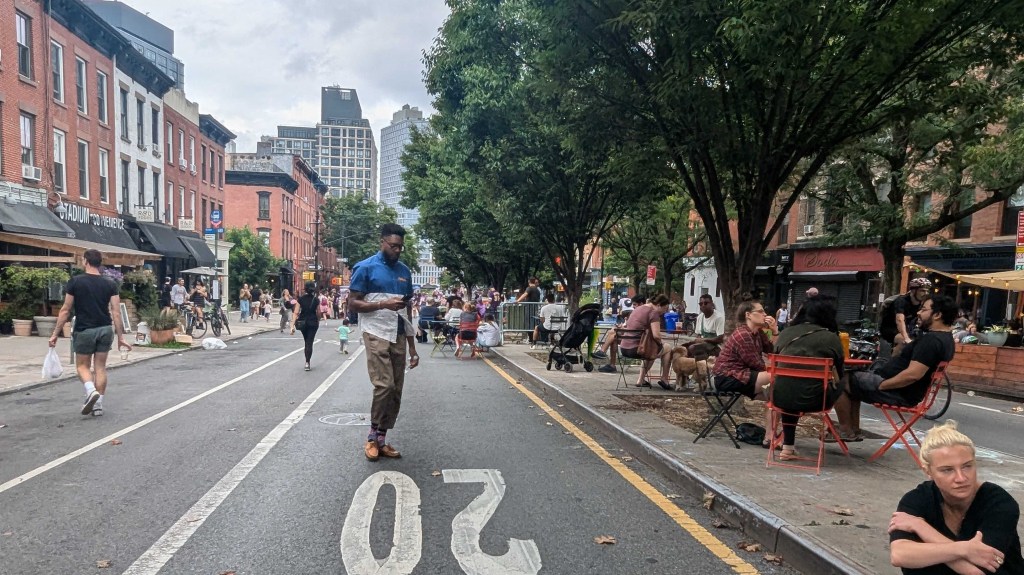
There will be less Vanderbilt Avenue open street than ever to enjoy this year.
Organizers of the crown jewel of the city’s open streets program announced on Wednesday that the roadway will be converted to a car-free paradise only on Saturdays from May to September this year, a money-saving rollback for a thriving neighborhood institution that used to be all weekend from early spring to fall.
Last year organizers had to cut the program down to running from May to September and reduced the Sunday hours, which was a 40-percent reduction in total hours. The Saturday-only change amounts to another 50-percent cut.
“It’s really unfortunate that the program is getting scaled back quite significantly this year because, really, everybody loves Vanderbilt,” said Alex Morano, a volunteer organizer with the open street. “It’s a great community program. And it’s not an exaggeration to say there are thousands of people that come out every summer, locally and just from around the city to enjoy it. So to limit how available this public space is, and to limit the programming and limit opportunities for the businesses is just a really awful thing.”
Like last year’s cuts, organizers say it’s getting too expensive to run the open street without much more dedicated city funding, which is giving less money to the Vanderbilt open street than ever. As a result, organizers need to rely on sponsorships, private donations and restaurant owners, who pay for the extra outdoor space — contributions that will drop because of the Saturday-only hours.
Overall, the city will be funding less than half of the cost of the Vanderbilt open street this year, which increases the pressure on the volunteers who keep the program going.
Morano said he doesn’t think that’s fair, especially since the Department of Transportation’s own study shows that open streets help commercial corridors retain businesses and increase the city’s tax base.
“When you don’t have cars on the street and when you’re preventing crashes and providing programming there’s a positive economic consequence to that. So I think the city should cover all of it, right because this is an economic program and a social program that the city directly benefits from,” said Morano.
The DOT gives open street organizers a maximum of $20,000 per year to run their programs. Vanderbilt got $15,000 last year and organizers expect to get less in 2025, though a representative from the DOT said that the funding cut followed the organizers’ application for fewer days to begin with.
Vanderbilt is hardly the only large open street that’s struggled with the way the city devotes resources to it. Park Slope’s Fifth Avenue open street massively cut back their footprint and hours last year, and Bed-Stuy’s Tompkins Avenue has been at the mercy of the NYPD’s interest in providing crowd control. Morano compared this level of support to what open streets in Montreal get, where Quebecois merchant associations that run their programs get $700,000 per year to make le open streets happen.
“The city just doesn’t make enough resources available for open street partners to be able to run really significantly sized programs. The current model isn’t a sustainable model. The city has to change the way that they’re running this. I think a new administration certainly would help with that. We need an administration that cares about keeping open streets alive, and that wants to put more energy and more resources towards this program,” said Morano.
Another Vanderbilt organizer also said the story of the Vanderbilt cuts was the story of open streets across the city.
“We see this around the city — the administration needs to fully fund the Open Streets program, so that the folks at DOT, working with volunteer community partners like ourselves, can deliver on the promise of this transformative program,” said Prospect Heights Neighborhood Development Corporation Chair Saskia Haegens. “For now, we are moving forward with the best version of Vanderbilt for 2025 that we can.”
A spokesperson for the DOT said that the agency supports the city’s overall open streets and plazas program with $10 million annually for close to 300 different locations, and that a total redesign of Vanderbilt Avenue is in still in the pipeline.
“We are committed to delivering a permanent redesign of Vanderbilt Avenue that builds on the successes of the Open Street with public space and safety improvements, as we have already delivered to Underhill Avenue, where we’ve seen reductions in crashes and injuries,” said agency spokesperson Anna Correa. “Across the city, we’ve allocated new funding and other resources to Open Streets to grow the program to more than 200 locations annually — including a record number near schools this year.”

Read More:
Streetsblog has migrated to a new comment system. New commenters can register directly in the comments section of any article. Returning commenters: your previous comments and display name have been preserved, but you'll need to reclaim your account by clicking "Forgot your password?" on the sign-in form, entering your email, and following the verification link to set a new password — this is required because passwords could not be carried over during the migration. For questions, contact tips@streetsblog.org.