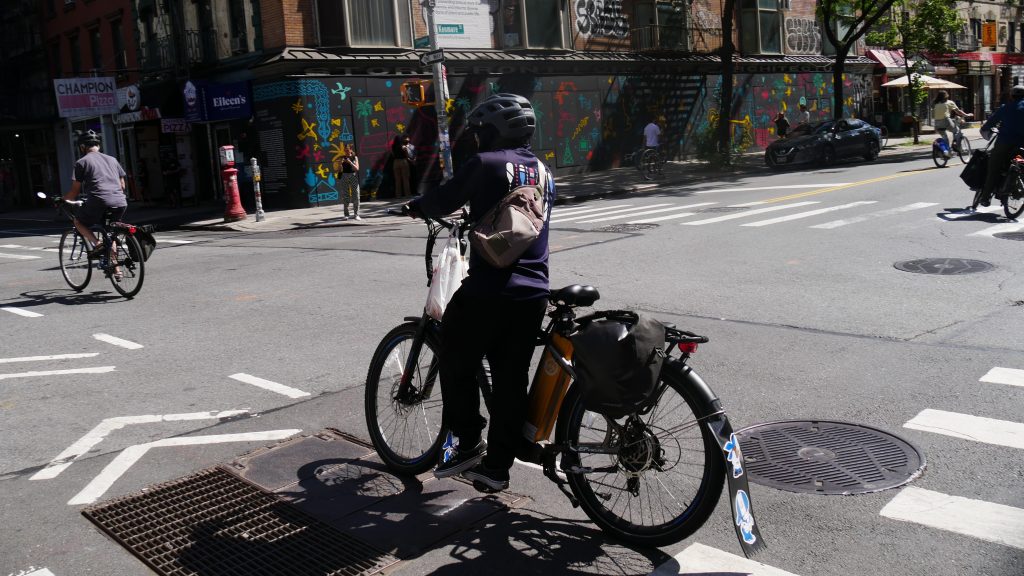
DOT: Council E-Bike Registration Bill is Not Necessary to Make Streets Safer
Enforce existing laws. Keep redesigning the streets for safety. Hold delivery app companies accountable. But don’t create a new bureaucracy to register electric bikes.
This is the prescription for safe streets put forward by Department of Transportation Commissioner Ydanis Rodriguez as he pushed back on a Council bill to require the agency to register and issue license plates for electric bikes and e-scooters.
Supporters, who now comprise a majority of the legislature, said the measure would make streets safer and end, in the words of one, the “absolute chaos” caused by e-bike riders, but Rodriguez disagreed, citing the fact that existing rules already allow the NYPD to crack down on violators and ongoing road redesigns are making streets safer for pedestrians.
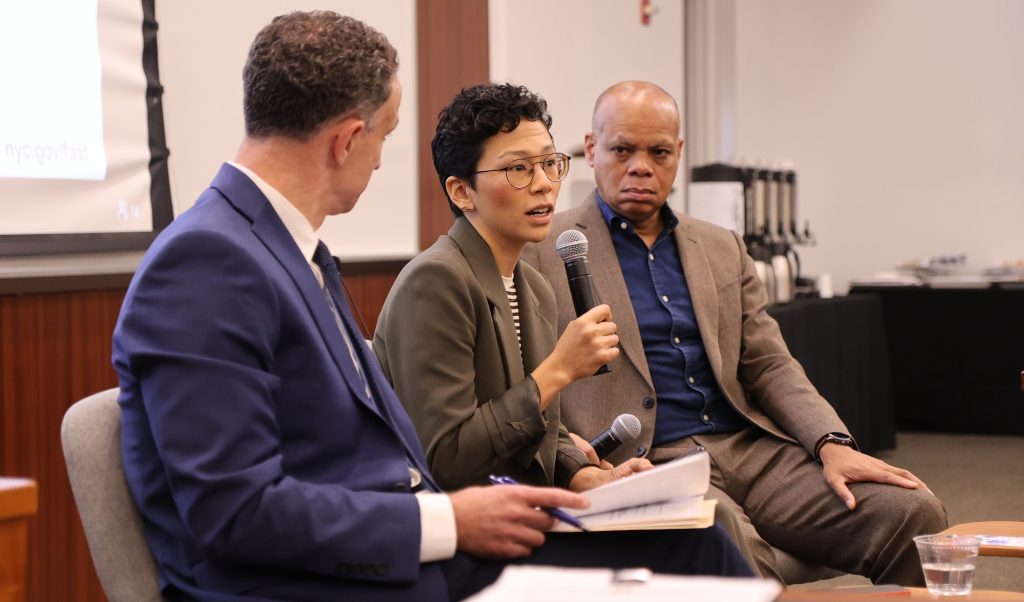
“The administration already has the tools to enforce against illegal [cycling] behaviors; a license plate is not necessary for enforcement,” he said at a packed hearing in the august Council chamber on Wednesday, breaking his agency’s year-plus-long silence on the registration bill. “The installation of protected bike lanes reduces pedestrian deaths and serious injuries by 29 percent. These safety gains from protected bike lanes are even more pronounced for seniors walking on our streets, with these designs reducing deaths and serious injuries by 39 percent.”
Plus, the licensing requirement would cost DOT $19 million to set up, added Assistant Commissioner Rick Rodriguez, who is not a relation of the commissioner.
DOT Commissioner Rodriguez also pushed back on the central motivation behind Intro 606, the e-bike legislation written by Council Member Robert Holden, namely that electric bikes comprise a “public safety crisis” because, in reality, the number of reckless cyclists is so few and the number of injuries caused by then even lower.
“Like many of you, we have been hearing about these issues [but] reckless driving by motor vehicle drivers remains — by far — the biggest threat to pedestrian safety,” he said, drawing boos from supporters of the Holden bill, who were reprimanded by the Sergeant at Arms.
“So far this year, 105 pedestrians were killed by cars or larger vehicles compared to six killed in crashes with e-bikes, mopeds, and stand up e-scooters combined. And of the over 8,700 pedestrian injuries this year, nearly 90 percent were injured in crashes with cars or larger vehicles. I say this not to diminish the very real concerns about pedestrian safety from these smaller devices, but to put these concerns in context. Cyclists disobeying traffic laws can have deadly consequences and is unacceptable — however, they are not the majority.”
That part of Rodriguez’s testimony echoed opposition for the Holden bill from Public Advocate Jumaane Williams, who observed earlier that supporters of e-bike registration have consistently opposed proven street safety measures such as wider bike lanes, protected bike lanes, and road diets.
“Many of the people who are supporting this bill pushed back very hard when we tried to adjust the car culture, even though people are killed by it,” he said.
Williams was also booed by supporters of Holden’s bill, who have described themselves as “victims and potential victims” of reckless cyclists. Rodriguez consistently reiterated that he had heard their concerns about feeling unsafe, but also pointed out the root cause of that fear remains the flawed design of city streets.
“For far too long, New York City and cities across the country designed streets to suit the needs of cars — endangering the safety of pedestrians and cyclists, increasing air pollution, and threatening the climate,” he said. “By reimagining our streets to prioritize pedestrians, mass transit, and cycling, we are making our streets safer and the planet greener.”
He also said the bill would require significant resources and would create “barriers for adoption” of e-bikes and scooters, which he called “sustainable modes of transportation [that] provide users with an affordable and convenient transportation option.”
“We should be promoting their safe and responsible use,” he added, reiterating that “NYPD has enforcement authority when road users, including e-bike riders, violate traffic laws — enforcement does not require that e-bikes be registered.”
But he declined to answer a softball question by Council Member Lincoln Restler about whether registration would actually reduce the number of fatalities and injuries (experience in other cities suggests that registration itself would not).
Holden bitterly criticized Rodriguez’s testimony and grilled him on how he could support automated enforcement of red lights, yet not putting a license plate on electric bikes so that they, like cars, could indeed be caught. (In fact, Holden’s bill calls for a DOT-issued plate, not a state-issued plate, which are the only kind that can be issued tickets.)
And Holden complained that the agency didn’t provide breakdowns of which vehicle operators are currently committing moving violations in the city (those numbers are not often clear from police moving violations stats or crash reports).
“Ninety-five percent of e-bike riders do not follow laws, but you chose not to provide that data,” Holden claimed.
But Rodriguez had provided data: virtually all people injured on the streets of New York are wounded by car drivers. There have been 77,965 crashes caused by the drivers of cars and trucks vs. 2,111 crashes caused by the riders of e-bikes and e-scooters, or just 2.6 percent of the total crashes.
“We support the intent of this bill,” he said, “but we don’t support the bill.”
Members of the public can submit testimony to the City Council directly by emailing it to testimony@council.nyc.gov. The deadline is 72 hours after the close of the hearing, which will likely end on Wednesday afternoon.

Read More:
Streetsblog has migrated to a new comment system. New commenters can register directly in the comments section of any article. Returning commenters: your previous comments and display name have been preserved, but you'll need to reclaim your account by clicking "Forgot your password?" on the sign-in form, entering your email, and following the verification link to set a new password — this is required because passwords could not be carried over during the migration. For questions, contact tips@streetsblog.org.