Council Seeks to Force DOT to Build 175 E-Bike Charging Hubs
Charge it!
The City Council wants to force the Transportation Department to install 175 e-bike charging hubs in commercial areas over the next five years, taking a direct approach after years of delayed projects — but some in the industry say the effort won’t be nearly enough to create the infrastructure the city needs.

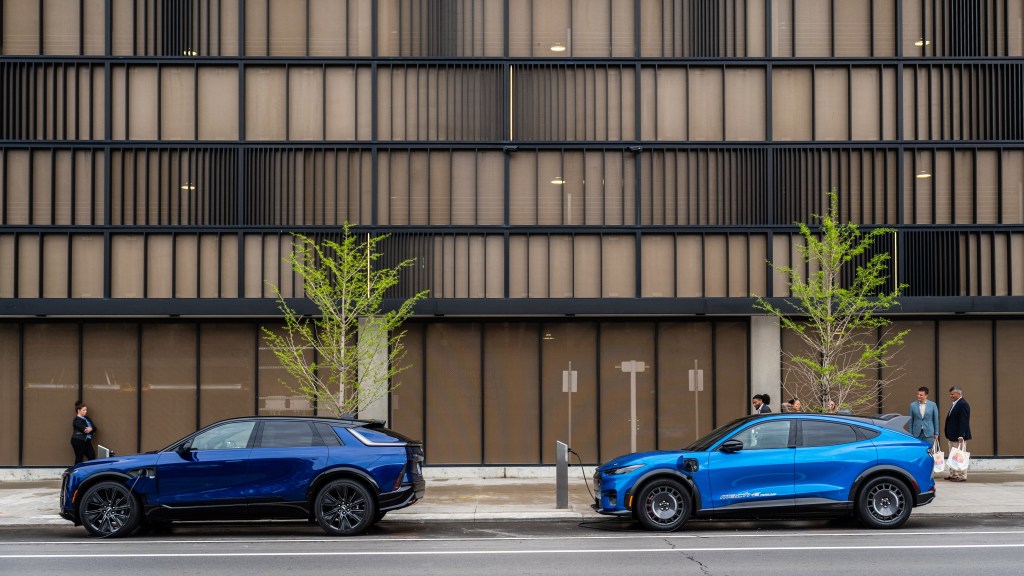
On Thursday, Council Members Sandy Nurse of Brooklyn and Carlina Rivera of Manhattan introduced a bill that would require the DOT install 35 “e-bike charging stations” in commercial corridors each year for five years. The bill would also require at least 25 percent of those charging stations be placed in the roadway.
After three years, the DOT will have to submit a report analyzing the usage and cost of maintaining the charging stations.

“We certainly want to expand the conversation around e-bike charging and battery safety as much as possible,” Rivera told Streetsblog. “E-bikes are a part of many people’s daily commutes now, and we are seeing more delivery workers than ever. So we’re looking to have a conversation with DOT, with my colleagues [to] see how we can expand this infrastructure responsibly, for public safety reasons.”
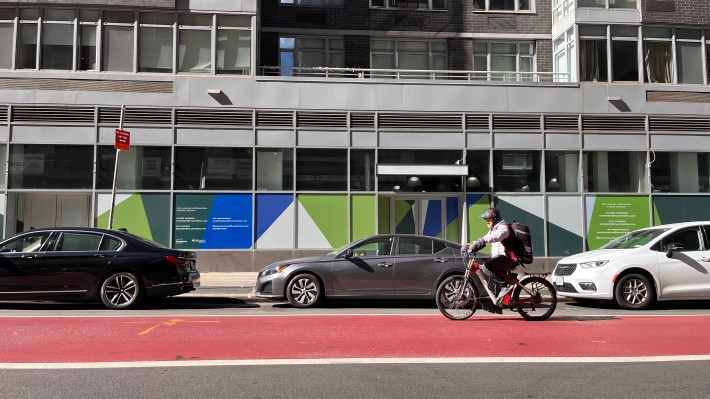
The city has seen an explosion of delivery workers using electric bikes and mopeds since the pandemic. Between 2020 and 2022 alone investors poured more than $5.5 billion into New York City-based companies, and there are an estimated 65,000 delivery workers in the five boroughs, according to a report from Transportation Alternatives.
A charging station would fuel up 30-40 bikes, so even 175 stations would not do enough to fully eliminate indoor charging, which causes deadly fires that the city is working to eliminate. So far this year, there have been 219 fires resulting in 85 injuries and three deaths, according to FDNY data.
“These Council members are acting in good faith and they are trying to make a law that would benefit public safety, but installing even 200 charging stations in five years would have minimal impact,” said Baruch Herzfeld, the CEO and co-founder of Pop Wheels, one of the battery charging companies that is part of the city’s current pilot program. “Everybody is trying to figure things out as things are moving quickly. This law is great, but it’s one one-hundredth of what the city is going to need over the next five years.”
Past initiatives, same problems
The bill comes after a series of slow-moving city-led initiatives to create charging infrastructure for e-bike batteries, both to prevent the fires caused by unsafe storage, and to give delivery workers sheltered space to congregate.
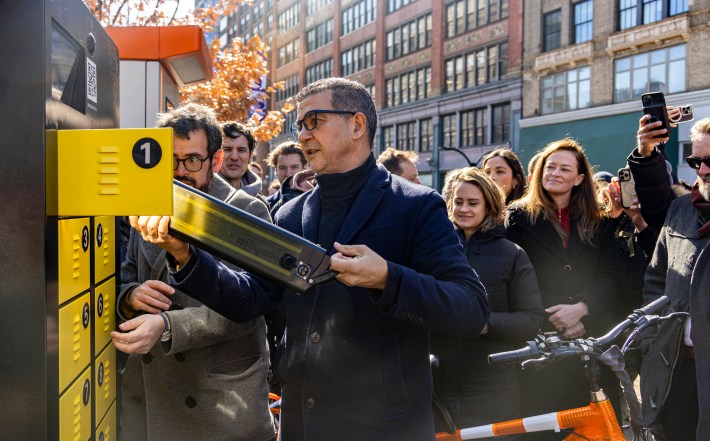
In 2022, Mayor Adams and Senator Chuck Schumer announced federal funding to turn abandoned city newsstands into charging stations where delivery workers could also take a break. But the first hub is not expected to open until early 2025.
Adams also announced early this year that the city would create a Department of Sustainable Delivery to regulate the growing app-delivery industry and promote safety and sustainability. But that agency is pending.
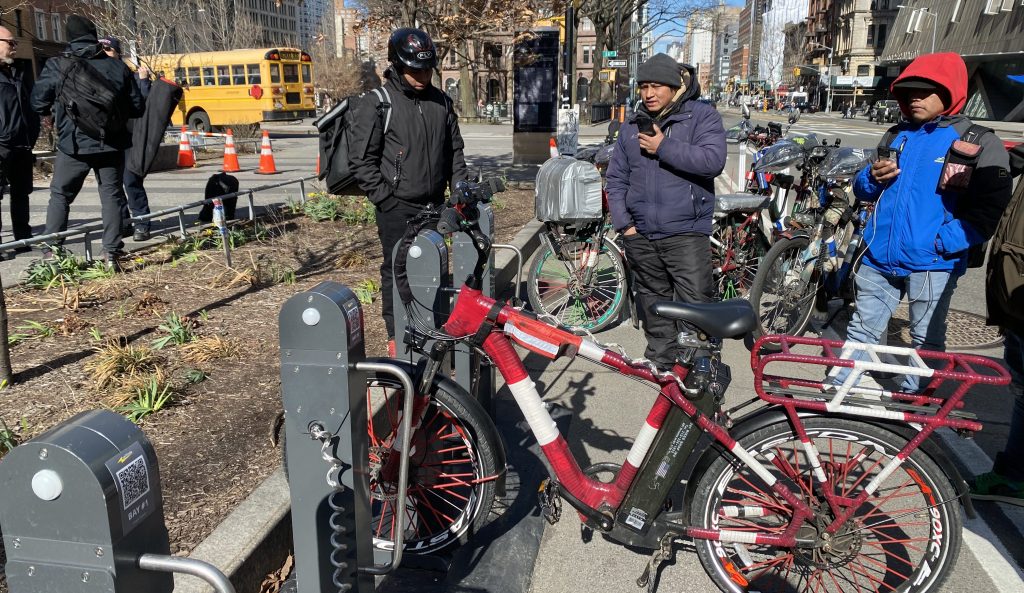
For now, there are three city-run charging stations serving 120 pre-registered workers. But the pilot has been a success, according to the DOT, which reported that half of the test users have stopped charging their batteries at home.
Herzfeld said that much more is needed — say, the ability to charge hundreds of thousands of batteries — given that the city is planning to create cargo-bike “microhubs” to reduce the reliance on truck traffic.
The new bill, at least, is the first proposal that would force the city to create specific amount of public charging facilities. As such, the Worker’s Justice Project, which organizes Los Deliveristas Unidos, said law signals the city’s willingness to help delivery workers.
“The availability of affordable, safe e-bikes, batteries, charging facilities and infrastructure has not kept pace with the explosive growth in our city’s e-micro mobilty use, increasing the risks for riders and workers alike,” said Ligia Guallpa, WJP’s executive director.

Read More:
Streetsblog has migrated to a new comment system. New commenters can register directly in the comments section of any article. Returning commenters: your previous comments and display name have been preserved, but you'll need to reclaim your account by clicking "Forgot your password?" on the sign-in form, entering your email, and following the verification link to set a new password — this is required because passwords could not be carried over during the migration. For questions, contact tips@streetsblog.org.