Exclusive: City Hires Company To Install E-Car Charging Posts In Public Space
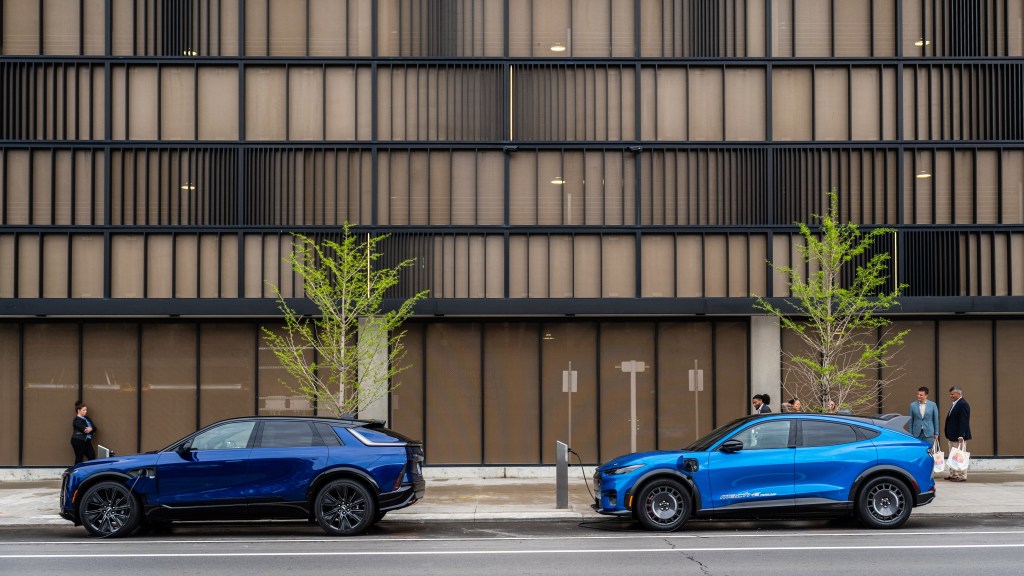

Six hundred more curbside spaces are about to become electric vehicle charging points under a contract that will be announced on Tuesday — a massive expansion of a pilot program but a small down payment on the city’s larger plan to permanently allocate more public space for the automobile.
Pedestrian and street-safety groups have long warned that creating curbside chargers represents a giveaway to the minority of New Yorkers who own cars, but that’s exactly what the Brooklyn-based it’s electric is being hired to do: install the electric posts that opponents say will reduce public space left for wider public benefit such as bike or bus lanes, street seats, curbside dining or even trees.
“Our curb space can be used for so much more than parking,” said Michael Sutherland, senior policy and legislative analyst at Open Plans, which shares a parent organization with Streetsblog. “EV chargers are permanent, expensive infrastructure that permanently lock in public space for cars and make future improvements more difficult.”
The city has been operating 88 charging points from FLO, but is expanding by 600 with it’s electric, a company with the lower-case name … and big ambitions.
“Just as fire hydrants are on every street, our vision is for EV chargers to become that normal,” it’s electric founder Nathan King said in a statement. The company did not address the livable streets issue: cars occupying the curbside lane forever.
The charging points do not only lock in parking, said another advocate.
“It also locks in a contract for a utility company to keep a fueling facility there in that parking space,” said Jon Orcutt, a former DOT policy director. “And we’re essentially turning public streets into the 21st-century gas stations.”
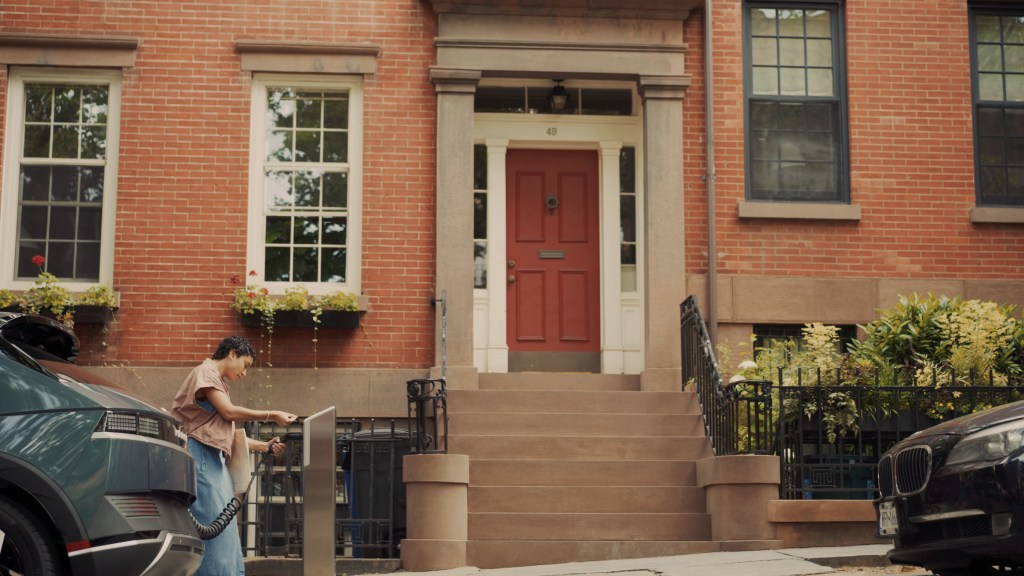
Mayor Mamdani created the Office of Curb Management at DOT in April, on the premise that the curb has been stuck with one use — car storage — ever since overnight parking was made legal in the 1950s. Its job is to repurpose that space for loading zones, containerized trash, and outdoor dining. And also more spots for EVs to fuel up. (The city announced the expansion last month, but will be announced today that it’s electric won the bid.)
DOT’s 2021 Electrifying New York report called for 10,000 curbside points by 2030, though it’s electric co-founder Tiya Gordon thinks that landmark will be reached “between 2030 and 2040.”
Transportation officials say they will coordinate charger locations with bike, bus, and pedestrian projects to preserve flexibility.
Neighborhoods with high concentrations of taxi drivers, including Soundview, Rego Park, Red Hook, Washington Heights, and Stapleton, are being targeted first because the chargers will help meet the city’s Green Rides rule, which requires all rideshare rides to be zero-emission (or wheelchair-accessible) by 2030.
Passenger vehicles, including those Uber and Lyfts account for 17 percent of the city’s greenhouse gas emissions, according to the city’s chief climate officer Louise Yeung. The city wants drivers to switch to electric to reduce that pollution (though obviously the driver of an electric SUV takes up the same curb space, causes the same traffic, blocks the same buses and has the same potential to kill and maim as the driver of a gas-powered car).
The original 88 charging points in the pilot are occupied by an EV more than 70 percent of the time and are delivering energy more than 85 percent of the time they are occupied, according to Con Edison.
But 56.7 percent of New York City households don’t have access to a vehicle at all, according to 2024 census data. And EVs only account for 8.3 percent of new vehicle registrations in the city, DOT said.
Still, advocates are not arguing against charging infrastructure for EVs, but merely where to put it.
“The city should explore publicly accessible, off-street EV charging that utilizes existing car infrastructure like garages and gas stations without hindering future efforts to reclaim public space for people,” Sutherland said.
DOT says it will add 92 fast charging points and 180 Level 2 points at places like city-owned municipal lots and garages, with construction underway or finished.
Council Majority Leader Shaun Abreu (D-Manhattan), who chairs the Transportation and Infrastructure Committee, defended the 600 new charging posts as “being creative with our city’s curb space,” saying it targets neighborhoods with the greatest need.
Gordon hopes to begin installations in the first quarter of 2027. The department is taking public comment on proposed locations. (Click here to provide feedback by Sept. 30.)

Read More:
Streetsblog has migrated to a new comment system. New commenters can register directly in the comments section of any article. Returning commenters: your previous comments and display name have been preserved, but you'll need to reclaim your account by clicking "Forgot your password?" on the sign-in form, entering your email, and following the verification link to set a new password — this is required because passwords could not be carried over during the migration. For questions, contact tips@streetsblog.org.