Advocates Rue Axing of High Speed Rail From Climate Bill
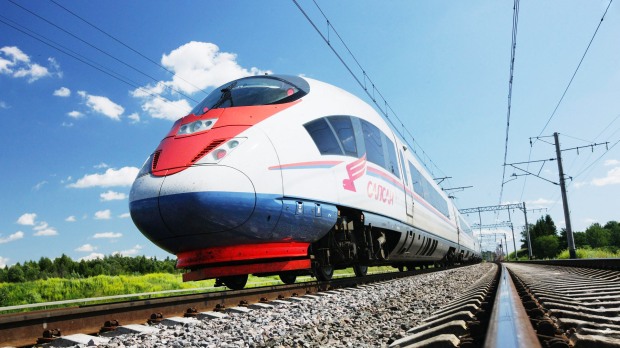
The Democrats’ controversial decision to axe funding for high speed rail from their blockbuster climate bill has some advocates wondering what it will take for lawmakers to finally understand the environmentally transformative potential of the mode — both for decarbonizing long distance travel and the larger movement to end car dependence more broadly.
Sustainable transportation advocates were outraged last week when news broke that the Senate’s $700-billion Inflation Reduction Act would contain zero guaranteed money for shared transportation while pouring billions into consumer subsidies for electric cars.
Transit projects are only eligible for a tiny handful of competitive programs — the $3.4 billion Neighborhood Equity and Access Grant program and a roughly $1-billion grant program to green commercial vehicles like buses, school transportation vehicles and garbage trucks — but agencies will be forced to compete for their share with projects that primarily benefit pedestrians, cyclists, and other sustainable modes. As a result, some are already beginning to question Democrats’ estimates that the package would decrease greenhouse gas emissions by 40 percent below 2005 levels.
“It is a bitter pill in terms of rail and transit, which is the one clearly established, low-carbon emission transportation systems we have going,” Sean Jeans-Gail, vice president of government affairs and policy at the Rail Passengers Association, told Politico. “It does feel like this is going to lock in highway dominance.”
Harnish acknowledges that the $10 billion that was cut from the new Senate deal certainly wouldn’t have been enough to give America the high speed rail network it deserves; a long-sought project between San Francisco to Los Angeles alone clocked in at least $76 billion according to recent estimates, and even more modest projects could easily consume the whole pot.
But that simply means we must increase funding to all forms of rail, including slower trains to smaller cities — which Harnish points out also got left out of the deal.
“I’m getting really annoyed at people who complain that California’s line is taking too long, and then not funding it, or any other projects,” Harnish said. “We need a national movement for fast, frequent, and affordable rail…Not only would it really reduce driving, but it would be a catalyst for changing our communities, so you don’t have to drive for short trips, either.”

Read More:
Streetsblog has migrated to a new comment system. New commenters can register directly in the comments section of any article. Returning commenters: your previous comments and display name have been preserved, but you'll need to reclaim your account by clicking "Forgot your password?" on the sign-in form, entering your email, and following the verification link to set a new password — this is required because passwords could not be carried over during the migration. For questions, contact tips@streetsblog.org.