Streetfilms: ‘Talking Public Spaces’ in the Meatpacking District

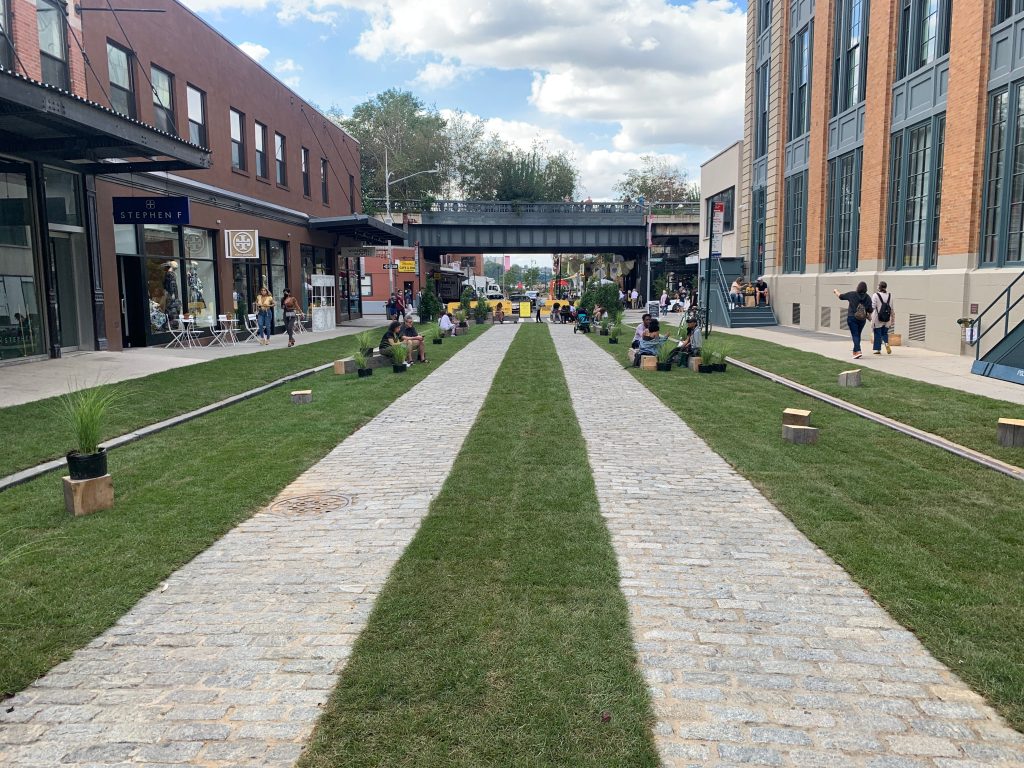
Gorgeous plazas with lush plantings in movable containers. Refurbished 19th-century factory buildings on quaint cobblestone streets. People sipping drinks under red cloth umbrellas — and hardly a car to be seen.
Are we really in the Manhattan?
Yes, we’re in the Meatpacking District, where the Business Improvement District operates open streets and plazas in a historic corner of the far West Side. For Jeffrey LeFrancois, the BID’s executive director, the lovely streetscape comes from engaging residents and businesses in an ongoing conversation about the public realm.
“It’s about getting people to see what’s possible” when public space “is not just about parking,” LeFrancois says in Clarence Eckerson Jr.’s new Streetfilm “Talking Public Spaces,” a lively colloquy about his BID’s pedestrianized spaces with Streetsblog Publisher Mark Gorton.
LeFrancois runs what might be the purest example of an open-streets laboratory in the city. The Meatpacking District, a commercial and nightlife hub that evolved from a desolate and dangerous former industrial area, has been trying different experiments in tactical urbanism over several years. Recently, the BID put down 5,000 feet of sod (yes, sod) on “Little West 12th Street” to create a plaza that was controversial at first but then became beloved by residents and visitors alike.
The Meatpacking District’s efforts to create great public space is part of a trend, recently explored by Streetsblog, in which business improvement districts have taken the lead in establishing pedestrianized areas — performing many functions, such as urban planning and sanitation, that traditionally have been city functions. It’s a trend that benefits wealthy commercial districts that can tax themselves to employ the personnel that it takes to maintain and program public spaces, but doesn’t help those districts without a BID.
LeFrancois offers his expertise as a model for the city. “We’re micro city managers,” he says in the film. “The city should look to us for what works and what doesn’t.”
Watch and share:

Streetsblog has migrated to a new comment system. New commenters can register directly in the comments section of any article. Returning commenters: your previous comments and display name have been preserved, but you'll need to reclaim your account by clicking "Forgot your password?" on the sign-in form, entering your email, and following the verification link to set a new password — this is required because passwords could not be carried over during the migration. For questions, contact tips@streetsblog.org.