OPINION: Pass the Bicycle Commuter Act — Now!
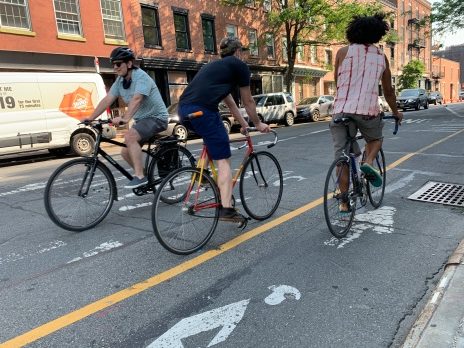

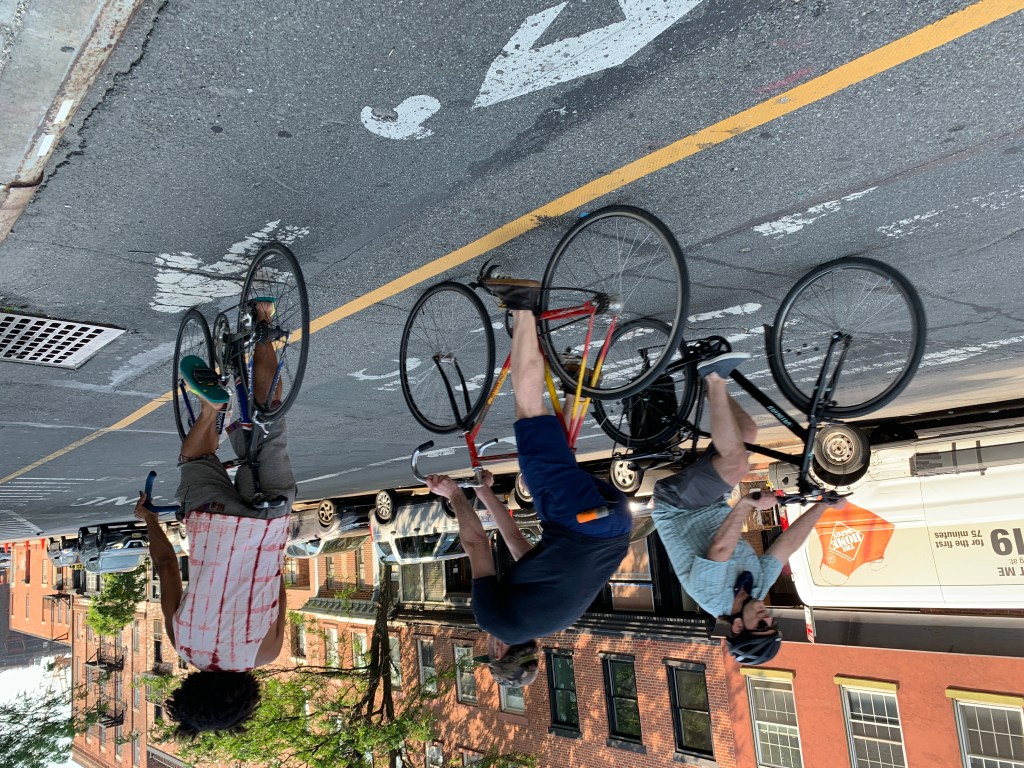
The Biden infrastructure package isn’t the only pending federal legislation that could have a big effect on the lives of New Yorkers. Majority Leader Schumer and Congress must enact another important initiative that could make a huge difference in how we commute: the Bicycle Commuter Act.

The act is a pre-tax incentive for people to bike to work that could encourage thousands of New Yorkers to ditch their cars for greener, safer transportation — leading to less traffic congestion on city streets, improved air quality, and more New Yorkers living a healthier lifestyle.
The act would extend to employees who bike to work the commuter benefits that are already offered to bus and subway riders and to drivers and to drivers in the form of prepaid cards, transit passes, commuter-check vouchers, and smart cards. It would provide as much as $81 a month for individuals to cover costs associated with commuting, and could be spent flexibly between modes. The bill would cover bikeshare rides and memberships (including for low-speed e-bikes) and would allow bike commuters to pair those subsidies with their other transit benefits, addressing the first-and-last miles of many commutes. It also would eliminate time-consuming receipt- and record-keeping requirements associated with the previous version of the benefit that required commuters to save receipts and report their expenses in order to get reimbursed.
Many studies have found that bike commuting is associated with a lower risk of cardiovascular disease and cancer. In New York City, before the pandemic, 1.6 million residents rode a bike at least occasionally, and 800,000 did so regularly. Those numbers grew by a whopping 26 percent from 2012 through 2017. The number of New Yorkers who develop cardiovascular disease and cancer could decline if the “#BikeBoom” that we have seen during the last year and a half continues — and we expect it will.
One only needs to look at Citi Bike ridership data from this year: 2021 has seen daily ridership shatter records several times, with growth of more than 20 percent above previous years. This month, responding to the rapid growth in cycling, the Department of Transportation unveiled a protected bike lane on the Brooklyn Bridge — the first major reconfiguration of the bridge since trolleys were removed in 1950 — which is designed to handle more than 60,000 daily cyclists. The city also plans to build a protected bike lane on the Queensboro Bridge, which connects Manhattan and Queens. The Bicycle Commuter Act is an unassuming, but powerful tool to raise the tide even higher.
Incorporating the Bicycle Commuter Act into the reconciliation package also would improve community health and environmental equity in our city and others. A 2017 study published in the medical journal BMJ found that places that have invested in bicycling infrastructure have seen dramatic improvements in health indicators and major cost savings in health care.
There are substantial economic benefits for underserved communities, too. In New York city, median incomes of zero-car households are lower than overall median incomes, while median incomes of households with vehicles are higher than overall median incomes in all five boroughs. Bicycle ownership and bikeshare membership are much less costly than owning a car. Both can help low-income families in neighborhoods that lack subway access, by opening up job opportunities and shortening commute times.
Replacing car trips with bicycling trips also could help states like New York meet transportation goals and performance measures, such as reducing congestion and air pollution. In 2017, the U.S. Department of Transportation released performance measures requiring states to set congestion-mitigation and air-quality goals that necessitate shifting trips away from single-occupancy motor vehicles. Offering incentives for employees to bike to work some or all of the time would help states meet both sets of goals. Now is the time to encourage the use of alternative travel options; many people returning to work in downtown offices are looking for opportunities to reshape their commutes in a greener, healthier direction.
Moreover, as the COVID-19 Delta variant has extended the pandemic, bicycling has proved even more important for maintaining social distancing and preventing driving. Indeed, the CDC recently listed biking as a preferred mode of commuting during the COVID-19 crisis.
As we look to enact many other large-scale transportation and infrastructure projects in order to ensure a cleaner, more equitable transportation future, we must not lose sight of the low-hanging fruit. Congress and Schumer must deliver for New Yorkers and city dwellers around the nation by making it easier and more economical to commute on a two hundred-year-old device that is proving more important than ever: the bicycle.
Renae Reynolds (@Renae_Rey) is the executive director of Tri-State Transportation Campaign, a 28-year-old advocacy organization that fights for an equitable, safe, multi-modal transportation network that provides options and supports the economies of New York, New Jersey, and Connecticut.

Read More:
Streetsblog has migrated to a new comment system. New commenters can register directly in the comments section of any article. Returning commenters: your previous comments and display name have been preserved, but you'll need to reclaim your account by clicking "Forgot your password?" on the sign-in form, entering your email, and following the verification link to set a new password — this is required because passwords could not be carried over during the migration. For questions, contact tips@streetsblog.org.