Feds to Cities: Paint the Town Red!
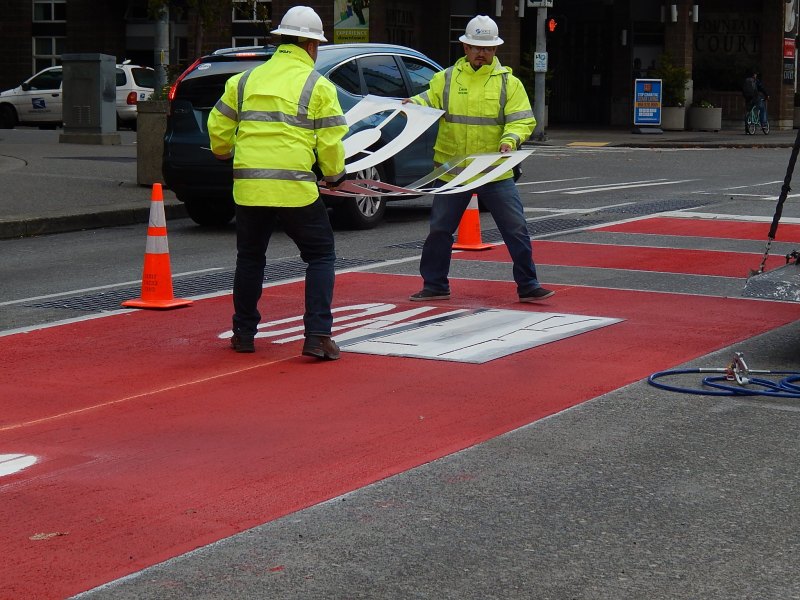
Better red than … tied up on endless traffic.
The Federal Highway Association approved new guidance this week that will dramatically expedite the process for approving the use of red paint to indicate a dedicated bus lane.
Cities that receive federal transportation grants previously had to ask their state transportation counterparts to send an application for shading travel lanes to the FHWA, which would take a minimum of a year to approve a project. Once completed, cities would then have to send evaluation reports annually to show the colorization was not having a detrimental effects on car traffic.
Now municipalities can just send a letter to the feds requesting the chromatic change — and there’s no extensive follow-up.
The FHWA’s order will eliminate construction delays and save cities costs implementing an effective way to move buses through dense urban areas, transportation experts say.
“It makes the street more intelligible and make people understand what the function of the street is. It really does change behavior,” National Association of City Transportation Officials spokesman Alex Engel told Streetsblog. “If it’s just [uncolored] marking, motorists often don’t realize they’re driving in a bus lane.”
The group’s 81 member cities and transit agencies have long determined that red-painted bus lanes help deter drivers from entering the busway. But the FHWA’s stringent requirements discouraged many cities from making the design change.
San Diego for instance sought this year to add bus-only lanes on a 2.7-mile stretch of El Cajon Boulevard, one of the city’s busiest streets, but avoided coating the asphalt with red paint because it took too long to deal with the feds.
“They expressly said they did a version without red paint because they wanted to avoid the federal approval process so now that’s not a barrier anymore,” said TransitCenter spokesman Ben Fried. “San Diego recognized that the red was ideal, and it became a time and cost consideration because of the bureaucratic hurdle. Now that hurdle has been removed.”
Other cities that have gone through the FHWA’s lane approval process saw an immediate effect on traffic. The number of unauthorized vehicles in red-painted transit lanes fell by 51 percent in San Francisco, by 55 percent in New York, and by 60 percent in Chicago once the bus lanes were redesigned, according to transit authority studies.
Buses can move at even faster speeds if asphalt striping is done in coordination with other measures including the collection of fares outside of the bus and establishing bus-only lanes. But painted lanes is an initial step that is likely to spread quickly.
“[The FHWA ruling] will lead more cities to make their bus lanes red,” Fried said. “[Not painting] has been the practice of the traffic engineering establishment. They’re very slow to adapt to anything new.”

Read More:
Streetsblog has migrated to a new comment system. New commenters can register directly in the comments section of any article. Returning commenters: your previous comments and display name have been preserved, but you'll need to reclaim your account by clicking "Forgot your password?" on the sign-in form, entering your email, and following the verification link to set a new password — this is required because passwords could not be carried over during the migration. For questions, contact tips@streetsblog.org.