#StuckAtDOT: The Bike Corral Conundrum
This is the first installment in a new campaign by the Neighborhood Empowerment Project called #StuckAtDOT to get the city agency to make changes that will allow communities to make improvements quickly and without unnecessary impediments.

Case study: Bike corrals needed.
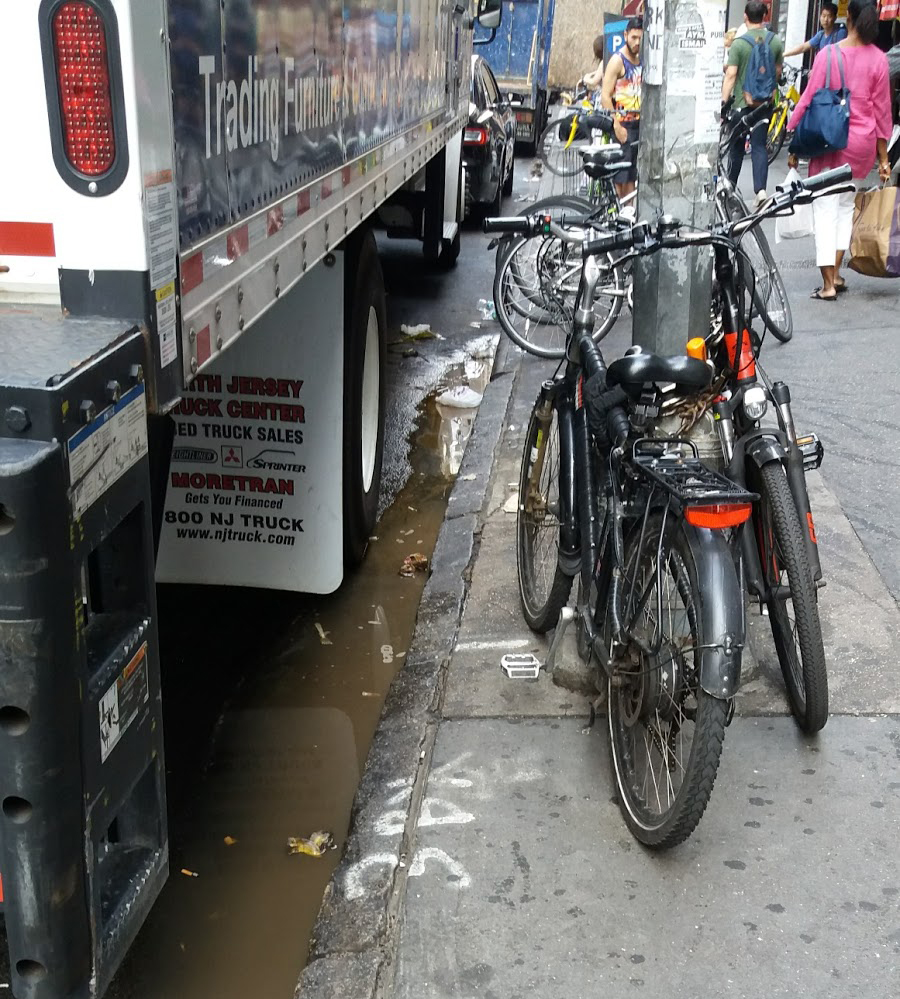
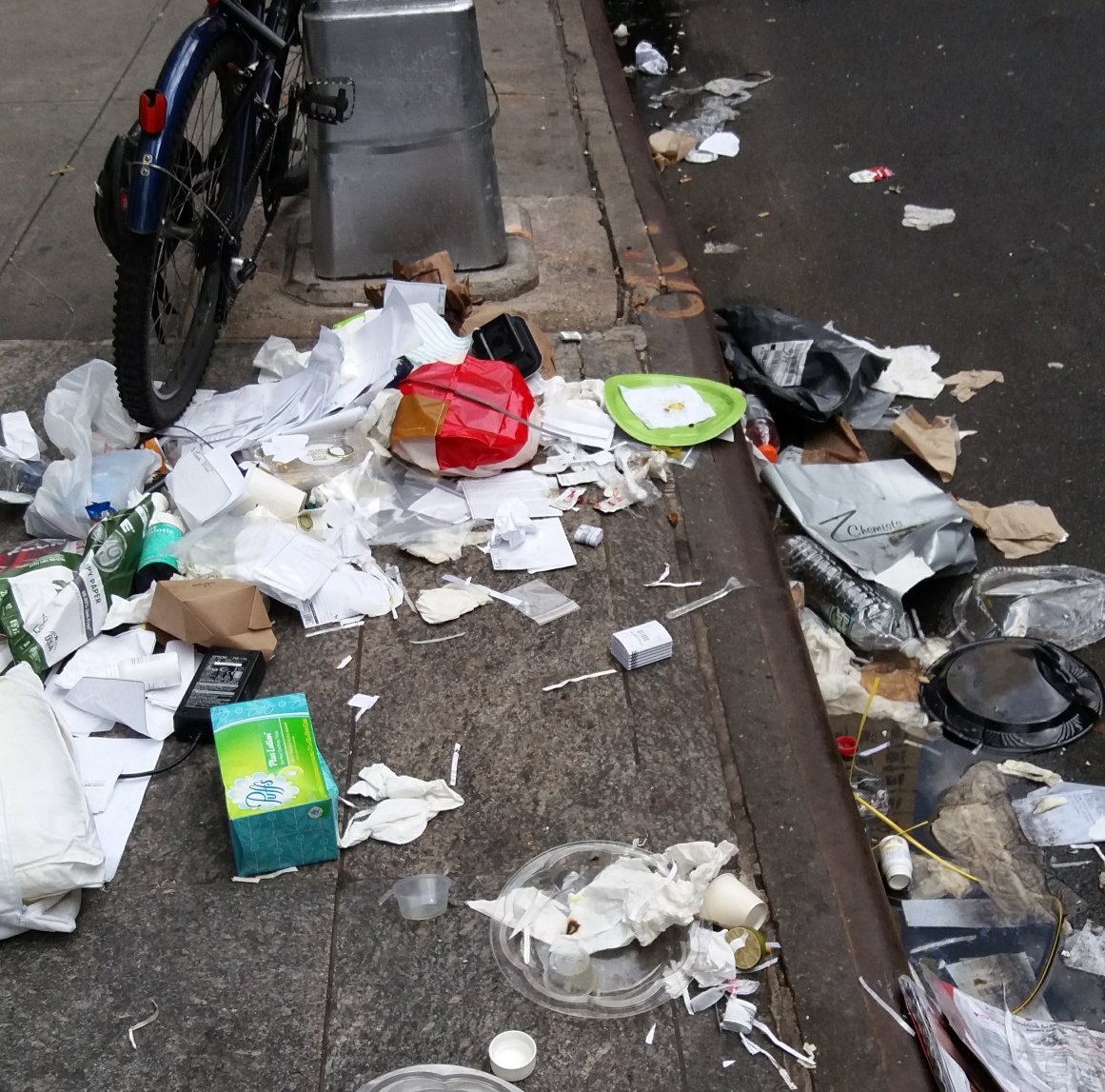
Location: W. 56th Street between Fifth and Sixth avenues. This is a high-density, mixed-used block that is home to over two dozen small food places that offer deliveries. The result is an acute bike-parking problem, with bikes locked to every available pole creating a messy streetscape and blocking pedestrians on the extremely narrow sidewalk (which narrows further in the hours before garbage is picked up).
Mitigating circumstance: The block is not part of a business improvement district, which would provide supplemental clean up and support. As a result, this block is not only full of bike clutter, but litter, too, and is perceived as dangerous. “Am I in a bad area,” an out-of-town friend recently asked. “No,” I said, “just Midtown.”
The key detail: The city Department of Transportation does not install bike corrals unless residents, businesses or a business group take responsibility for maintaining and insuring the new infrastructure. That means that if an area is not covered by a Business Improvement District, a business owner or landlord must take on the responsibility of maintaining a corral — i.e. keeping it clean or risk a fine plus carrying insurance in case someone is injured. If DOT can not find a reliable partner, the agency will not provide the public amenity. As a result, businesses whose customers directly benefit from bike parking (such as coffee shops or gyms, plus BIDS, which recognize the economic value of bike infrastructure), are generally the ones that create it. But individual business owners aren’t sufficiently motivated to provide parking for their workers. If a corral doesn’t help the bottom line, it’s just too much trouble. Only one corral has been installed since 2016 — and that was in the confines of the Union Square BID.
Stakeholder: The West 50s Neighborhood Association (which covers 53rd through 58th streets between Fifth and Eighth avenues). The group has 700 members.
Initial steps: About six years ago, the Association contacted DOT, which agreed that the block has a problem. The city required the Association to find one or several businesses to request, maintain and insure the corrals. The group has not been able to find a partner or partners willing to take on the added responsibility.
Stuck at DOT? Yes. DOT is standing by its corral requirements.
Best practices: In Seattle, when bike parking is installed, the corral remains the property of the Department of Transportation, which then maintains it. To help with maintenance, there’s even a hotline for calling in broken or rusted corrals to be fixed at city expense. If DOT followed Seattle’s lead, the W. 56th Street bike corrals could be installed tomorrow and maintained with the help of 311 calls. Or, better yet, the city could provide a stipend to the West 50s Neighborhood Association to clean the corrals, and waive the insurance. This way, the local stakeholders will be empowered to address their needs expeditiously and tend to their public space.
Janet Liff is a co-founder of the Neighborhood Empowerment Project.

Read More:
Streetsblog has migrated to a new comment system. New commenters can register directly in the comments section of any article. Returning commenters: your previous comments and display name have been preserved, but you'll need to reclaim your account by clicking "Forgot your password?" on the sign-in form, entering your email, and following the verification link to set a new password — this is required because passwords could not be carried over during the migration. For questions, contact tips@streetsblog.org.