Op-Ed: Move Quickly on the Vehicular Violence Accountability Act

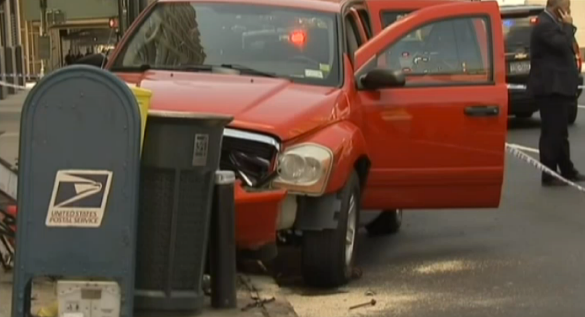
New York City has never been safer than it is today, when crime has dropped to historic lows. Yet, even as safety has improved overall, the city is experiencing an epidemic of vehicular violence that has killed 29 of our Manhattan neighbors so far this year — and injured thousands more.
A New Yorker today is about equally as likely to be killed by a car than with a knife or a gun. We’ve lost seniors, toddlers — and the feeling that our children will safely get where they are going in the city without being maimed or killed.
As the Manhattan district attorney, I know that we cannot arrest and prosecute our way out of the vehicular-violence epidemic. I also know that no single solution can curb the crisis, and that criminal prosecution of dangerous drivers is just one component of any plan to reduce and end vehicular violence.

Six months ago, my office set out to examine that single component on which a district attorney has special expertise — criminal law and procedure. To aid in our review, we used the most powerful, citizen-led, investigative tool that district attorneys have: a state grand jury.
Our grand jury heard from families of victims killed by drivers, street-safety experts, advocates, and government agencies. The jurors closely reviewed a series of fact patterns from collisions in Manhattan and videos of death- or serious-injury-producing crashes. At the end of their gut-wrenching investigation, they wrote a remarkable report that implored our city and state elected officials to “prevent vehicular violence before tragedy strikes.”
The grand jury’s report recommended five major reforms of criminal prosecution and evidence procedure:
- Strengthen offenses for vehicular collisions resulting in death or serious injury.
- Expand sanctions imposed on reckless drivers.
- Improve the development and admissibility of evidence
- Amplify the voice of vehicular violence victims, and
- Remove dangerous drivers from our streets before they kill, through better oversight, education, and street design.
After the grand jury handed down its recommendations, we immediately started crafting a bill, the Vehicular Violence Accountability Act. State Senator Tim Kennedy (chair of the Senate Transportation Committee), and State Senator Brad Hoylman have signed on as the initial sponsors. Now, we’re asking Streetsblog readers to join Transportation Alternatives and Families for Safe Streets in calling on lawmakers to pass the bill early in the next legislative session.
Following the grand jury’s recommendation, our bill creates an article of the Penal Law, titled “Vehicular Violence,” that would enable more prosecutions of dangerous drivers. It establishes new crimes: “Death by Vehicle,” a class A misdemeanor, and “Serious Physical Injury by Vehicle,” a class B misdemeanor. These offenses would escalate to a class E felony and class A misdemeanor, respectively, when there are aggravating factors, such as recent vehicular convictions, speeding more than 20 miles above the speed limit, or committing more than one moving violation at a time.
The Vehicular Violence Accountability Act would fix fundamentally broken laws so that more drivers who injure or kill can be held accountable. It reflects what we’ve heard time and again from survivors and their families, who are not looking for us to throw the book at dangerous drivers. Rather, they are asking us to fix the law in order to empower survivors, to remove driving privileges from habitually reckless people, and to achieve some measure of accountability for acts that are not covered.
My office also will create a liaison position in our Witness Aid Services Unit in order to connect vehicular-violence survivors and their families with services and counseling, and help them understand the criminal-court process over the lifetime of their case.
It bears repeating that the solution for ending vehicular violence does not lie entirely with criminal laws or handling of evidence. We also need vigorous enforcement, smart street design, better education and outreach, and more collaboration between city and state agencies and our communities. But, the Vehicular Violence Accountability Act is our effort to ensure that, on the criminal-legal side, we are doing all that we can to support survivors and ensure that drivers who kill or injure face accountability.
Cyrus Vance Jr. is Manhattan district attorney.

Read More:

Streetsblog has migrated to a new comment system. New commenters can register directly in the comments section of any article. Returning commenters: your previous comments and display name have been preserved, but you'll need to reclaim your account by clicking "Forgot your password?" on the sign-in form, entering your email, and following the verification link to set a new password — this is required because passwords could not be carried over during the migration. For questions, contact tips@streetsblog.org.