Arkansas Passes the ‘Idaho Stop,’ Allowing Cyclists to Yield at Red Lights

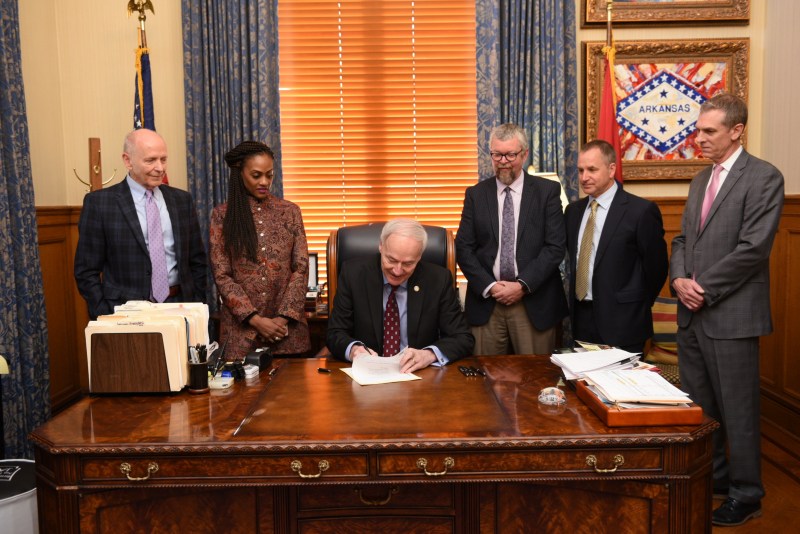
Arkansas became the second state in the nation to legalize the Idaho Stop on Monday, the biggest breakthrough yet for the iconic 35-year-old bike safety law.
The Idaho Stop — named for the first state that allowed it — gives cyclists the right to treat stop signs and red lights as “yields.” Arkansas state lawmakers hope the new law will offer both health and business benefits.
“This is a win for everyone in the state,” State Senator Missy Irvin, who co-sponsored the legislation, said in a statement. “I was proud to bring a bill forward that made our roads safer for cyclists, improved traffic flow and boosts tourism.”
Governor Asa Hutchinson signed the measure making it official yesterday.
The Idaho Stop, first passed in 1982, has been shown to have pretty significant safety benefits. Bicycle injuries dropped 14 percent in Idaho the year following its passage. A 2010 study by Berkeley researcher Jason Meggs found bike safety was about 30 percent better in Idaho cities than comparable peers.
“This act is likely to improve the safety of bicyclists by promoting the use of side streets and lessening the time that bicyclist are exposed to dangers at intersections,” said league of American Bicyclists Policy Director Ken McLeod said in statement marking the Arkansas bill’s passage.
More and more states and cities have considered Idaho Stop legislation in recent years. In 2017, Delaware approveda variation on the Idaho Stop, which locals affectionately refer to as the “Delaware Yield.” It applies only to stop signs.
Meanwhile, Utah’s House of Representatives passed Idaho Stop legislation, but it has been held up in the Senate. The Idaho Stop was also considered in San Francisco and Portland in recent years as well, though neither city went ahead with it.
Joe Jacobs, a marketing manager with Arkansas State Parks told Streetsblog making the business argument for the rule change was important.
“The key to getting it passed was the perfect combination of governor’s support, private non-profit support, and working with experienced legislators,” he said. “Also, the work of the tourism industry in promoting the state as being bicycle-friendly can’t be overstated in the success of the bill.”
For a longer explanation of the benefits of the Idaho Stop, check out this great video by Portland videographer Spencer Boomhower.

Read More:
Streetsblog has migrated to a new comment system. New commenters can register directly in the comments section of any article. Returning commenters: your previous comments and display name have been preserved, but you'll need to reclaim your account by clicking "Forgot your password?" on the sign-in form, entering your email, and following the verification link to set a new password — this is required because passwords could not be carried over during the migration. For questions, contact tips@streetsblog.org.