Kids Head Back to School — And Parents Return to Their Killing Machines

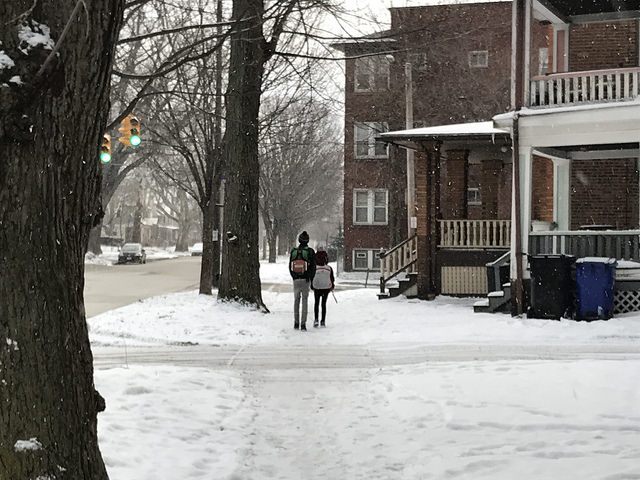
Finally some concrete evidence that the school pick-up and drop-off routine is indeed a safety hazard.
A new study by the data firm Zendrive helps confirm that risky driving behavior peaks around the times children are arriving and leaving schools around the country every day — creating a dangerous situation right when children are most vulnerable.
Zendrive collected reams of data on driver behavior around schools, using information gathered from 9 million drivers’ cell phones during April 2018. The study tracked “risky behaviors” — like cell phone use, speeding, and sudden braking or fast acceleration — using sensors already present in the phones. The risky behaviors were then matched to the physical locations within one-quarter mile of 125,000 U.S. schools. (You can check the safety of your school here.)
At a fifth of schools, drivers were engaging in an average of two risky behaviors per trip. The hour between 3 and 4 p.m. — as school lets out — was the most risky time for students, when drivers were near the peak of bad behavior. This tracks with U.S. DOT data showing the 3-4 p.m. hour is the most deadly for schoolchildren.

The most common behavior Zendrive recorded was hard braking, followed by cell phone use while driving.
Across the country, city schools performed worst overall, with higher risk driving 32 percent more likely compared to rural areas. But urban schools also improved more than suburban and rural.

New York City was among the most improved compared to last year’s analysis. Manhattan went from being the worst county in the whole country — an “F” — to 1030th worst, or a solid “C-.” Brooklyn, Queens and the Bronx all had impressive improvements as well. In a single year they advanced from 3rd, 4th and 8th worst in the nation, to 273rd, 355th and 832nd worst in the nation.
Zendrive says that’s typical. City schools tend to have more dangerous driving around them — but they have also been improving their safety scores more quickly than rural and suburban schools, as cities like New York embrace Vision Zero. (This data comes from April when New York City’s speeding cameras in school zones were still active. The speed cameras will return in time for the first day of school on Wednesday.)
Nationally however, driving behavior around schools has been getting worse. Zendrive reports only 10 percent of schools showed a year-over-year improvement in driver behavior. In 30 percent of schools it got worse. In another 60 percent there was no change.

Read More:
Streetsblog has migrated to a new comment system. New commenters can register directly in the comments section of any article. Returning commenters: your previous comments and display name have been preserved, but you'll need to reclaim your account by clicking "Forgot your password?" on the sign-in form, entering your email, and following the verification link to set a new password — this is required because passwords could not be carried over during the migration. For questions, contact tips@streetsblog.org.