Landlords in Seattle Can’t Force Renters to Pay for Parking Anymore

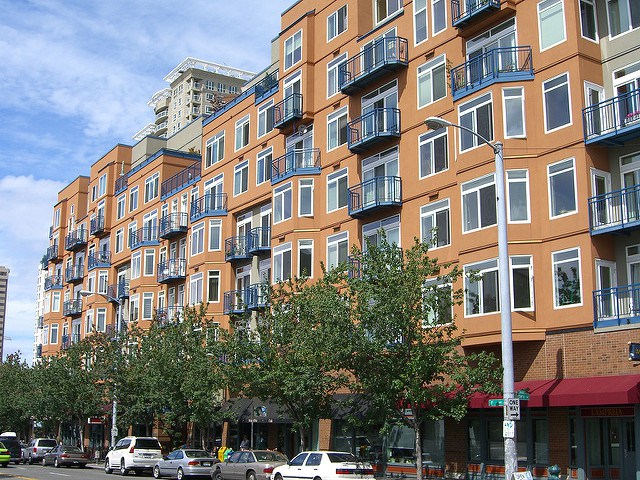
The Seattle City Council has approved a substantial package of parking reforms that aims to make housing more affordable and reduce dependence on driving.
Among the highlights is a new rule that would unravel one of the biggest subsidies to driving: “bundling” the price of car parking with rent. Landlords of buildings with more than 10 apartments will now have to charge for parking separately and cannot bundle it with rent.
By giving renters no option but to pay for parking with their apartment, bundling obscures the true price of parking. And parking costs a lot. A 2015 study by King County concluded that parking adds, on average, about 12.5 percent to rents [PDF], fueling the city’s housing affordability problems.
Meanwhile, there’s good evidence that much of the parking in Seattle goes unused. Almost a third of Seattle renters do not own a car, according to the city, and one study found about one-third of the parking spaces at multi-family buildings are not occupied.
With the new rule, renters who don’t own cars won’t be forced to pay for parking spaces they don’t use. (Landlords will be able to rent unused parking spaces to people who live outside the building.)
Minimum parking requirements were also cut in half for below-market housing construction: from one space for every three units, to one space for every six.
In addition, the new rules expand the areas of Seattle where no parking is required. Prior to the changes, land within a certain radius of a transit stop served every 30 minutes for 18 hours a day were exempt from parking rules. Now the looser rules apply to areas near transit stops with 30-minute frequencies 13 hours a day. That means more housing can be built at lower cost.
The Seattle Times reports that parking construction shows signs of declining thanks to the city’s previous parking reforms. In 2004, the average new apartment had 1.5 parking spaces. Last year, the number was down to just 0.6 spaces per apartment.

Streetsblog has migrated to a new comment system. New commenters can register directly in the comments section of any article. Returning commenters: your previous comments and display name have been preserved, but you'll need to reclaim your account by clicking "Forgot your password?" on the sign-in form, entering your email, and following the verification link to set a new password — this is required because passwords could not be carried over during the migration. For questions, contact tips@streetsblog.org.