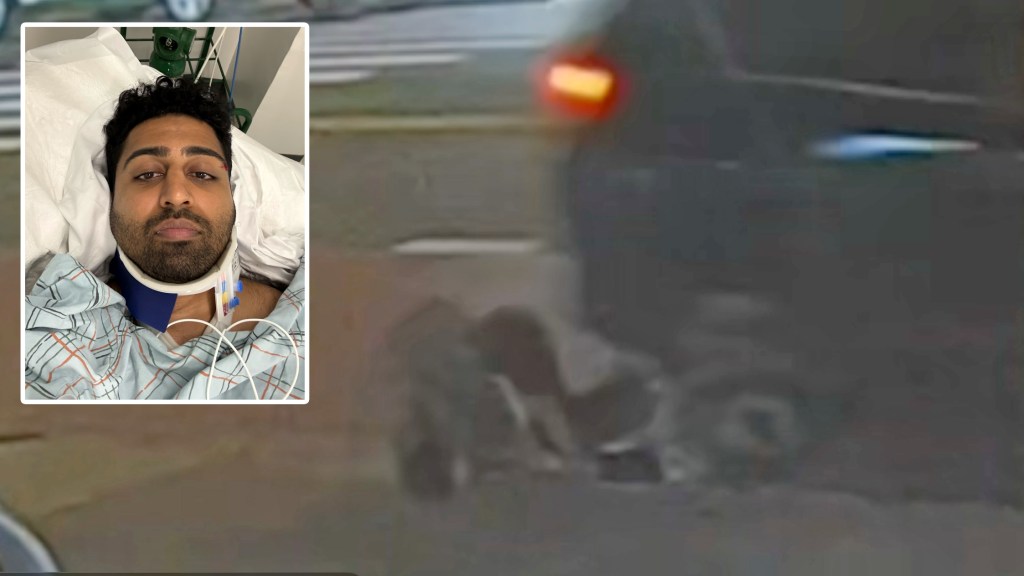
Placard Abusers Gravitate to Upgraded Inwood Crosswalk as Soon as the Stripes Are Dry

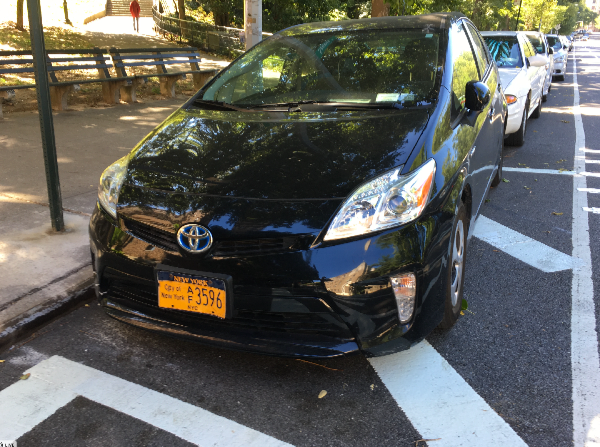
Over the summer DOT upgraded an unmarked crosswalk on Seaman Avenue in Inwood, alerting drivers to the presence of people crossing at W. 214th Street. It didn’t take long for placard abusers to lay claim to it.
To improve visibility at the crosswalk, DOT converted a curbside parking spot to a no standing zone on the east side of Seaman. Soon after, city employees with placards began parking in the no standing zone, obstructing what is supposed to be a car-free space that allows motorists and people entering the crosswalk to better see each other.
One offender is the driver of this city-owned Prius, which bears a placard issued by the Human Resources Administration. This car is frequently parked in the daylighting zone overnight. It was there for much if not all of last weekend, and it was hindering visibility at the crosswalk as of 7:30 this morning.
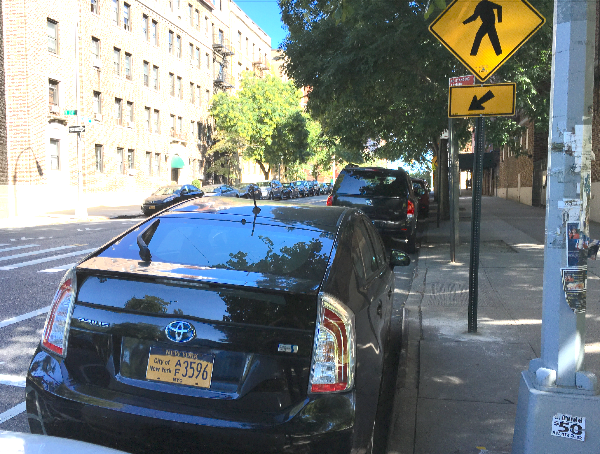
The problem of placard abuse goes beyond this HRA staffer. The whole placard system amounts to an elaborate way to hand out permission slips for government workers to illegally take over bus stops, delivery zones, and other parking-restricted areas. This is just one example of how placards directly undermine DOT’s street safety projects, which often rely on low-cost methods, like striping, that are easily circumvented by placard holders.
While law enforcement will soon be bringing a case against fake placard issuers, the de Blasio administration has let the larger problem of official placard abuse get worse, reissuing tens of thousands of placards that the Bloomberg administration had discontinued.
The mayor promised a crackdown on abuse after the press raised a stink over the massive increase in placards, but there are simply too many in circulation and too few consequences for placard holders who break the rules. It’s still business as usual five months after de Blasio announced the crackdown.
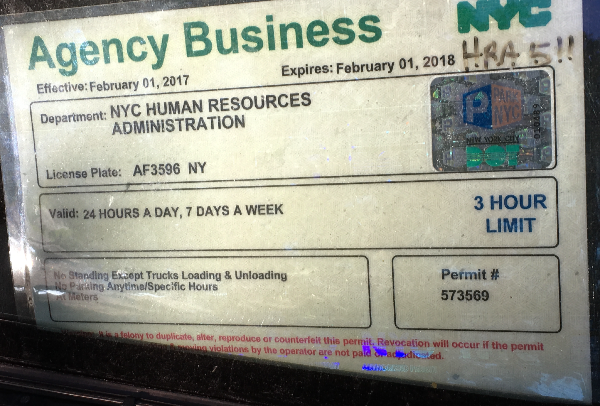
We asked the Human Resources Administration who drives this vehicle, and what the agency plans to do in response to this staffer’s bad behavior. We also asked DOT if it might take measures to protect the no standing zone at Seaman and 214th Street. We’ll update this post if we get answers.
Update 10/5/17: The Human Resources Administration sent us this statement: “We expect HRA employees that have city cars assigned to them to adhere to all parking rules and regulations. We have investigated the matter and instructed the employee to park the vehicle in designated parking areas.” DOT has not answered our queries about design improvements to prevent people from parking in the crosswalk daylighting zone.

Read More:
Streetsblog has migrated to a new comment system. New commenters can register directly in the comments section of any article. Returning commenters: your previous comments and display name have been preserved, but you'll need to reclaim your account by clicking "Forgot your password?" on the sign-in form, entering your email, and following the verification link to set a new password — this is required because passwords could not be carried over during the migration. For questions, contact tips@streetsblog.org.