Portland Launches Public Adaptive Bike Rental for People With Disabilities

When Portland launched its bike-share system last year, disability rights advocates questioned why the city wasn’t making public bikes accessible for people with disabilities as well. The issue got attention in a City Council race, and the city listened.
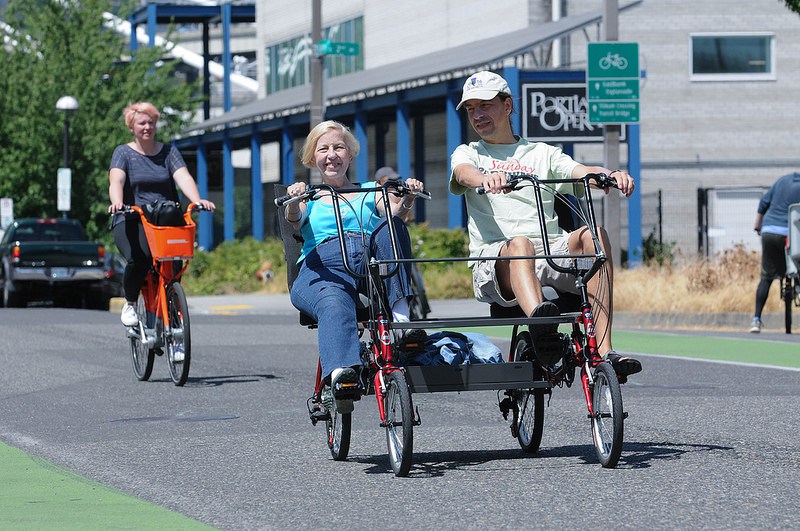
Now Portland is launching a public bike rental program for people with disabilities called Adaptive Biketown, which shares its name with the city’s Nike-sponsored bike-share system. The rental bikes will be available at affordable fares and can be checked out with a transit pass, but won’t be distributed in a network of stations like bike-share.
Jonathan Maus at Bike Portland reported from the launch event on Friday. He sees the advent of a public adaptive bike program as a breakthrough in making cycling accessible to more people:
The new Adaptive Biketown program will be operated as a rental service and will offer a mix of tandems, hand-cycles, and three-wheeled bikes. The program is open to people with disabilities, seniors, and those who qualify for a TriMet honored citizen pass. Those who want to rent one must register in advance and the cost is $5 per hour or three hours for $12. About 10 bikes will be available at Kerr Bikes located conveniently on the Eastbank Esplanade path just south of OMSI.
The program is being run as a pilot through this fall so that PBOT and its partners can evolve the offering as feedback and experience warrants. PBOT is funding the program to the tune of $30,000 (including $14,000 for 10 new bicycles). Biketown’s title sponsor Nike has also kicked in $10,000 for ongoing program costs…
Sawyer Viola had never ridden a bike before today. He told me his mom made him come out and give a try. After his first spin (a short jaunt on the Esplanade), he gave me a thumbs-up and said he will definitely do it again.
Adaptive Biketown is likely to be the catalyst of an inspiring and important positive feedback loop: More availability of adaptive bikes will allow more people to try them, which will drive more awareness and more demand, which will drive more availability, and so on on and so forth until having people with disabilities on bikes is just a normal, everyday thing.
More recommended reading today: Transportation for America warns about potential loss of funding for major transit projects in the Pacific Northwest in Trump’s scorched-earth budget proposal. And the Reno Rambler shares a recent study showing the impact of going car-free on reducing carbon emissions.

Read More:
Streetsblog has migrated to a new comment system. New commenters can register directly in the comments section of any article. Returning commenters: your previous comments and display name have been preserved, but you'll need to reclaim your account by clicking "Forgot your password?" on the sign-in form, entering your email, and following the verification link to set a new password — this is required because passwords could not be carried over during the migration. For questions, contact tips@streetsblog.org.