When Your State DOT Starts Talking About “Relieving Congestion,” Alarms Should Go Off

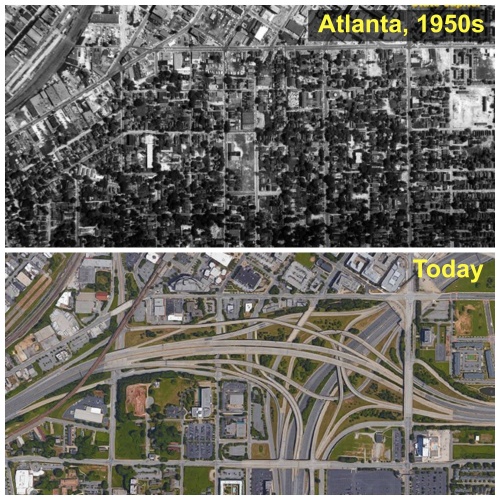
In the 1960s, when Interstate I-75/85 was built through the heart of Atlanta, it wiped out whole neighborhoods. To this day, people living in its shadow deal with all kinds of ill effects: high air pollution, traffic, reduced mobility.
Now the state of Georgia is looking to reduce congestion on the corridor, saying “no idea is off the table.” But some ideas should be discarded right off the bat — like the notion that adding space for cars is going to solve the traffic problem.
Darin Givens at ThreadATL warns that the state’s approach might compound past mistakes. Or it could try something new — something that might actually work:
Some have suggested increasing capacity through a tunnel or a double-deck expansion. But doing that while leaving all the exits open means more car trips (induced demand) that create more exhaust and bring more vehicles into the city, all of them needing parking spaces.
And leaving things as they are means we continue with the current level of exhaust which is harmful to our health. Nothing happens in a bubble. Transportation decisions at the state level affect urban livability in the city.
Could we put Bus Rapid Transit lanes on all freeways in Atlanta and put BRT stations throughout the metro? And encourage transit-oriented development around those stations? It’s just a random thought, but it’s an example of the kind of regional-scale “fix” for congestion that would actually accomplish something, rather than trying to make the road design bear the weight of solution as the built environment all around it remains car-centric and lacking in transportation options.
More recommended reading today: The Political Environment says Scott Walker’s punitive attacks on transit and cities presaged what we’re seeing from the Trump White House. Modern Cities shares photos of an Orlando road diet that boosted walking and biking, improved safety, and led to growth in local businesses and jobs.

Read More:
Streetsblog has migrated to a new comment system. New commenters can register directly in the comments section of any article. Returning commenters: your previous comments and display name have been preserved, but you'll need to reclaim your account by clicking "Forgot your password?" on the sign-in form, entering your email, and following the verification link to set a new password — this is required because passwords could not be carried over during the migration. For questions, contact tips@streetsblog.org.