House and Senate Decline Trump’s Request to Gut Transit Funding, For Now

Yesterday, Congress came out with a funding package that keeps the government operating until the end of September. Officially, it’s known as the omnibus appropriations package for fiscal year 2017. Unofficially, it’s a Republican Congress ignoring the wishes of President Donald J. Trump, and for transit projects around the country, it’s what amounts to good news these days.
Soon after the administration released a budget blueprint in March that zeroed out major federal programs for transit, walking, and bicycling, Trump’s people asked Congress to speed up its timetable. Instead of taking an axe to next year’s budget, the White House asked Congress if it would hack away at what remained of this year’s spending plan.
The signal from both houses of Congress this week is that the answer is “No.” The status quo will continue — for now — and legislative leaders are not going to be rushed into Trump’s attempt to chop nearly all discretionary spending outside the Department of Defense.
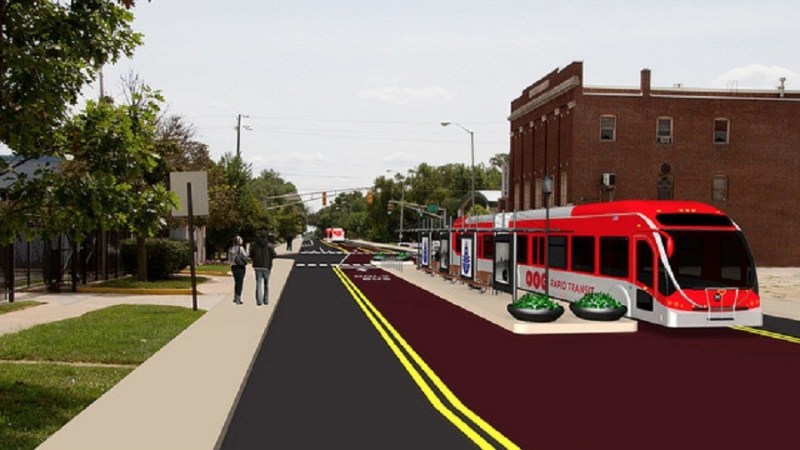
When it comes to transportation, the appropriations bill largely hews to spending levels spelled out in the 2015 FAST Act. The TIGER grant program is funded at $500 million. Another $1.7 billion is set aside for New Starts transit expansion projects, $333 million for the Core Capacity program to address congested transit corridors, and $408 million for Small Starts, which funds streetcar and Bus Rapid Transit projects.
The budget funds 31 bus and rail projects through these programs. Fourteen have existing funding agreements with the Federal Transit Administration, while 17 are expected to enter agreements this year.
Congress also tweaked some rules, removing the $100 million cap on Core Capacity and Small Starts grants, reducing the maximum TIGER grant size from $100 million to $25 million, and dropping the maximum share of grants that can go to projects in any one state from 20 percent to 10 percent, according to the Eno Center for Transportation.
The bill also includes $199 million in one-time funding for commuter railroads to upgrade their safety systems to Positive Train Control, according to Eno.
The budget allows the federal government to take back transportation funds by the end of June, in a process known as “rescission.” One fly in the ointment: “The way that this is written exempts some traditional road building funds, but does not exempt Transportation Alternatives — the largest funding program for biking and walking,” said Ken McLeod, policy director at the League of American Bicyclists.
With news that Congress is mostly willing to keep the status quo this year, advocates are looking ahead to looming fights on Capitol Hill, wary that Trump’s proposal to gut transit, walking, and bicycling funds in next year’s budget could still gain momentum in Congress.

Read More:
Streetsblog has migrated to a new comment system. New commenters can register directly in the comments section of any article. Returning commenters: your previous comments and display name have been preserved, but you'll need to reclaim your account by clicking "Forgot your password?" on the sign-in form, entering your email, and following the verification link to set a new password — this is required because passwords could not be carried over during the migration. For questions, contact tips@streetsblog.org.