Most New Yorkers Don’t Own Cars. Do Community Boards Reflect That?
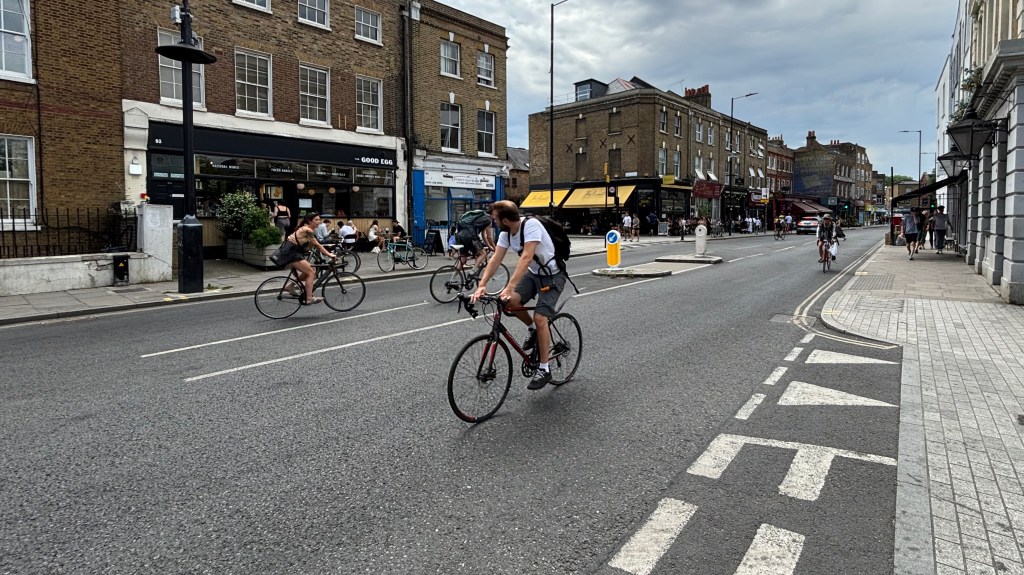
Most households in New York City, about 56 percent, don’t own cars. But if you’ve ever attended a community board meeting about redesigning a street, you might have come away thinking that car storage is the single most important function our streets serve.

That’s a big problem, since DOT often defers to community boards when deciding whether to move forward with its redesigns. Many a bus lane, bike lane, or pedestrian improvement has been watered down or abandoned at the behest of a local community board that refused to accept a reduction in parking in return for faster transit or safer streets.
Even in neighborhoods where the car ownership rate is as low as 20 or 30 percent, such as Manhattan CB 9 or Brooklyn CB 9, parking and traffic often dominate conversations about important street safety projects. If the car ownership rate among members of these community boards reflected the neighborhood at large, it’s hard to imagine that the elimination of a few parking spaces would be a sticking point so often.
Currently, there’s no way to tell with any degree of specificity how the composition of community boards compares to the neighborhoods they’re supposed to serve. Bronx Council Member Ritchie Torres wants to change that.
Torres has introduced a bill (Intro. 1046) to survey the demographics of community boards each year. Under the proposal, community boards would have to disclose members’ names, employment information, neighborhoods of residence, and length of service. They would also have to provide a count of open spots on boards and committees. Members would be encouraged to volunteer other demographic information, such as race, income, language spoken at home, and — of special note for the issues Streetsblog covers — if they own a car.
Torres told Gotham Gazette last week that community boards should welcome putting diversity and representation on the agenda. “My message to community boards is this: There’s nothing to fear from diversity,” he said. “The goal isn’t perfect proportionality but broad-based representation.”
Making the demographic questions optional would compromise the accuracy of the survey. A mandatory survey could still preserve the anonymity of individual members while yielding a truer picture of the board as a whole.
This is the second session in a row where some form of community board reform has been proposed in the City Council. Last year, a bill from Council Member Danny Dromm that would have put term limits on community board positions did not make it out of committee.
The question of community board representation re-emerged last month, when, after community boards across the city voted against Mayor de Blasio’s affordable housing proposals. In one interview, de Blasio said community boards lack a “perfect vantage point on their communities.” A few days later, while discussing the progress of Vision Zero, de Blasio told the Wall Street Journal, “I respect community boards. But community boards don’t get to decide.”
Torres opposed community board term limits, but he clearly thinks something has to change. “I think the real issue is not whether there should be term limits, but why do we allow community boards to be stumbling blocks to safe streets?” Torres said at a hearing on the term limits bill last May. “We don’t require community board approval when we’re making decisions about fire safety or policing policy.”

Read More:
Streetsblog has migrated to a new comment system. New commenters can register directly in the comments section of any article. Returning commenters: your previous comments and display name have been preserved, but you'll need to reclaim your account by clicking "Forgot your password?" on the sign-in form, entering your email, and following the verification link to set a new password — this is required because passwords could not be carried over during the migration. For questions, contact tips@streetsblog.org.