How Parking Permits Can Improve the Politics of Walkable Development

Residential parking permits are often referred to as “hunting licenses” because while they grant permit holders the privilege of parking on the street, there’s usually no limit to how many permits can be issued. If there are more permits in a neighborhood than available on-street parking spaces, there’s still going to be a parking crunch and permit holders will still circle streets hunting for a spot.
In Portland, however, the residential parking permit program is shaping up differently, and those differences could make parking permits a more effective tool to counteract NIMBY resistance to walkable development.
The key to Portland’s proposal is a limit on the number of permits in a given neighborhood. Many of the details have yet to be hashed out, but here’s where things stand now, reports Michael Andersen at BikePortland:
The proposal, which the city described Friday as “preliminary,” combines two main ideas:
1) Neighborhoods would get the option to vote to start charging themselves a yet-to-be-determined amount for overnight street parking, and
2) people who live in most of the buildings along commercial corridors wouldn’t get to park in permit-parking areas overnight unless people who live in nearby residences don’t want the space.
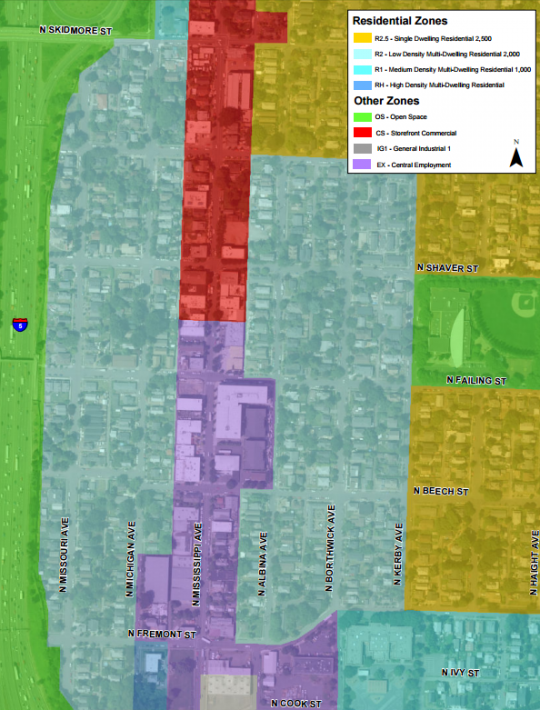
The second aspect, which is arguably the defining concept of the proposal, would be accomplished through the city’s zoning code. In any new parking district, residents of buildings in “residential” zones would get the first chance to purchase parking permits. But mixed-use, industrial and employment zones — zones that line almost every crowded commercial corridor in Portland where street parking is scarce — wouldn’t be included in the parking district. This would mean residents there would only be able to purchase parking permits if the “supply” of local parking spaces on nearby residential blocks (as determined by the city) exceeds the “demand” from residential zones.
It seems like the proposed lottery system is a clever way to get long-time residents on board with the idea of paid parking permits. And once those residents feel secure about on-street parking, writes Andersen, the way should be clear for “central Portland neighborhoods to keep adding new housing without also setting aside more and more space for free or cheap car parking.”
Also on the Streetsblog Network today: While the Kansas City Star calls for more bike infrastructure, the St. Louis Post-Dispatch editorializes about streets like it’s still 1960, notes NextSTL. And Fairfax Advocates for Better Bicycling share news about Munich’s plans for “bike highways.”

Read More:
Streetsblog has migrated to a new comment system. New commenters can register directly in the comments section of any article. Returning commenters: your previous comments and display name have been preserved, but you'll need to reclaim your account by clicking "Forgot your password?" on the sign-in form, entering your email, and following the verification link to set a new password — this is required because passwords could not be carried over during the migration. For questions, contact tips@streetsblog.org.