The Enormous Promise of a Carbon Tax-and-Dividend

Absent any foreseeable action from Washington, some states and localities are stepping up with policies that put a price on carbon. And that has a number of exciting implications for cities and sustainable transportation. California is using revenue from its cap-and-trade program, for instance, to subsidize housing near transit.
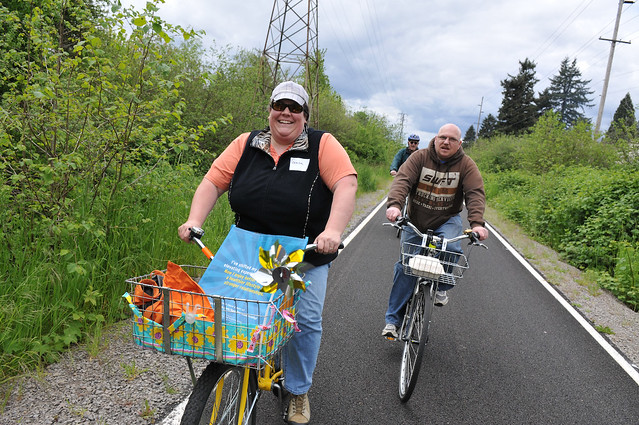
In Oregon, advocates are now pushing a carbon tax that would rebate all the money to households. Even without spending the revenue on specific goals, carbon pricing would be a huge boost for walking, biking, and transit, Michael Andersen at Bike Portland explains:
The group, called Oregon Climate, is pushing a concept called “tax and dividend”: instead of sending the proceeds into government coffers, all of the revenue collected from wholesale fossil-fuel transactions — gasoline to a distributor, coal to a power plant, and so on — would be pooled and divided evenly among Oregonians in the form of checks worth an estimated $500 to $1500 per year.
“This is the most climate-friendly progressive legislature that we’ve had, and maybe the most climate-friendly in the country right now,” Oregon Climate Executive Director Camila Thorndike said in an interview Tuesday. “States across the country have their eyes on Oregon, and we cannot let this opportunity pass by.”
Prices would rise in Oregon for concrete, gasoline, electricity and other fossil-fuel-intensive products. Dan Golden, Oregon Climate’s volunteer policy director, said Tuesday that their proposed tax of $30 per ton of carbon (increasing by $10 each year) would translate into about 27 cents per gallon of gasoline, increasing another 9 cents each year.
However, those additional costs would be offset by the checks Oregonians would receive. Oregonians with smaller-than-average carbon footprints would come out ahead, while those with larger-than-average emissions would lose — giving everyone continued incentives to cut their energy consumption.
“I’m not a transportation expert but I think if I were, I’d be really stoked about carbon pricing,” Thorndike said. “Rather than bundles of piecemeal decision-making, you’d have an economywide transition to walkable, bikeable, livable cities. … We’d have so many incentives backed financially to really build our lives and our economy around alternatives to cheap gas.”
A carbon tax would also have to overturn the Oregon constitution’s ban on spending gas tax money on anything but roads, meaning the policy would have to garner 60 percent of the popular vote. Oregon Climate is planning to take their measure to the 2016 ballot, Andersen reports.
If the campaign falls short next year, Oregon Climate says it plans to continue fighting in future elections.
Elsewhere on the Network today: Mobilizing the Region says it’s time for Connecticut to have a real discussion about tolling roads. 1000 Friends of Wisconsin reports that the state appears to be using erroneous traffic numbers to justify enormously expensive road expansions. And Human Transit explains how to find a hotel that’s transit friendly.

Read More:
Streetsblog has migrated to a new comment system. New commenters can register directly in the comments section of any article. Returning commenters: your previous comments and display name have been preserved, but you'll need to reclaim your account by clicking "Forgot your password?" on the sign-in form, entering your email, and following the verification link to set a new password — this is required because passwords could not be carried over during the migration. For questions, contact tips@streetsblog.org.