On Bike to Work Day, U.S. DOT and Cycling Advocates Eye New Moves

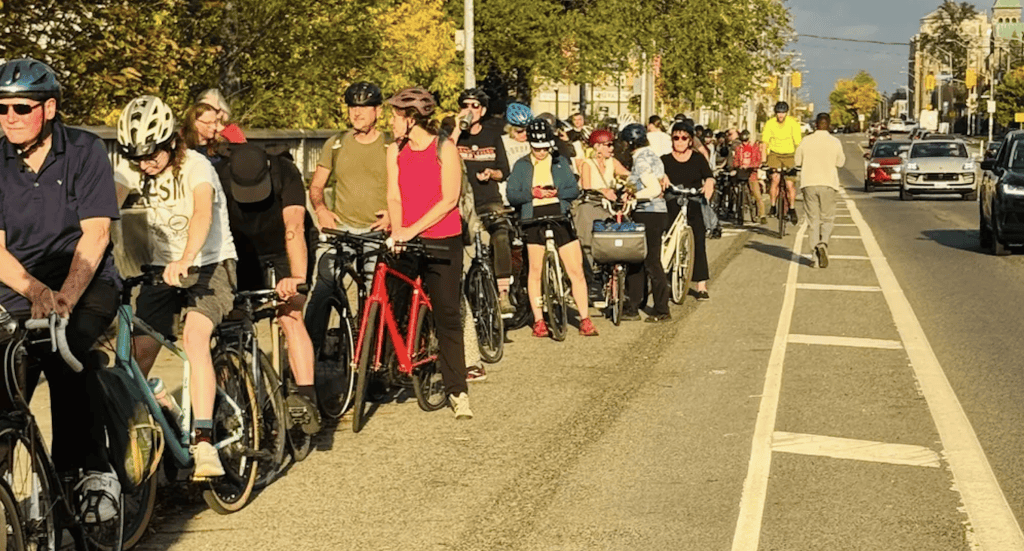
In addition to the announcement of a new local bike-share system, today’s D.C. Bike to Work Day found both the U.S. DOT and the nation’s leading bike advocacy groups positioning themselves to claim new victories for cyclists in the coming days.
 FTA chief Peter Rogoff addressing cyclists at this morning’s Bike to Work Day events. (Photo: U.S. DOT)
The U.S. DOT sent several senior officials to this morning’s capital-area bike events, using the day to finalize a new expansion of eligibility for federal funding of cycling and pedestrian infrastructure connected to transit.
Federal Transit Administration (FTA) chief Peter Rogoff, who suited up for a morning ride into downtown D.C., told fellow cyclists that “the Obama
Administration will keep supporting cycle-friendly policies because
they help connect communities in ways that are beneficial to everyone
at very little cost,” according to a statement released by the U.S. DOT.
First proposed in November, the FTA’s new policy for boosting federal bike-ped spending sets radius surrounding a transit station in which bike infrastructure projects would be eligible for aid at three miles. Pedestrian projects within a half-mile of transit stations would be eligible for federal assistance. The previous regulatory radius was 1,500 feet, in most cases.
Meanwhile, nine national cycling and pedestrian advocacy groups released a letter in advance of Bike to Work Day seeking extra clean transport funding from the new Senate climate bill. The groups studiously avoided the critical tone that the transit industry and state DOTs used on Wednesday to seek a greater share of the revenue from the climate measure; nonetheless, the bike-ped backers urged sponsors Sens. John Kerry (D-MA) and Joseph Lieberman (I-CT) to lift their legislation’s limit on transport spending.
The letter’s signatories — including America Bikes and the League of American Bicyclists — began by lauding Kerry and Lieberman for requiring that any revenue from their bill’s proposed new fuel fees be spent on emissions-cutting transport projects.
Noting that infrastructure investments from the bill’s new fuel fees would operate under a ceiling of slightly more than $6 billion per year, the groups added:
While we appreciate that this level of funding is greater
than prior climate bills, it still limits the ability of states,
counties, cities and transit systems to invest in sustainable
transportation. The market needs a stronger signal regarding the
importance of shifting our transportation modes to low- and no-carbon alternatives.
The bike-ped advocates proposed an increase in climate revenue set aside for transportation that would be commensurate with the estimated U.S. emissions generated by the movement of people and goods — about 30 percent, according to the Environmental Protection Agency (EPA).

Streetsblog has migrated to a new comment system. New commenters can register directly in the comments section of any article. Returning commenters: your previous comments and display name have been preserved, but you'll need to reclaim your account by clicking "Forgot your password?" on the sign-in form, entering your email, and following the verification link to set a new password — this is required because passwords could not be carried over during the migration. For questions, contact tips@streetsblog.org.