Is It Time to Swap the 2nd Ave Subway for Bus Rapid Transit?

 In today’s New York Times, Jim Dwyer poses a question that some city transit advocates have to this point discussed only in hushed tones: “Is it really such a great idea to be digging subway tunnels in Manhattan?”
Given the logistical difficulties and escalated costs of boring underground, Dwyer points to an alternative (link added).
Only now are city and authority officials beginning serious exploration of using the surface of the city, rather than its underside, for mass transit.
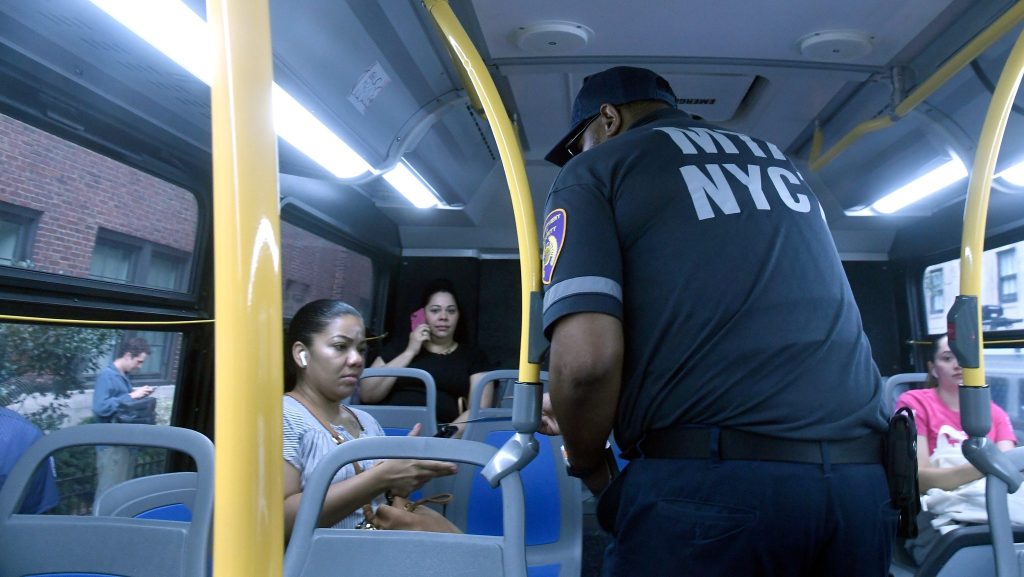
One idea is to dedicate portions of big streets and avenues to protected bus lanes, physically separated from other traffic. Riders would pay their fares before they boarded. An experiment to do that in the Bronx has made a big cut in travel time, said Joan Byron, director of the Sustainability and Environmental Justice Initiative at the Pratt Center for Community Development.
Such systems are called bus rapid transit, and the cost to build them is $1 million to $2 million per mile, Ms. Byron says, compared with $1 billion per mile for the Second Avenue subway.
“If you just took the cost overruns for one year on any of the megarail projects, that would pay for a handsome bus rapid transit network,” she said.
As Streetsblog readers know, the Pratt Center, headed by current Brooklyn City Council candidate Brad Lander, has advocated a BRT build-out for some time. After the jump, an excerpt from the Center’s testimony [PDF] before the Ravitch Commission.
We should consider putting the Second Avenue Subway on hold to implement and evaluate the success of the First/Second Avenue BRT route, which will be running the length of Manhattan by the end of next year, and could be simply connected to a Brooklyn route of the Williamsburg Bridge a year or two later. Let’s make this work — with a genuinely separated lane, off-board fare payment, bulbs and stations that make for rapid boarding, signal-light timing, and inter-borough connections — and see how much of the need we can satisfy at a fraction of the cost.
While it is, as the Pratt folks acknowledge, “anathema” to suggest abandoning projects like the Second Avenue subway, from a livable streets perspective a citywide BRT system as they envision it would be a true game-changer. BRT (or light rail for that matter) re-allocates street space away from private motor vehicles in favor of public transit and, with proper design, pedestrians and cyclists. While there’s no denying its merits as a people-mover, a Second Avenue subway essentially maintains the street-level status quo, and at a much higher cost.
With the city already on board with Select Bus
Service, and with the MTA cutting capital projects, struggling to maintain existing infrastructure, and pondering cuts in service, is it time to consider shifting capital resources toward a true BRT network?
Image: Las Vegas MAX system via Tri-State Transportation Campaign

Read More:
Streetsblog has migrated to a new comment system. New commenters can register directly in the comments section of any article. Returning commenters: your previous comments and display name have been preserved, but you'll need to reclaim your account by clicking "Forgot your password?" on the sign-in form, entering your email, and following the verification link to set a new password — this is required because passwords could not be carried over during the migration. For questions, contact tips@streetsblog.org.