DOT Details Prince Street “Open Sundays” Project


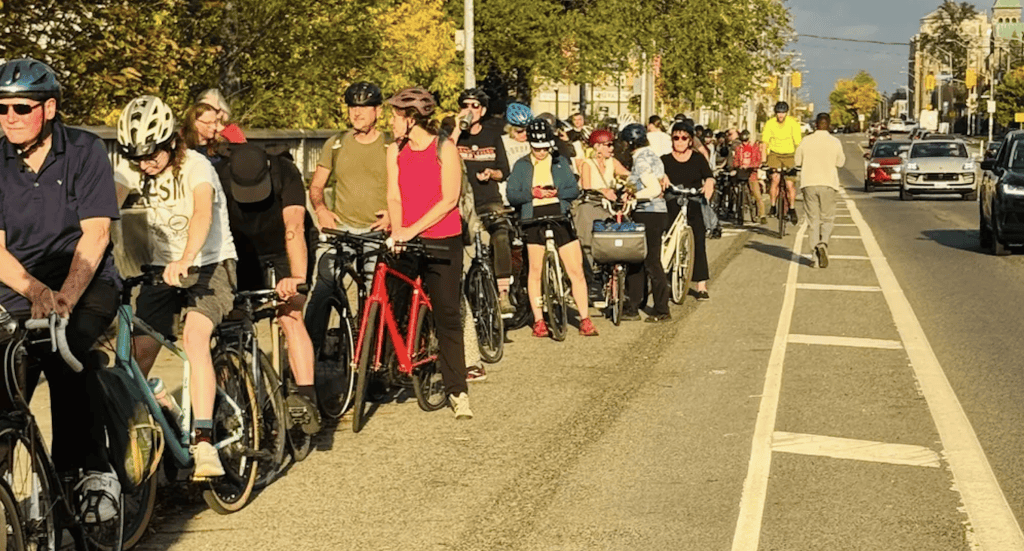
On weekends, 200 vehicles and 4,500 pedestrians per hour make their way down Prince Street, yet the vast majority of the street’s public space is given over to motor vehicle traffic and parking.
Community Board 2’s Traffic & Transportation Committee heard specifics last night on a DOT pilot project that would open a segment of Prince Street to pedestrians 14 days a year. And as expected, the committee and DOT heard from residents who want the pedestrian-heavy thoroughfare to continue to accommodate cars 24/7/365.
The city proposes to close Prince to cars from Lafayette to W. Broadway on Sundays from 10 a.m. to 6 p.m. The project would last from Memorial Day weekend to Labor Day weekend.
According to surveys cited by DOT:
- Eighty-five percent of people travel to Prince Street by subway, on foot, by bike or on a bus.
- Eighty percent of pedestrians interviewed on a Saturday “experience the street as being crowded.”
- Expanding pedestrian space would attract people to come to Prince Street more often, where they would spend “about five times as much money” in neighborhood shops and restaurants.
- On a typical weekend, 200 vehicles travel Prince Street in an hour, compared to 4,500 pedestrians.
While some members of the public spoke in favor, they were easily outnumbered by opponents. “There was a lot of screaming about an out of control street vendor problem that the City seems unwilling or unable to address,” one Community Board member said.
For an idea of the tenor of the debate, one supporter of the plan who pointed out that pedestrian streets work in London and other cities was rebutted with cries of “This is New York City!”

…And this is Paris. Does this look like a horrible street to live on?
A key complaint of opponents is that the city doesn’t do enough to enforce rules against sidewalk vending, prompting fears that Prince Street “Open Sundays” would become, in essence, noisy street fairs crowded with kiosks. But one attendee picked up on another strain of contention:
It was clear from last night’s meeting that many of the people against the car-free Prince proposal want fewer pedestrians in the neighborhood, not more. In a sense, they concede that a car-free Prince would be more appealing to outsiders. It’s just not what they want.
Still, the committee ultimately adopted a resolution that, according to committee member Ian Dutton, acknowledges the merits of DOT’s plan but says it is unacceptable because it was
proposed and developed without enough community input. While we have yet to see the actual wording, Dutton says the resolution proposes “forming a
neighborhood stakeholders group to come up with a more comprehensive plan that the community can accept.”
The resolution leaves open the possibility that the project is still alive, perhaps with community activists like Sean Sweeney of the SoHo Alliance — currently, a vocal opponent — working with the city to make it more palatable to all.
Graphics: NYC DOT

Read More:
Streetsblog has migrated to a new comment system. New commenters can register directly in the comments section of any article. Returning commenters: your previous comments and display name have been preserved, but you'll need to reclaim your account by clicking "Forgot your password?" on the sign-in form, entering your email, and following the verification link to set a new password — this is required because passwords could not be carried over during the migration. For questions, contact tips@streetsblog.org.