Automatic For The People? Transit Group Presses Case For Automated Interborough Express
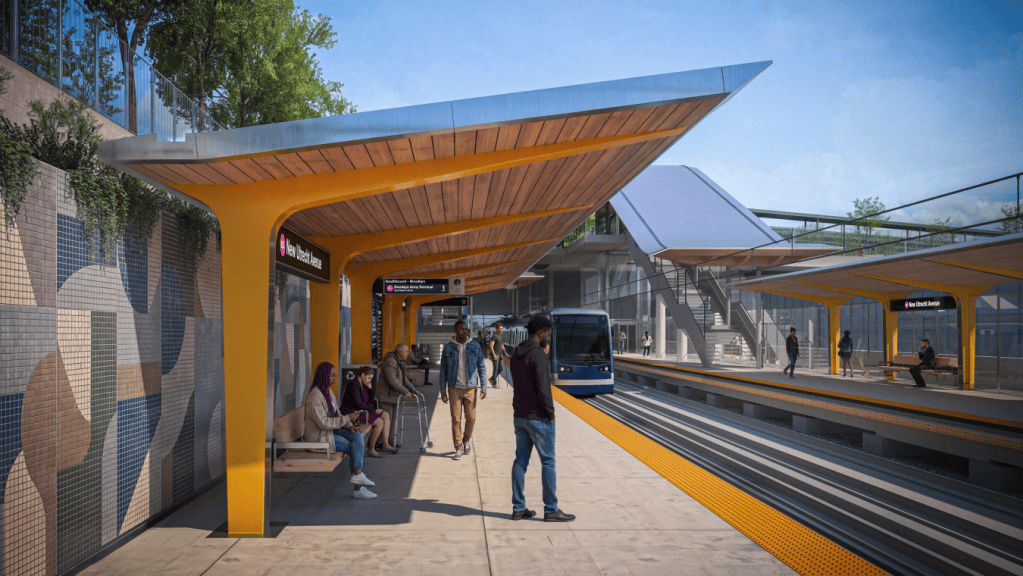
A group of transit wonks wants the MTA to say dōmo arigatō, Mr. Roboto and institute automated train operation for the upcoming Interborough Express — a revolutionary change that could allow the MTA to carry 50 percent more riders than the agency currently projects.
Running self-driving trains on the orbital light-rail route between Brooklyn and Queens would lower the construction and operating costs for the project, create safer station environments and — most crucially — allow the MTA to far much more service and in turn attract much higher ridership, according to a report from the Effective Transit Alliance.
“There are two things that really drive ridership in urban lines,” said ETA Executive Director Blair Lorenzo. “One is speed, the other one is frequency: how many trains come in a short amount of time, how long do you have to wait for a train? Automation is a great way to solve that because you can run trains incredibly frequently without needing to break the bank on operating costs because the marginal cost of running an extra train is really small.”
The MTA should always strive to run trains incredibly frequently, but Lorenzo said it’s particularly crucial for the Interborough Express because the agency wants the new train to stitch together otherwise disparate elements of its transit system and provide easy transfers that don’t yet exist. MTA leaders have argued that the IBX’s connections to existing subway stops will dramatically ease commutes through southern Brooklyn and central Queens, and provide previously isolated neighborhoods with shorter commutes to Manhattan.
“Automated systems around the world run automated trains that often come every three minutes during the day, which means you never have to wait for a train,” Lorenzo said. “It’s especially important for the IBX because the IBX is a circumferential line. It goes around the city, connecting other subway lines, which means for a lot of riders, it’s going to involve one or maybe even two transfers for it to be maximally useful. So minimizing waiting time really helps.”
Automating the line would help ensure that the line can absorb ridership above the MTA’s projections.
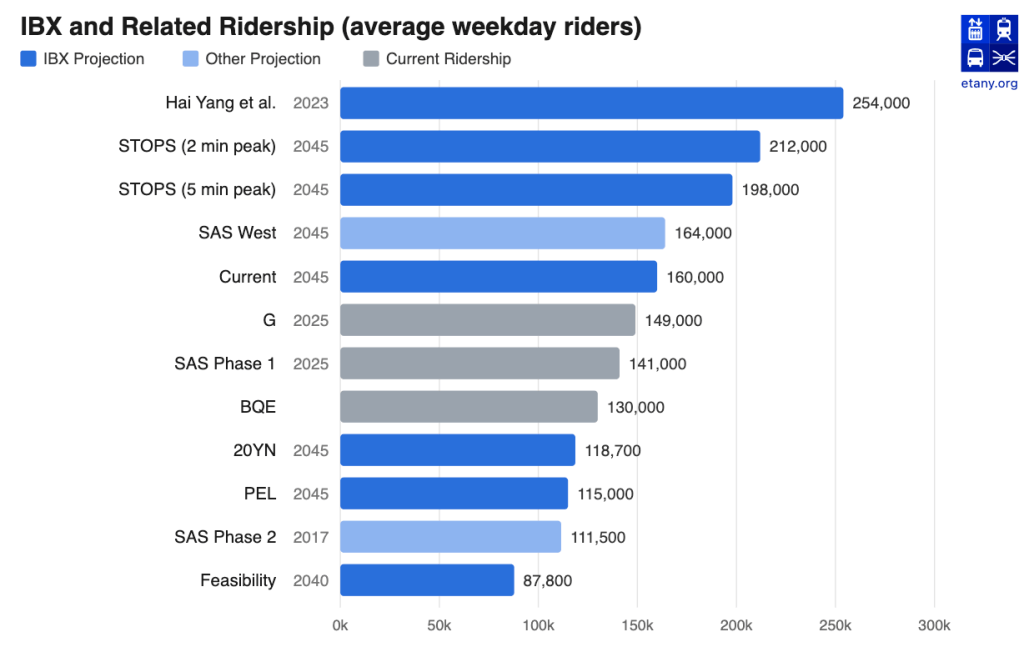
Those projections peg daily ridership on the IBX at 160,000 riders per day by 2045. The ETA, meanwhile, used a different simulation program that showed ridership hitting just under 200,000 riders per day if the train runs every five minutes at peak hours or more than 200,000 riders per day if the train has two-minute headways at peak hours. A separate, independent ridership forecast predicted the system will carry an astounding 254,000 riders per day before even considering possible land-use changes that boost the population along the line. Fully automated trains, the group argued, would help the MTA more easily scale up service in response to more riders.
“It is imperative that the IBX be future-proofed for higher ridership in the future,” the group wrote in its report.” [Automated light metro] is the most cost-effective way to accomplish this: it allows capacity to scale to meet future demand with comparatively little additional capital investment or ongoing operational cost.”
Bringing fully automated trains into the MTA’s system would mark a new era for the agency, but it wouldn’t be entirely new to New York. The Port Authority’s AirTrain at John F. Kennedy International Airport employs fully automatic, unstaffed trains, though most New Yorkers who have ridden the people-mover probably don’t regard it as a paragon of efficient transit. Lorenzo pointed out that the Port Authority’s failure to take advantage of the AirTrain’s design makes it an outlier compared to systems the MTA can actually learn from, like Vancouver’s SkyTrain or Montreal’s REM.
“The new hotness is the REM in Montreal,” she said. “Whether you order that exact technology from that exact vendor is not the issue, but that is the shape of what it looks like. From the outside, they’re comparatively small vehicles, but they have a lot of space on the inside.They’re relatively short trains, but they make up for the fact that they’re short by coming very frequently. They’re completely automated. They all have platform screen doors for safety and reliability. It’s something New Yorkers may have experienced on a trip, and it’s a really it’s a really good example of what can be done.”
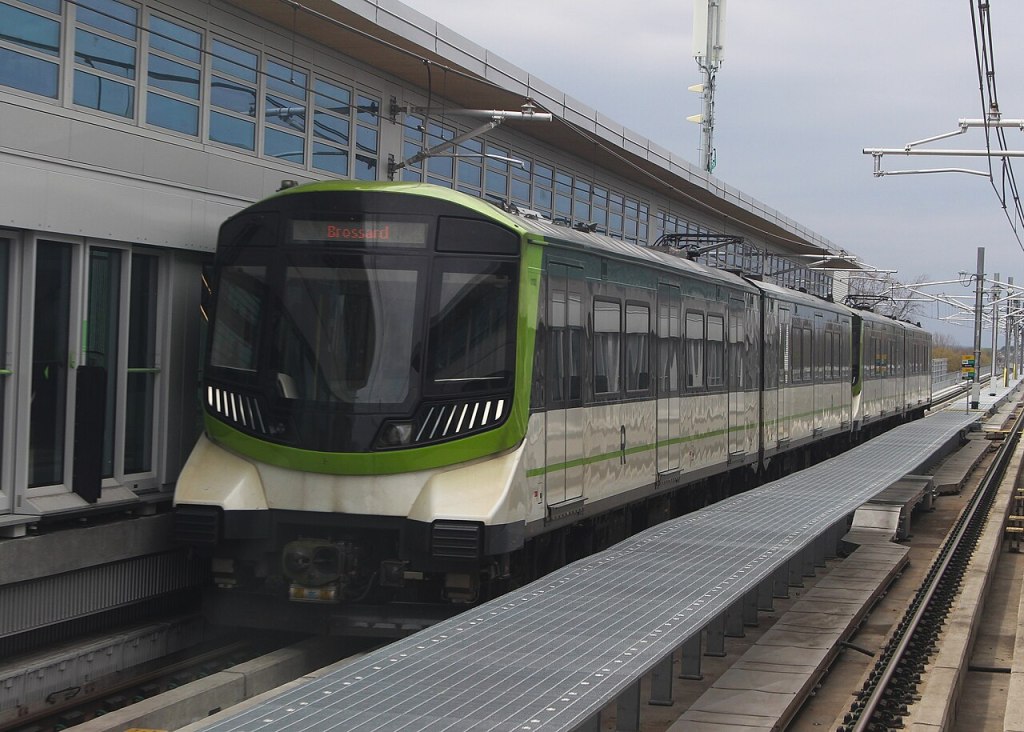
The REM currently carries 130,000 passengers per day across 23 stations using a combination of two-car or four-car train sets depending on the time of day, and the SkyTrain runs off-peak headways of six to eight minutes and carries 450,000 riders per day with automatic trains. Those are just a couple examples of a growing comfort with automatic trains in international peer cities to New York, and the ETA report pointed out that the number of new, automated metro lines is growing year after year.
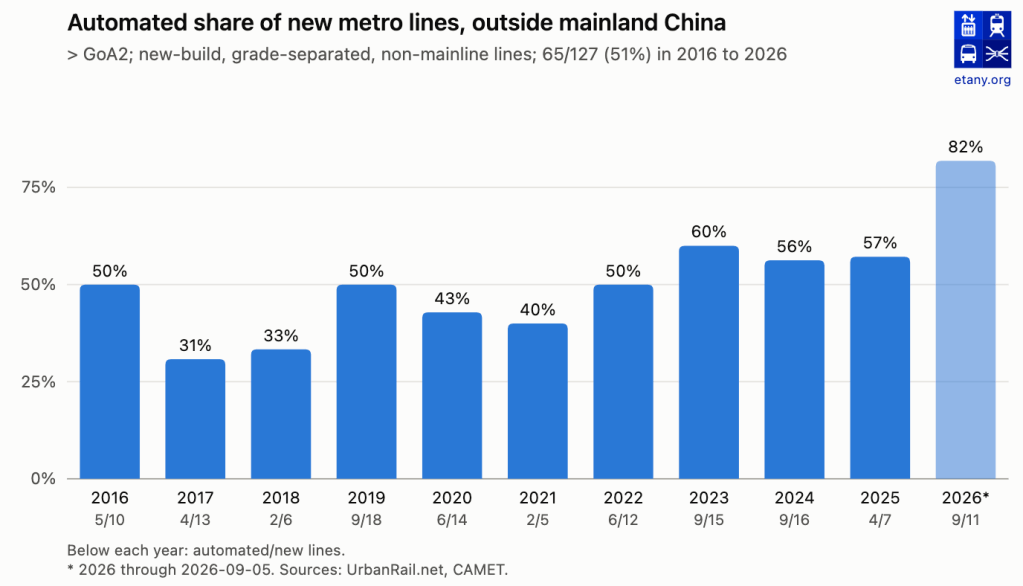
At a recent high-profile transit trade show, the group wrote, “major rolling stock vendors who are interested in bidding on the IBX told ETA that they had difficulty understanding why the MTA would ever consider building the IBX without automation. The global standard for a new-build metro line today, whether light or heavy, is automation.”
“I’d say automated trains are the future, but I’d actually argue automated trains are very much the present,” said Lorenzo.
The report also argued that automated and more frequent service would save the MTA significant capital funds because the agency can buy smaller trains and build smaller stations.
To assist with automated operations, ETA wants the MTA to finally embrace platform screen doors to ensure rider safety and even train reliability. For just $41 million, in a project that will cost $5.5 billion, the ETA report claims platform screen doors cheaply prevent passengers from accessing the tracks and ensure the train reaches 99 percent on-time performance.
Furthermore, the MTA is building the Interborough Express as a totally new type of train and station in its system, which allows it to introduce technology it’s never used. It’s a fundamentally different conversation than the one around retrofitting stations built several decades ago.
“There’s such a small cost, and it’s completely new technology [in the system],” Lorenzo explained. “There’s no worries about interoperability or different trains. You’d be silly not to do platform screen doors. They make it so much safer. You don’t have to worry about any of the things we’ve seen of people being pulled, or especially people being pushed, because you simply can’t get access to [the tracks]. People can’t throw trash on the tracks, it really improves reliability alongside safety.”
Beyond the inevitable headaches of doing something new, the only real remaining obstacle to fully automating the IBX is labor politics. At the moment, the agency is waging a low-level war with the Transport Workers Union Local 100 over the number of employees needed on an existing subway train. The MTA already runs a handful of minor lines with only one employee per train, and hopes to make that number of the ceiling. TWU wants two — thereby increasing the labor cost of running every train.
Fans of one-person train operation have noted that New York City is an outlier compared to international cities when it comes to still using drivers and conductors. They have convincingly argued that eliminating the conductor position would save the MTA almost half a billion dollars every year.
The TWU has argued, in turn, that New York’s subway system is unique among peer cities, and that conductors see problems on train platforms and ensure that all riders have boarded the train. Last year state lawmakers suddenly and somewhat inexplicably passed a bill that would prohibit the MTA from instituting one-person train operation, which Gov. Kathy Hochul vetoed in December.
The bill passed again during this year’s legislative session, but it has not been sent up to Hochul to sign yet.
A spokesperson for the MTA said that the agency is reviewing the report. A spokesperson for the TWU did not respond by press time.

Streetsblog has migrated to a new comment system. New commenters can register directly in the comments section of any article. Returning commenters: your previous comments and display name have been preserved, but you'll need to reclaim your account by clicking "Forgot your password?" on the sign-in form, entering your email, and following the verification link to set a new password — this is required because passwords could not be carried over during the migration. For questions, contact tips@streetsblog.org.