Wheels Up: City Bus Speeds Hit Four-Year High Under Mayor Mamdani
The wheels on the bus are going round and round faster than ever.
Citywide bus speeds hit 8.5 miles per hour in August, which is the quickest buses have moved through the city in four years, amid Mayor Mamdani and the MTA’s sweeping campaign to improve bus service.
During a meeting of the MTA’s New York City Transit Committee on Monday morning, MTA Executive Vice President of Buses Frank Farrell revealed the 8.5 mph figure — the highest monthly average bus speed since August 2022 — and a slew of other favorable metrics.
Service delivered and customer journey performance time, which measure the percentage of buses that leave a depot on time and the percentage of bus riders that make it to their stop within five minutes of their scheduled arrival time, were higher in August than in June and July.
“The system is performing better in ways that matter for our customers,” said Farrell. “Service is more reliable, trips are more predictable and buses are moving faster.”
August traditionally brings lighter traffic to city streets, as rich New Yorkers take a final chance to flee the city. Farrell admitted that lighter-than-usual traffic leads to higher bus speeds every August, but also insisted on several reasons for measure optimism, including the recent Queens bus network redesign and the continued expansion of the MTA’s on-board camera enforcement program to more buses.
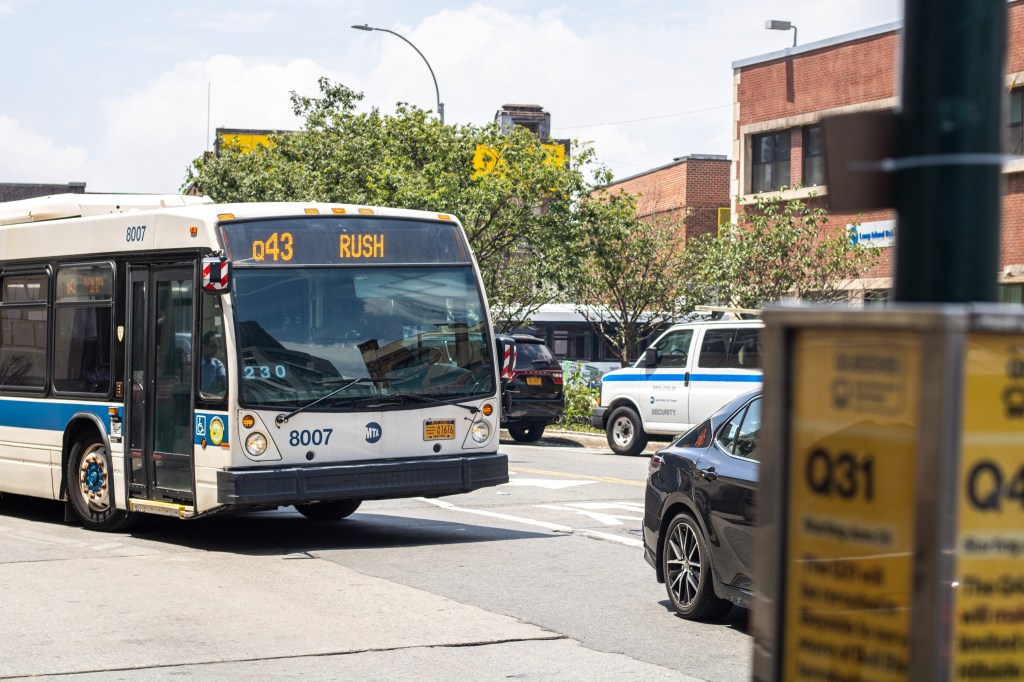
The Queens bus redesign went into full effect in 2025, after years of planning and community outreach. That redesign modernized routes that were still based on old trolley lines from the early 20th century, spaced out bus stops to better align with international standards and introduced new types of specialized routes — known as rush routes — that combine the characteristics of local and limited routes. The result? Faster rides in the World’s Borough.
This August, local and limited buses in Queens reached an average speed of 9 mph, a higher average speed than any non-pandemic August dating back to 2019. Rush routes like the Q28, which hummed along at 10.4 mph, and the Q111, which moved at 9.4 mph, contributed to the citywide speed increase.
“With the redesign introducing better routes, and better travel patterns, and the spacing of bus stops, it all contributed to faster buses in Queens,” said Farrell.
The meeting brought other updates, too. One-third of the MTA bus fleet, totaling more than 2,000 buses, is now equipped with ACE, the camera-enforcement system that allows buses to issue tickets for drivers who block buses and bus stops whether inside or outside of bus lanes.
The agency has credited the camera enforcement system for speeding up some stretches of bus routes by a remarkable 30 percent. The agency also found that the cameras effectively removed cars from stops as well, with a 40 percent reduction in tickets handed out to drivers blocking bus stops between 2024 and 2026.
“When ACE is being properly utilized it keeps bus lanes free, it gets cars out of the way of buses on routes and at bus stops, and allows buses to move more freely. This is why we’ve been pushing to roll out 25 ACE routes this year and 25 more next year as well,” said Farrell.
The highest bus speeds in four years of Augusts augur well for the mayor and the MTA’s larger plans to speed buses up citywide.
Indeed, Mamdani has made improving bus service a central plank of his governing platform, starting with his campaign promise to make buses both fast and free.
The mayor kicked off his administration’s efforts with a bang, holding a series of press conferences earlier this year to announce he was reviving or finishing bus lane projects that were abandoned by Mayor Eric Adams — including a double bus lane on Madison Avenue and an offset bus lane on Fordham Road. The mayor also opened one stalled Adams-era busway on Tremont Avenue, and announced earlier this year that the 34th Street busway will be installed in 2026.
The big partnership between the Mamdani administration and the MTA is a commitment called “Next Stop: Better Buses, Faster Service.” The city and state regard their plan as an all-encompassing effort to improve bus speeds by 20 percent on 50 priority corridors with the slowest buses. Building bus lanes is a key piece of the plan, but the blueprint also includes borough-based bus redesigns, an MTA commitment to institute all-door boarding on buses and management changes to ensure buses are dispatched effectively.
The plan also identified five long corridors in Brooklyn, Queens and the Bronx on which DOT and the MTA will work together to institute bus rapid transit service, starting with Flatbush Avenue, which is scheduled to feature corridor-long BRT by 2030.
DOT and the MTA have not always managed to pull in the same direction when trying to improve bus speeds, so a spokesperson for the city side of the partnership also took the moment to celebrate the future potential for city and state to work together to make buses move.
“New York City’s buses are lifeline for more than a million daily riders who depend on them for affordable access to jobs, healthcare, school and so much more,” said DOT spokesperson Mona Bruno. “Making service fast and reliable is a central priority for this administration so that New Yorkers can spend less time commuting and more time where they need to be. We look forward continuing our work with the MTA to deliver world class bus service this city deserves.”
Rider advocates credited the cumulative years of adding cameras to buses and red paint to the streets for helping the agency reach a post-pandemic high in bus speeds.
“The mayor said fast and the buses listened,” said Riders Alliance Director of Policy and Communications Danny Pearlstein. “But seriously, years of rider organizing are saving people valuable time. Bus lanes are rolling out like red carpets across the city and camera enforcement is playing a critical role. More please!”

Read More:
Streetsblog has migrated to a new comment system. New commenters can register directly in the comments section of any article. Returning commenters: your previous comments and display name have been preserved, but you'll need to reclaim your account by clicking "Forgot your password?" on the sign-in form, entering your email, and following the verification link to set a new password — this is required because passwords could not be carried over during the migration. For questions, contact tips@streetsblog.org.