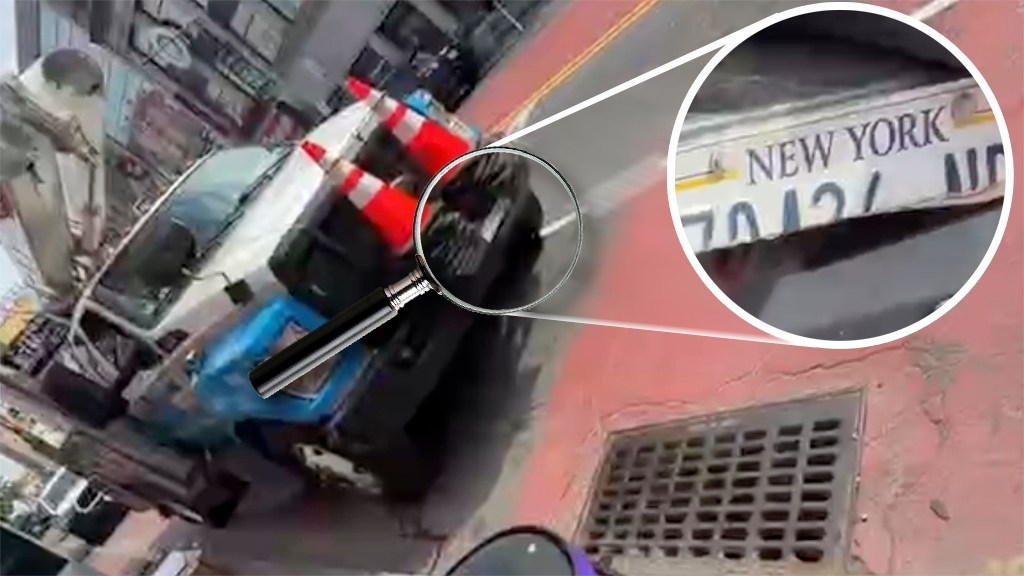
Go ACE! Bus Stops Are Clearer Than Ever Thanks To MTA’s Bus-Mounted Camera Enforcement
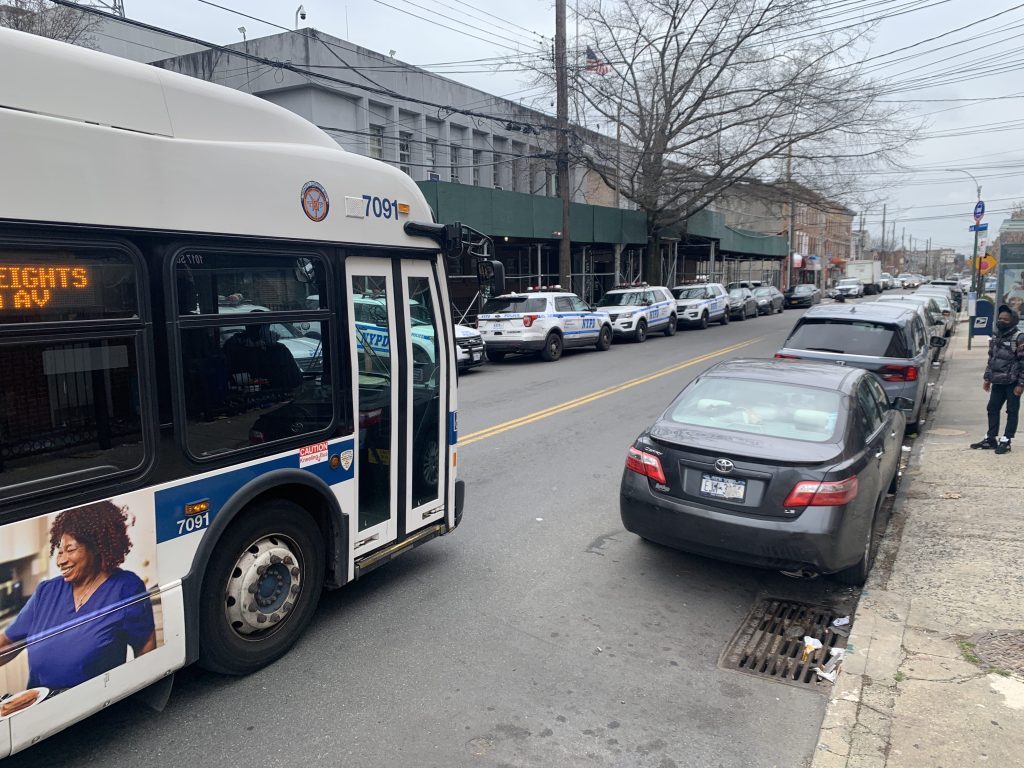
Car and truck drivers are clearing out of bus stops across the city thanks to the MTA’s bus-mounted automated enforcement cameras, new data shows.
The number of drivers caught blocking bus stops along the 50 bus routes with Automated Camera Enforcement, which insiders call “ACE,” has dropped 40 percent after the MTA turned on the cameras, with another four routes coming online last Friday.
“New Yorkers need safe, reliable, and fast bus service and ACE continues to be a powerful tool to make that happen,” MTA New York City Transit President Demetrius Crichlow said in a statement provided to Streetsblog. “By enforcing traffic rules like double parking, clearing bus stop and bus lanes, ACE is ensuring New Yorkers are getting where they need to go.”
The overall 40 percent reduction in blocked bus stops reflects an aggregate number the MTA collected for all 50 routes that have used ACE since the program began in June 2024. Put together, they show massive changes in driver behavior between the number of tickets issued on a given route at the state of camera enforcement compared to the latest available data.
For instance, when the ACE program began on the Bx36 in 2024, the cameras issued 4,905 tickets for blocking bus stops that September. By November of the following, they issued just 754 blocked bus stop tickets on the route — a drop of 84.6 percent.
Even some routes that just started using ACE last year have seen immediate impacts: The M42 began ticketing drivers in late July of last year and spit out 999 tickets for blocking bus stops in September, but just 349 tickets for the offense just two months later in November.
ACE has been effective in speeding up bus trips as well, with buses moving 5 percent faster on average across the system, and as much as 30 percent faster on some routes.
But clearing bus stops of cars doesn’t just help speed service. Eliminating illegal parking makes traffic situations in front of bus stops much more predictable for drivers. Unobstructed bus stops also make it easier for passengers with mobility impairments to get on and off the bus, as it allows them to board directly onto the bus instead of having to step off the curb and then up onto the bus.
“Old heads remember that expanded bus camera authorization was part of the 2023 #FixTheMTA legislation spearheaded in Albany by then-Assembly Member Zohran Mamdani,” said Riders Alliance spokesman Danny Pearlstein. “It was all too clear then that blocked bus stops stall already slow service and can make it impossible for people with disabilities to get on the bus. Three years on, camera enforcement is getting great results and can’t roll out too quickly across the city.”
ACE system was initially known as Automatic Bus Lane Enforcement (ABLE), as the cameras only used to give tickets to drivers who parked or drove in bus lanes.
In 2023, Gov. Hochul and state legislators agreed on a budget that expanded the system to allow the bus-mounted cameras to sweep up traffic scofflaws across an entire bus route, allowing buses to also ticket drivers double parked or parked in bus stops.
The program began with 14 bus routes in June 2024, and as of Friday now includes 1,400 buses on 54 bus routes, covering 560 miles of streets and helps almost one million daily bus riders.

Read More:
Streetsblog has migrated to a new comment system. New commenters can register directly in the comments section of any article. Returning commenters: your previous comments and display name have been preserved, but you'll need to reclaim your account by clicking "Forgot your password?" on the sign-in form, entering your email, and following the verification link to set a new password — this is required because passwords could not be carried over during the migration. For questions, contact tips@streetsblog.org.