The Rise of No-Mobiles: Lessons from a Frozen City
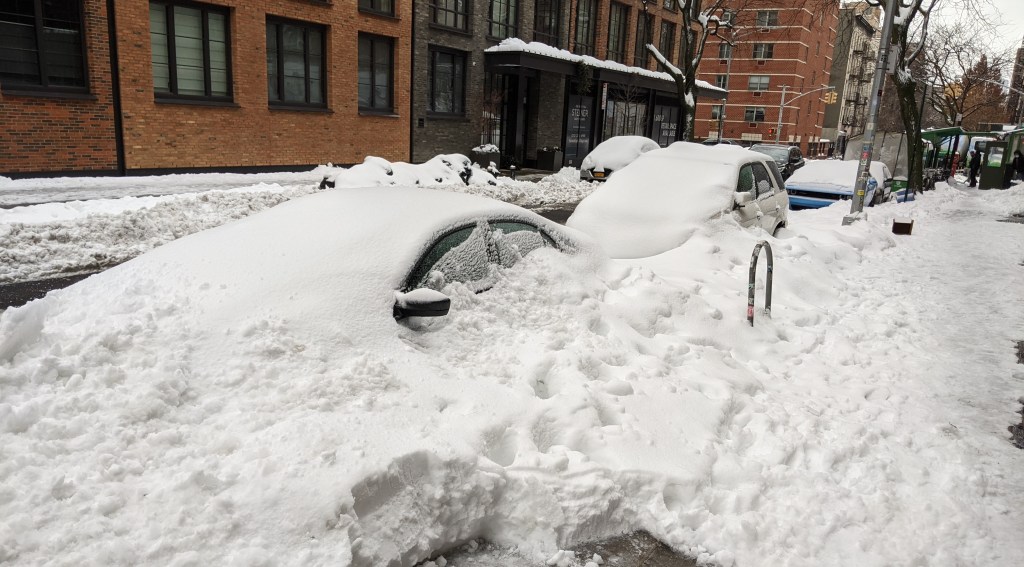
Earlier this year, a string of intense winter storms brought weeks of subzero windchill and 41 inches of snow to the East Coast. The repeated precipitation, combined with persistently low temperatures, prevented melting for several weeks.
In response, New York City deployed extensive plowing operations, dropped approximately 380,000 tons of salt, requested emergency civilian shoveling support, and deployed snow-melting “hot tubs” across the five boroughs.
At the same time, the Department of Sanitation repeatedly suspended the city’s “alternate-side parking” rules, which usually require car owners to move their car once a week so that the agency can clean — or plow — one side of the street. With no risk of fines, many owners simply let their cars sit where they had parked them just before the storms.
New Yorkers witnessed the result of these conflicting policies. Endless miles of waist-high snowbanks stood for weeks. Ice and slush rendered curb lanes unusable, immobilized vehicles and narrowed sidewalks. Across the entire city, residents struggled to access bus stops, navigate intersections and patronize businesses.
These winter storms suddenly and totally transformed New York’s urban fabric, inviting intense and widespread scrutiny of street infrastructure and exposing systemic weaknesses in roadway design. This transformation was most visible at the curb, where hundreds of thousands of snow-entombed cars stood motionless for weeks on end.
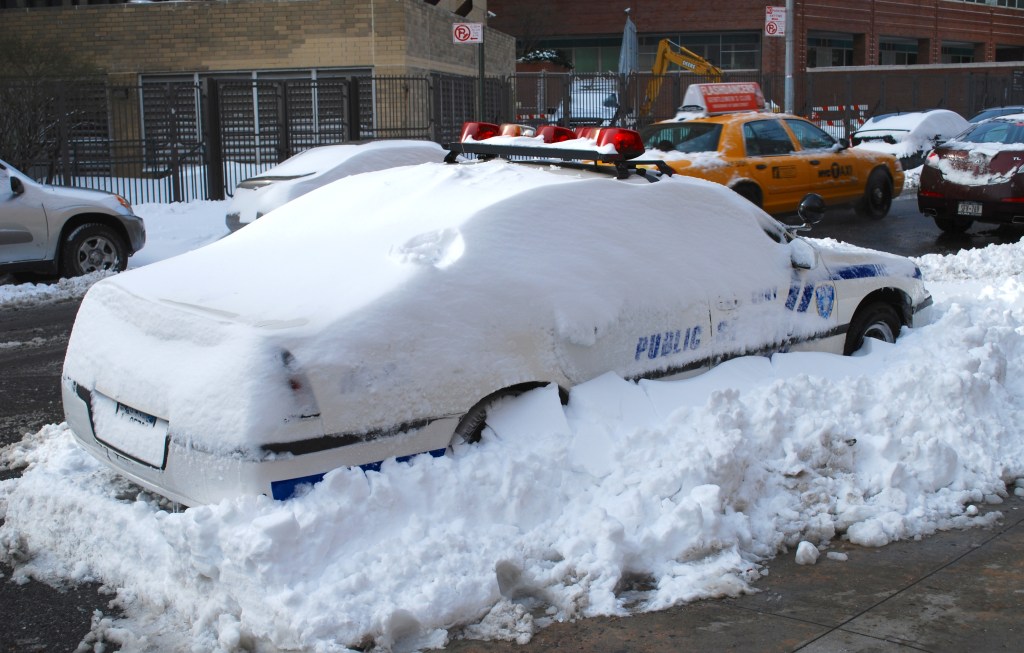
I like to call these vehicles nomobiles: street-parked cars incapacitated by snow or ice that do not move for an extended period of time. These cars no longer fulfill their central function as instruments of private mobility and instead become static, semi-permanent elements of the public realm.
This temporary metamorphosis provides an unusual opportunity to assess the underlying assumptions of curb management and roadside infrastructure and raises a crucial question: If hundreds of thousands of vehicles went offline for multiple weeks without halting everyday life, what role do privately owned cars actually serve in dense cities, and who ultimately pays for their presence? Nomobiles force us to evaluate the promise of convenience attached to car ownership, the consequences of publicly subsidized vehicle storage, and the labor required to maintain access at all times.
Nomobiles impose both tangible and immeasurable costs on the public. Obstructed curb lanes slow down plowing routes, while obstructed bike lanes require even more resources to clear. The economic value of the curb is not an accident. Recent statements by the Mamdani administration indicate growing interest in treating curb space as a fiscal and administrative resource, by expanding metered parking to generate revenue and practicing more deliberate curb management.
Recent research shows that “curb parking on New York City streets is worth $12.3 billion annually if drivers paid the market rate for storing their vehicles in the public right of way.” This winter’s storms momentarily suspended the social contract surrounding this public, shared resource, thereby exposing who ultimately pays the cost of the shared space.
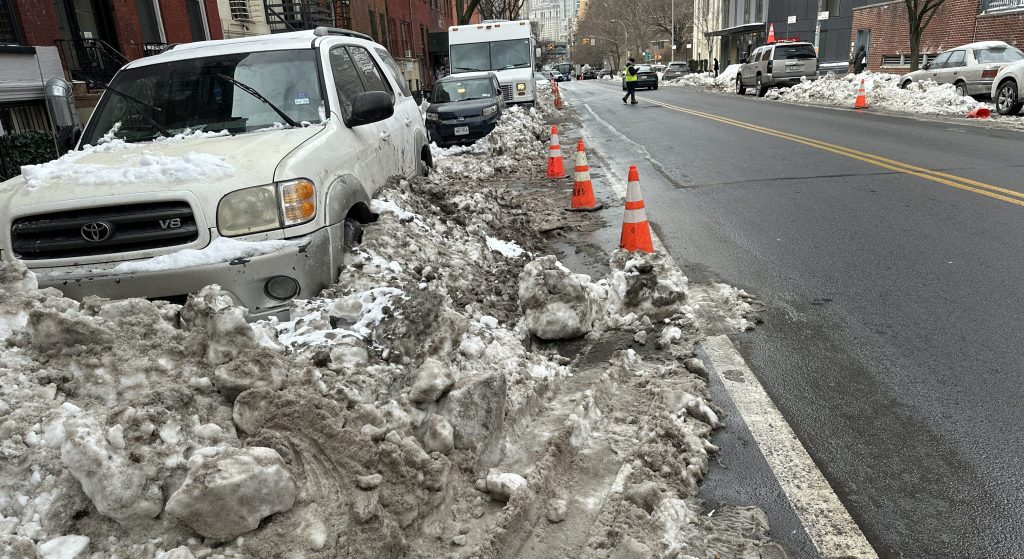
The storms pointed a spotlight on New Yorkers who own cars, and their justifications for doing so in such a transit-dense city. The 2022 Citywide Mobility Survey found that the majority of residents who purchased vehicles during and after 2019 did so because they “wanted the flexibility and convenience of having a vehicle.” Many of these drivers found themselves stranded by frozen cars.
The continued provision of free curbside storage reinforces these New Yorker’s expectation of reliable mobility. More than 97 percent of New York City’s three million parking spaces are completely free. This arrangement obscures the true costs of preserving curbside vehicular access.
“I basically just wrote it off for two weeks,” said one Brooklyn schoolteacher I spoke with. “I was like, alright, I just don’t have a car right now.” The teacher had purchased a vehicle to shorten a long commute to a neighborhood without robust transit options and relied on curbside parking at home. “I hate that I have to own a car … Whatever kind of autonomy I have is illusory and, you know, for suckers.”
During the storms and their aftermath, the teacher spent several hundred dollars on rideshare trips, incurred additional transit fares attempting to connect between networks, and paid more than a thousand dollars in winter-related mechanical repairs while their vehicle was immobilized.
Beyond fiscal expenditures, households also absorb significant amounts of unpaid physical labor: digging vehicles out of compacted snow and ice, walking extended distances to reach alternative transit, and recalculating commutes.
“The best case scenario is that you get plowed in, you dig yourself out, but you get plowed back in again,” said a St. George resident who purchased a vehicle after years without one to supplement limited borough connectivity. “The worst case scenario, at least on Staten Island, is that you don’t even get plowed in because the plows haven’t gotten to your street yet. So you can dig all you want, but good luck getting anywhere. It’s so obvious that something isn’t working here.”
As the economic burden of car ownership snowballs, those with greater financial flexibility are better positioned to maintain mobility through viable non-automobile options, while those without such resources must supply labor, tolerate prolonged immobility, or rely on more constrained transportation choices.
This winter reminded New York City that car ownership does not insulate individuals from unreliable systems. Nomobiles disrupted the street as a whole. These vehicles did not generate movement, but they continued to generate work in a layered subsidy structure: public funds provided baseline accessibility, private labor absorbed recovery, and informal makeshift markets monetized the gap between the two. This system persists not because it is efficient, but because its costs are delayed, dispersed, and rarely itemized.
Free curbside parking is central to sustaining this arrangement. It is a publicly subsidized habit that maintains the illusion that private mobility is largely self-contained. Nomobiles highlight the limits of this assumption, revealing the payments we make in our fiscal and political economies to sustain private mobility, even when that mobility becomes obsolete. As climate change produces heavier snowfall and longer freeze periods, the gap between perceived convenience and actual cost is likely to further narrow.
Nomobiles provide a lens to critique and more precisely examine roadside infrastructure. Let them serve as a warning to citizens and planners alike: where habit and preference prevail, function will suffer.

Read More:
Streetsblog has migrated to a new comment system. New commenters can register directly in the comments section of any article. Returning commenters: your previous comments and display name have been preserved, but you'll need to reclaim your account by clicking "Forgot your password?" on the sign-in form, entering your email, and following the verification link to set a new password — this is required because passwords could not be carried over during the migration. For questions, contact tips@streetsblog.org.