DOT Eyes Bike Lane On That Viaduct Around Grand Central Terminal
The city may add a bike lane to the elevated roadway around Grand Central Terminal as an extension of the upcoming redesign of Park Avenue, the Department of Transportation quietly revealed on Tuesday.
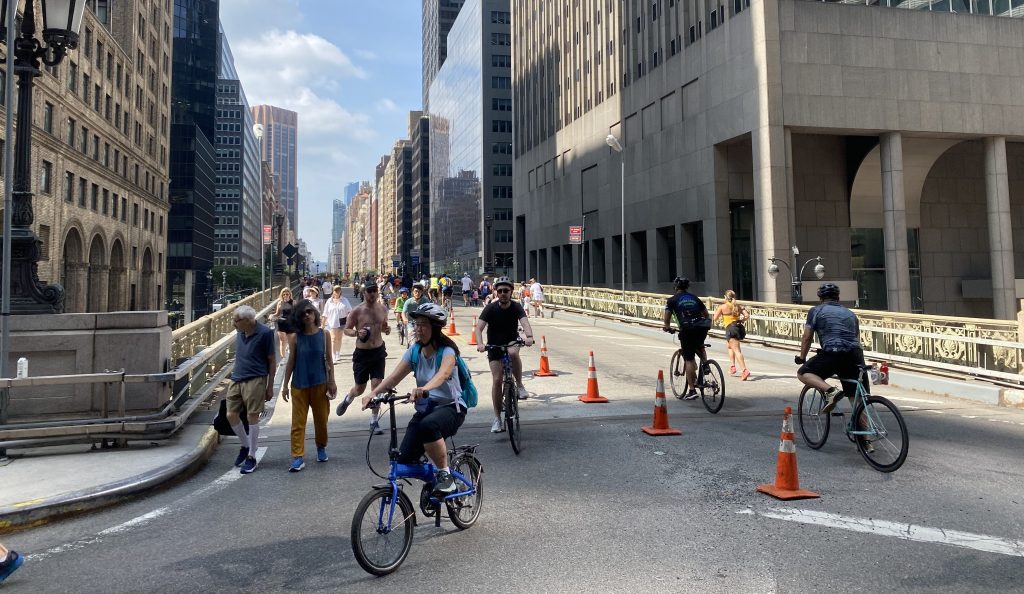
The scenic Park Avenue Viaduct is currently a regular road, but it closes to cars during the three Manhattan editions of Summer Streets, and residents and advocates urged the Mamdani administration to permanently convert it to a shared walk-bike path.
“You’ve got this incredibly well-built space around a giant train station connecting through the middle of the city — it’s just kind of obvious,” said Alex Duncan, the founder of the influential subreddit r/Micromobility, who goes by Miser online. “It’s already built, you just need to repurpose it.”
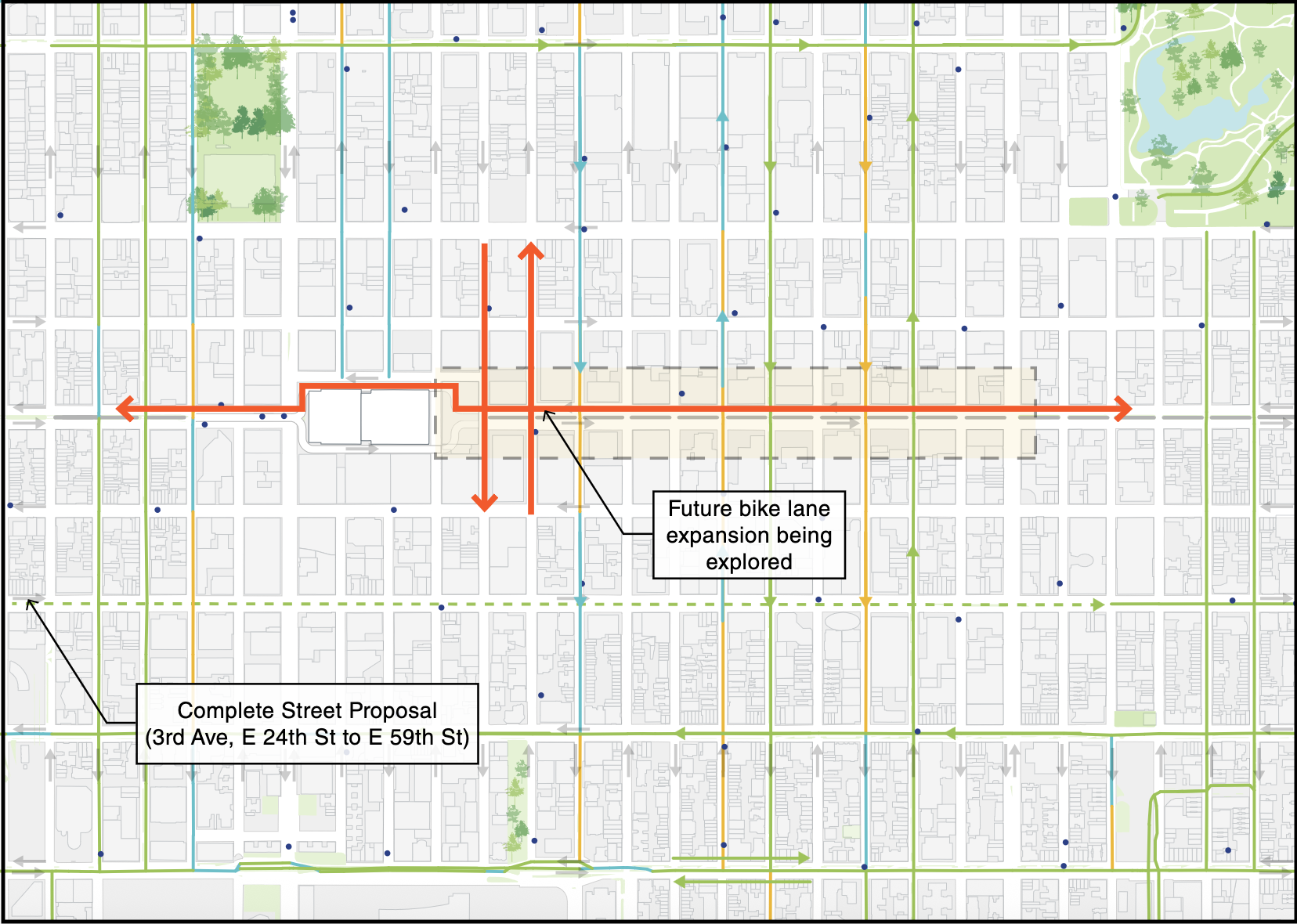
DOT buried the idea of a viaduct bike lane on the second-to-last page of an 84-page plan the agency presented to the Public Design Commission on Tuesday. The rest of the plan focuses on the previously announced redesign of Park Avenue between 46th and 57th streets. Commission members raised no objections.
Transportation planners mapped a set of future extensions that are “being explored” from the spine of the Park Avenue project. These include the “viaduct connection” that would be on one side of Grand Central, more bike lanes on Park Avenue north of 57th Street and two crosstown paths on E. 46th and E. 47th streets.
The city temporarily bans cars from the viaduct during its annual Summer Streets celebration — a tradition dating back to the Bloomberg administration. Three years ago, Bloomberg’s DOT Commissioner, Janette Sadik-Khan, floated the idea of placing cycle lanes and walkways on the elevated road beyond that yearly event.
DOT has yet to release any details about the viaduct bike lane, including whether it would be protected, how wide it would be and whether it would be two-way like the rest of the Park Avenue proposal, but the map indicates it would likely go around the western fork of the elevated structure. The path has two downtown car lanes and one uptown lane for cars, along with an entrance to a parking garage.
But the lack of details hasn’t diminished advocates’ enthusiasm, and they said it would open up many possibilities for better connections around one of America’s busiest transit hubs.
Duncan has created renderings of his own in the past showing what a bike and pedestrian-friendly viaduct could look like, and locals agree that there could be much better use of the space than just a pass-through for motor vehicles, said one local advocate.
“It would be a beautiful way to open up New Yorkers to be able to see the cool architecture and city design that we have,” said Samir Lavignia, the second vice-chair of Community Board 5, who was not speaking on behalf of the civic panel. “It almost feels like you’re riding through a building on top of Grand Central.”
The elevated Beaux-Arts steel structure dates back to 1919 and splits Park Avenue traffic via a ramp over 42nd Street that rings the train hall and the MetLife Building, and converges at the base of the Helmsley Building at 46th Street.
“It’s two lanes wide, there’s basically no cars there, it’s a glorified loading zone,” Lavignia said. “It would be a really nice opportunity to put a bike lane but also some amenity so people can be up there and look across the rest of the city.”
A bike path could offer an easier link to the transit hub, which connects commuter railroad travelers to and from upstate and Long Island. The wrap-around road currently does not offer direct access to the Terminal, but there are doors along the outside of the train hall, and there are also entrances to the MetLife Building and another one at the Hyatt Grand Central hotel.
The city could repurpose the existing indoor car storage with a large-scale bike parking facility akin to train stations in the Netherlands, noted Duncan.
The city could extend the bikeway south through the Park Avenue Tunnel in Murray Hill, a former railroad cut that the city covered over and is now a car-only passageway leading to the base of the viaduct from 34th Street. As with the viaduct, the city opens the underground tube to pedestrians and cyclists during Summer Streets.
The viaduct and the tunnel would allow the city to quickly triple the length of the protected bike path on Park Avenue from 11 blocks to 33.
“DOT could build out a huge, really protected lane pretty easily, with almost no work,” he said. “This is such a no-brainer, it’s probably the most obvious place to put a bike lane and close it to traffic in the entire city.”
Any of the upgrades could still be years away, as the city plans to reconstruct the medians after the state’s Metropolitan Transportation Authority rips up the street to renovate the Metro-North Railroad shed below.
DOT spokesperson Will Livingston declined to provide Streetsblog with a timeline or more details for the viaduct bike path.

Read More:
Streetsblog has migrated to a new comment system. New commenters can register directly in the comments section of any article. Returning commenters: your previous comments and display name have been preserved, but you'll need to reclaim your account by clicking "Forgot your password?" on the sign-in form, entering your email, and following the verification link to set a new password — this is required because passwords could not be carried over during the migration. For questions, contact tips@streetsblog.org.