NYPD Refuses to Release Parking Placard Records
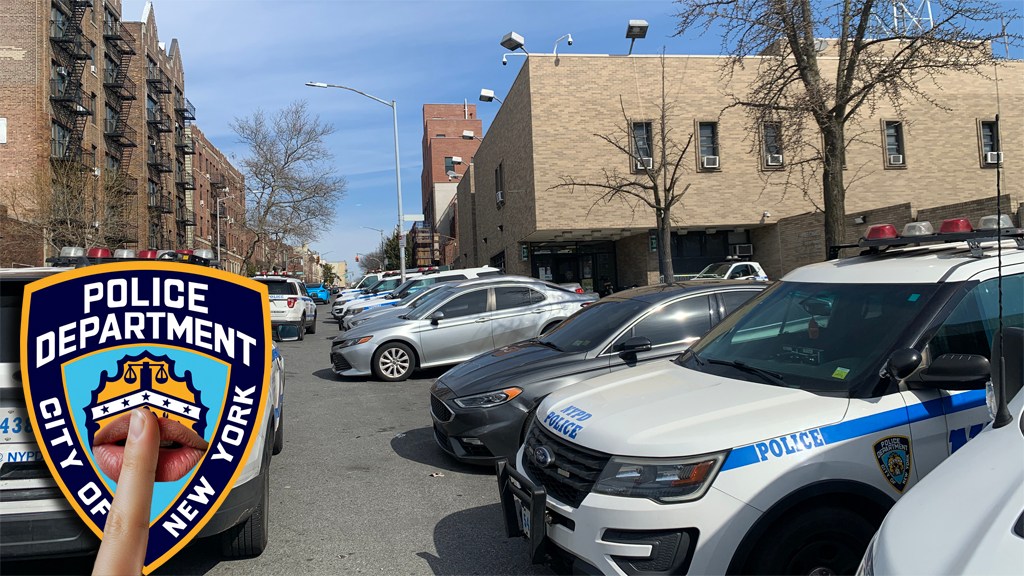
NYPD will not disclose a list of its parking placards in response to a routine Freedom of Information Law request, on the grounds that the names of recipients of the parking perk are far too sensitive to reveal.
The NYPD declined to provide records concerning its roughly 35,000 placards more than a year after Streetsblog submitted a FOIL request for all active NYPD parking permits, including the names of personnel who receive placards. But the department relied on contradictory reasoning for withholding the information, according to a lawyer who filed an appeal on behalf of Streetsblog.
“NYPD has a history of trying to hide records from the public, even though the records belong to the public and the public has a right to access them,” said Michael Linhorst at Cornell Law School’s First Amendment Clinic. “They haven’t made any argument why releasing this would endanger somebody’s life or safety.”
Bizarrely, an unnamed FOIL officer at the NYPD denied our seemingly straightforward request by stating it was both too vague to locate the records, and that these same records they supposedly couldn’t find were also exempt from public disclosure:
Your request does not reasonably describe a record in a manner that would enable a search to be conducted by the New York City Police Department.
… The records you requested are exempt from disclosure under FOIL because they would reveal non-routine law enforcement and/or criminal investigative techniques.
… The records you requested are exempt from disclosure under FOIL because if disclosed, they could endanger the life and safety of any person.
The explanations are contradictory: How can NYPD know the information is sensitive to release if it doesn’t understand what records qualified for the request?
“You can’t know the records are exempt unless you know what the records are,” Linhorst noted. “They claim that they can’t even figure out what records you’re looking for.”
Parking placards have long been a key source of flagrant corruption in city, state and federal governments, allowing certain officials to park wherever they want with total impunity.
The carte-blanche perk encourages unnecessary driving in the nation’s most transit-rich city, enables cops and other officials to obstruct life-saving bike lanes and pedestrian islands, and hinders commerce by blocking loading zones. Placards entrench and symbolize the city’s two-tiered system of traffic laws.
The NYPD is one of three municipal agencies that issues the permits, along with the Department of Transportation and Department of Education. Street safety advocates have repeatedly urged Mayor Mamdani to rein them in.
Last year, New York’s Finest issued 36,429 such permits, including to its own officers, and state government and federal officials and prosecutors, according to its most recent public reporting.
An anonymous watchdog, who goes by the social media handle Placard Abuse, said the police’s FOIL rejection is in line with the department’s larger pattern of acting outside of the law.
“The NYPD rejects almost all FOIL requests on outright bogus grounds on their first response as a matter of policy,” Placard Abuse told Streetsblog over email. “As with placard corruption, there seem to be no consequences when the NYPD deliberately misuses taxpayer resources to systematically violate the law.”
Streetsblog sought the records in question, in part, because parking placards are already very visible: Any New Yorker can see them behind the glass windshields of NYPD vehicles and officers’ private cars.
Linhorst pointed out that courts have repeatedly ruled that cops can’t shield records concerning common procedures from the public. This includes records about fingerprinting, for example, and should include placards, too.
“Parking placards aren’t this secret technique that the public doesn’t know about,” he said. “It’s hard to imagine how parking placards are non-routine.”
The threat to security is also highly questionable, the attorney added. He noted that the FOIL officer did not even explain how releasing placard data would hurt anyone. “They haven’t made any argument why releasing this would endanger somebody’s life or safety,” he said.
Linhorst and colleagues at the Cornell Law School clinic appealed the denial on Sept. 4, and the city has until Monday, Sept. 21 to respond.
The NYPD’s press office declined to comment.

Read More:
Streetsblog has migrated to a new comment system. New commenters can register directly in the comments section of any article. Returning commenters: your previous comments and display name have been preserved, but you'll need to reclaim your account by clicking "Forgot your password?" on the sign-in form, entering your email, and following the verification link to set a new password — this is required because passwords could not be carried over during the migration. For questions, contact tips@streetsblog.org.