Eyes on the Street: ‘Roomy’ Lafayette/Fourth Bike Lane Already Blocked by Illegal Parking
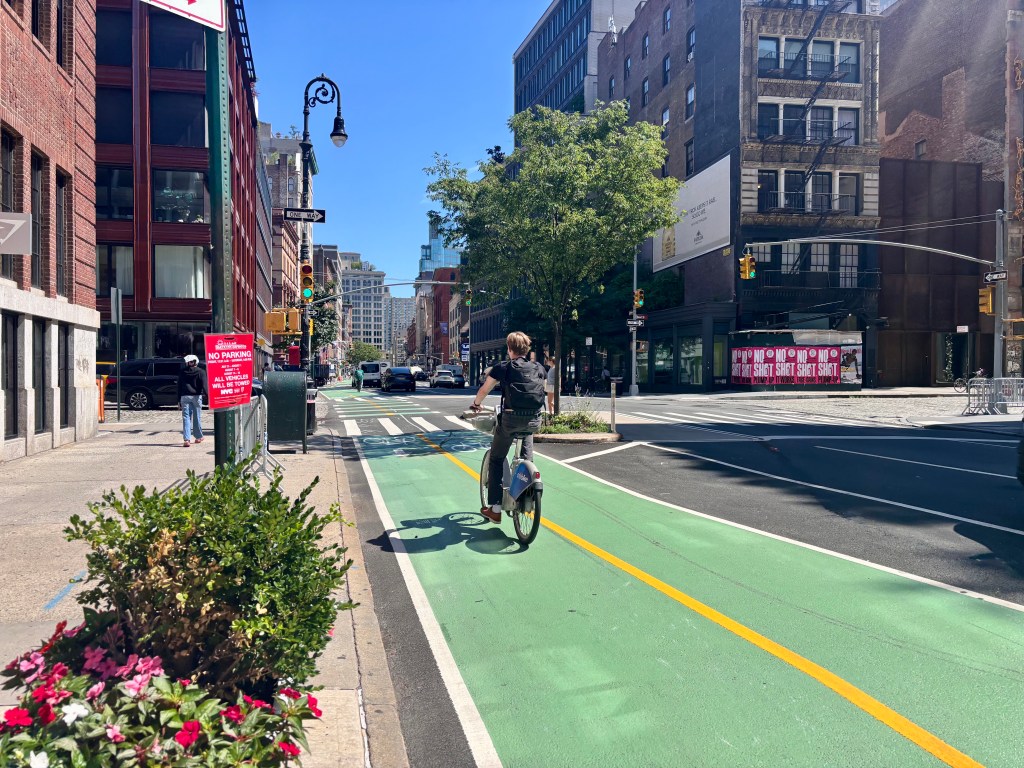
The revamped two-way bike lane on Lafayette Street and Fourth Avenue from Spring Street to 15th Street is complete, providing a key connection for cyclists going between Broadway and Union Square and points south.
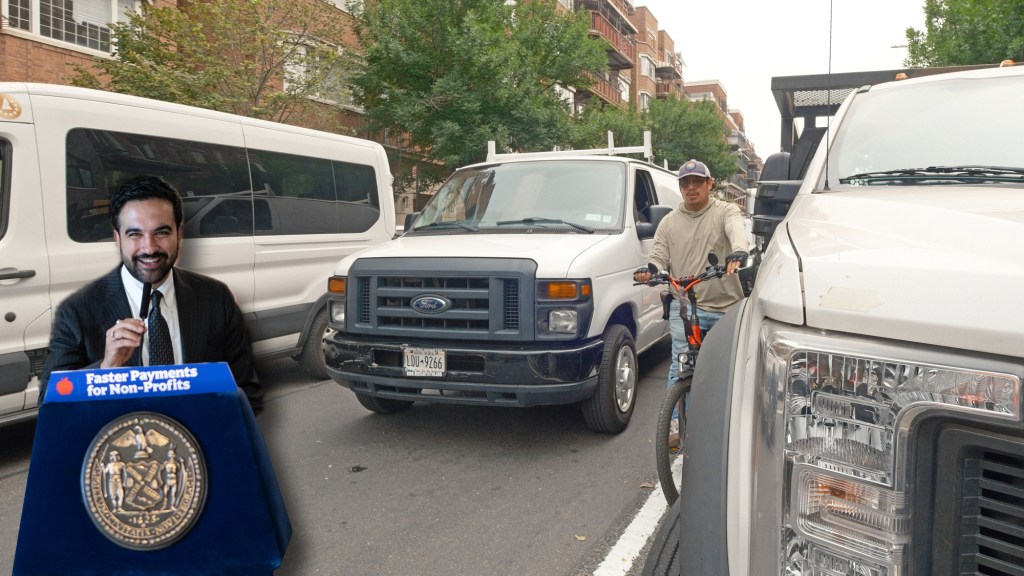
Unfortunately, like many such street designs in the city, the new extra-wide lane is already attracting illegal double-parking in the bike lane.
Lafayette Street becomes Fourth Avenue north of 8th Street. Back in 2014, the Department of Transportation under then-Mayor Bill de Blasio converted an unprotected bike lane on the corridor to a full-on protected bike lane in the northbound direction way. This year’s upgrade made the protected bike lane wider and two-way, and narrowed the street’s car lanes to slow down drivers.
The old one-way bike lane forced southbound cyclists to detour onto Broadway instead, where the bike lane is a simple painted strip with minimal protection for cyclists. The new bike lane covers the same distance, but the city accommodated a new southbound lane by widening it from five feet to 11 feet.
DOT also widened the buffer zone between the bike and the parking lanes, as shown in the before-and-after below:
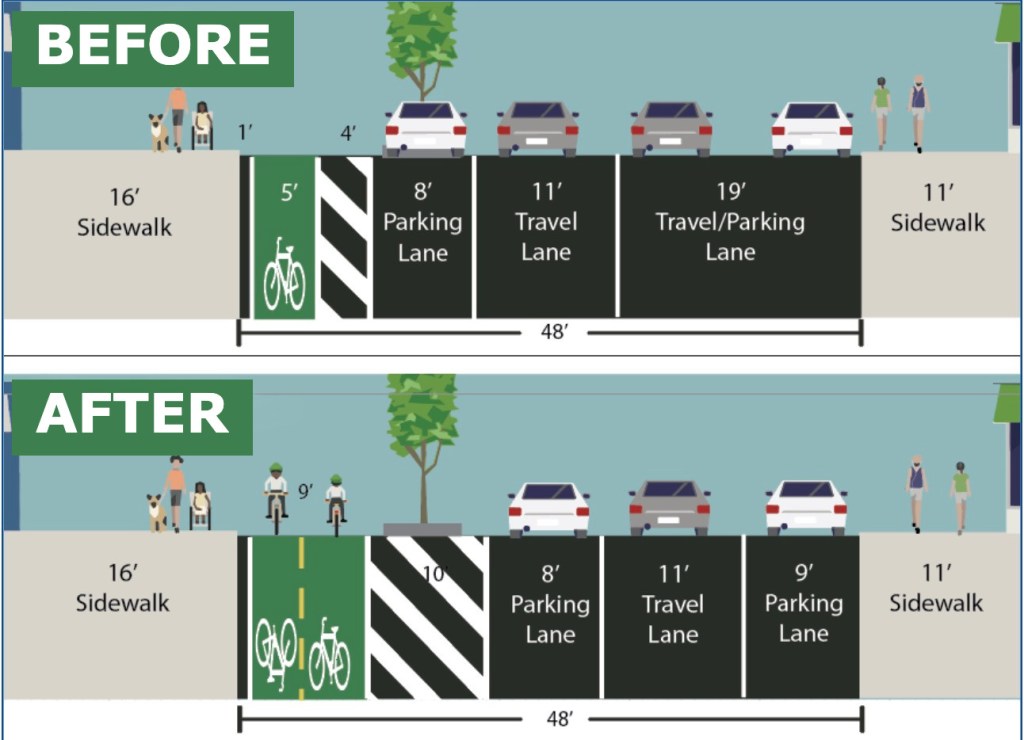
Although marketed as an upgrade, bi-directional bike lanes tend to be narrower than one-way lane, and can force cyclists to squeeze through smaller gaps to pass riders ahead of them. But the new Lafayette Street bike lane is 11 feet wide — less than the 16 foot-wide two-way bike lane in Astoria, but more than the 8 feet two-way lane that DOT plans to put on nearby Grand Street.
Streetsblog visited the new lane last week to see how it’s working out.
A great new bike lane
The revised segment of the bike lane runs about one mile and takes cyclists from Lafayette Street and Prince Street to 4th Avenue and 15th Street, where it connects to the protected bike lanes on 18th Street and Broadway.
One northbound cyclist pausing at the crosswalk on 4th Avenue and 12th Street around midday told Streetsblog that the new lane “looks pretty nice.”
“It definitely feels like an upgrade,” he added, before catching the light to take off towards Greenwich Village before we could get his name.
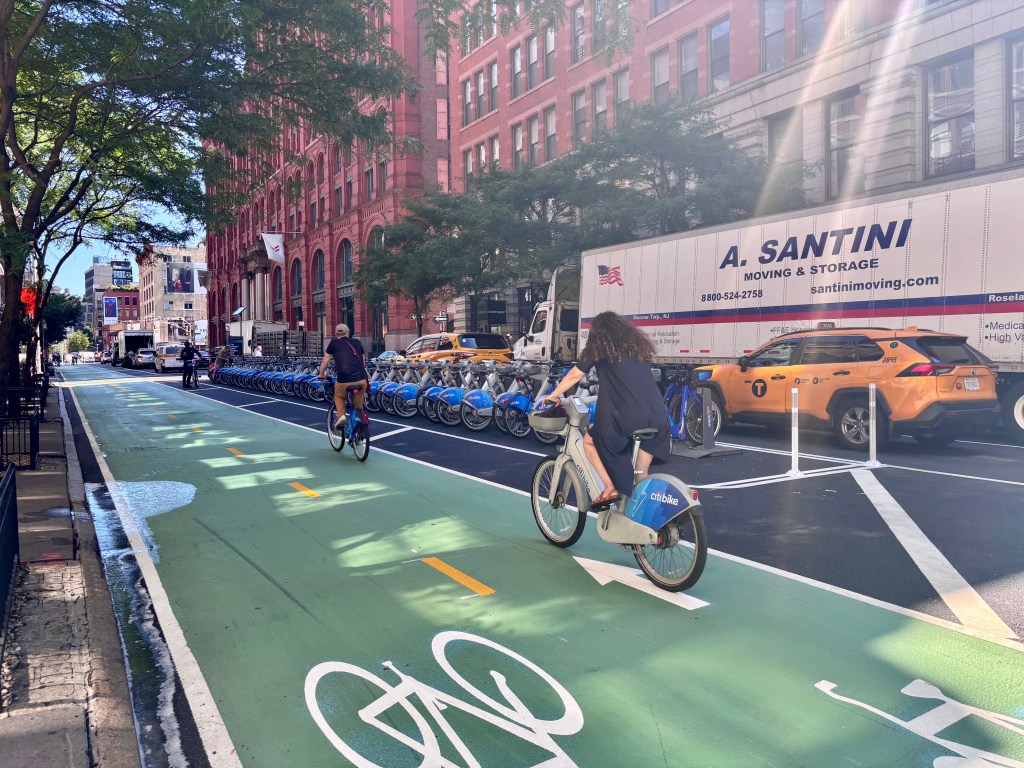
The features of the bike lane vary along the route. Some segments have concrete hardening, which physically separates the bike lane from the road with a concrete wall, while others rely on a wide, striped buffer area.
“This project will help improve safety and comfort for people walking and biking in the East Village,” a DOT spokesperson said. “Construction is continuing throughout this month and we generally see better compliance with our designs after construction is complete and all physical elements are installed.”
All in all, the new double-lane is a big milestone for bike safety in Manhattan, creating a safe north-south connection through the heart of the Village and SoHo.
Protected bike lanes reduce total deaths and serious injuries for cyclists by 18 percent, according to DOT data, and the new southbound lane is far superior to the unprotected Broadway alternative.
A slight Citi Bike relocation
Two Citi Bike stations along the route in the East Village play a critical role for commuters — they serve more than 26,000 riders per month, according to DOT.
As part of the redesign, DOT relocated the dock on Lafayette Street and 9th Street a block south to the intersection with Astor Place in order reduce pressure on the crowded crossings by the entrance to the 6 train:
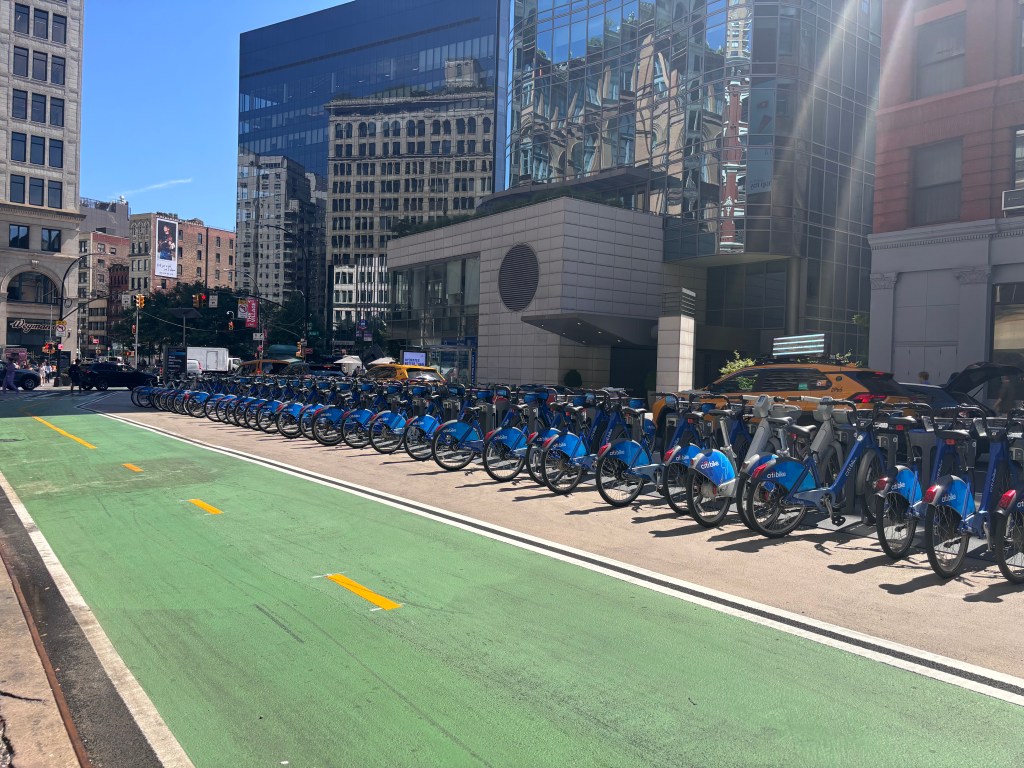
Around midday, the station was packed — which is a good indicator that it’s still very popular among cyclists despite the new location.
Every rose has its thorn
The Lafayette Street bike lane may be great, but Streetsblog observed multiple instances of blockage from double-parked drivers.
“The new lane feels much more roomy. I like it a lot,” said one cyclist, who was docking her Citi Bike at the 4th Avenue and East 12th Street station. “It would be nice if there was less double-parking, though,” she added.
That might’ve been an understatement. Take, for instance, this Toyota from New Jersey, which blocked the southbound lane along Lafayette for more than an hour and a half, forcing bikers to swerve around it into oncoming cyclist traffic:
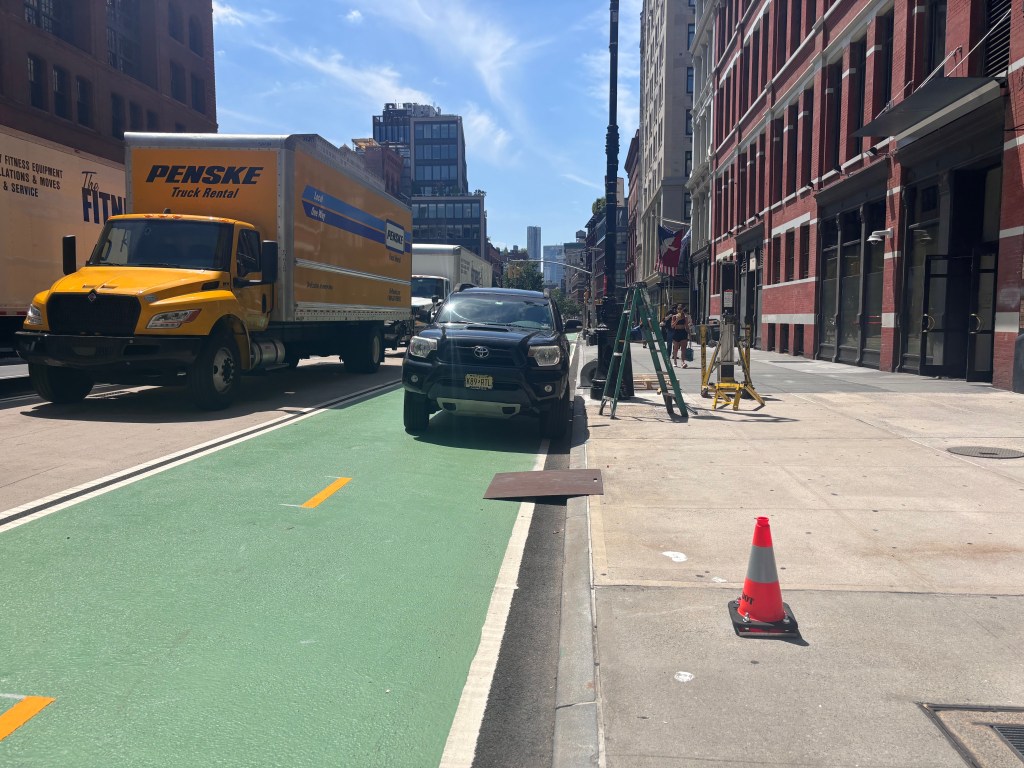
The New Jersey car has received over 25 parking violations in the past three years in the city, even though it’s registered out-of-state.
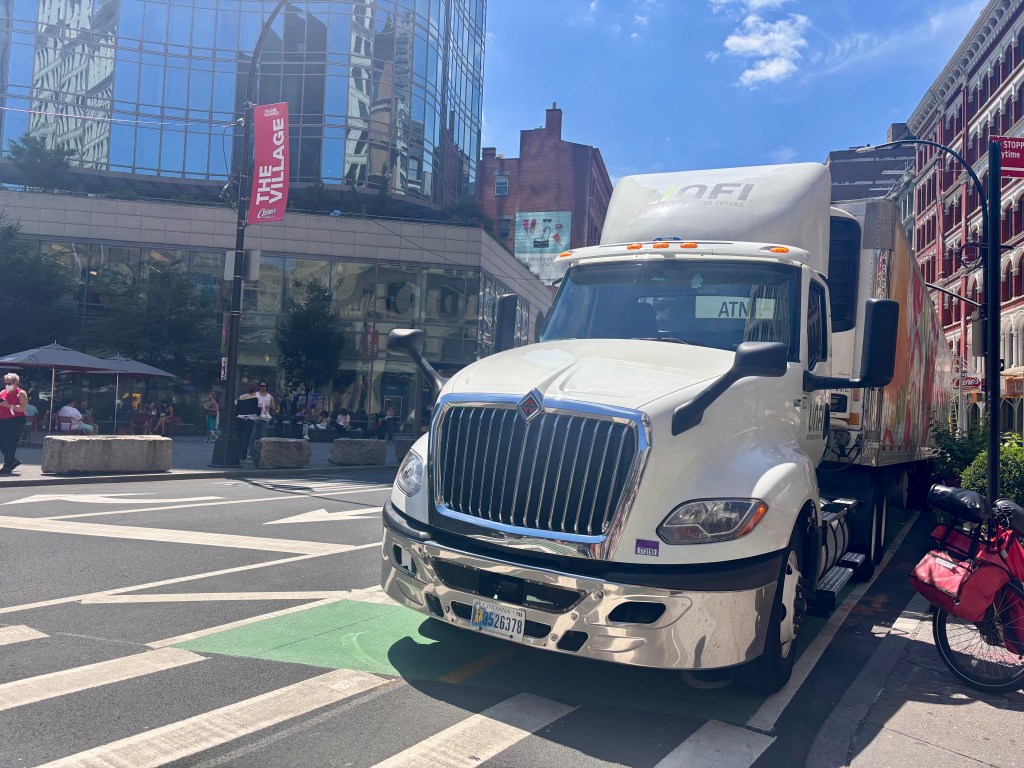
Cyclist faced even more trouble up ahead. Only a few blocks further north was an illegal 53′ truck from Indiana that blocked the entirety of the bus lane:
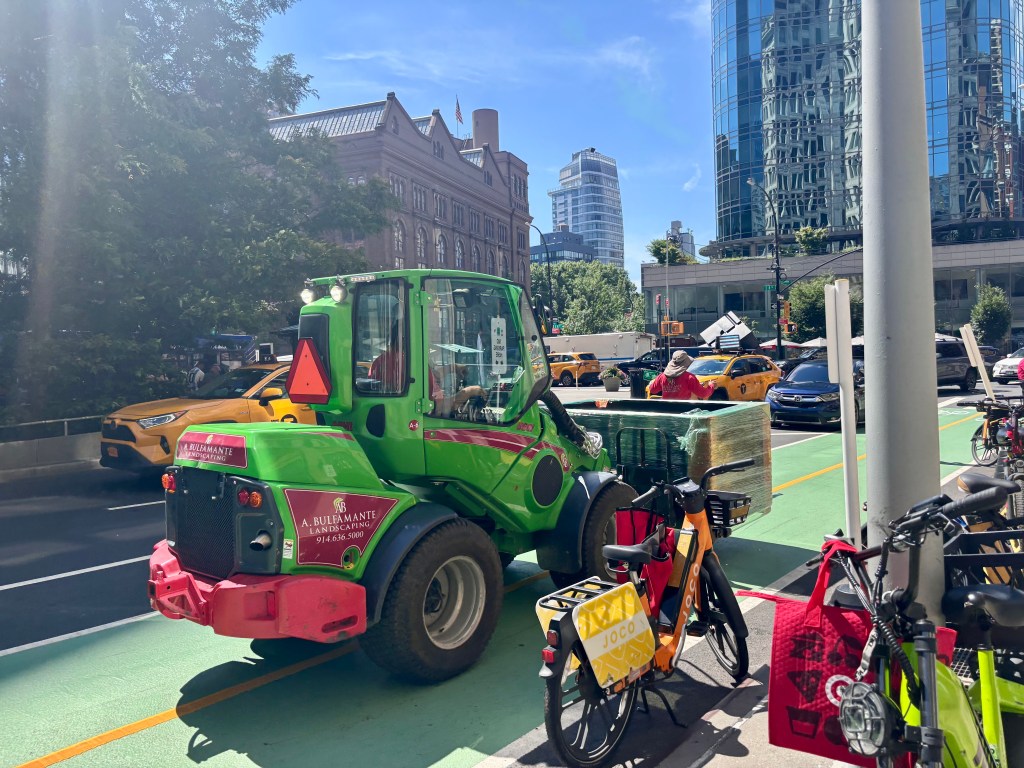
Not to be a broken record, but another vehicle caught Streetsblog’s eye in the bike lane along Lafayette. This one was more unique — and didn’t even have a license plate:
DOT recognized the potential for illegal parking to muck up the bike lanes in its original presentation about the redesign, noting that illegal parking has long created “hazardous conditions” for cyclists and pedestrians alike along the street.
Cops gave at least 150 parking tickets to bike lane blockers in the area this year, according publicly available data, but it seems that neither that nor the recent bike lane changes have prevented cars (or tractors) from constantly blocking the way.
Ultimately, the DOT must find ways to balance cyclists being able to pass each other with the risk that wider bike lanes may encourage more illegal parking.
A quick solution for the city would be implementing some sort of hard barrier — such as vertical posts — alongside the bike lane in zones with rampant illegal parking.
A rep for DOT said that, in the future, “the bike lane will be physically separated from vehicles by vertical elements like delineators.”

Read More:
Streetsblog has migrated to a new comment system. New commenters can register directly in the comments section of any article. Returning commenters: your previous comments and display name have been preserved, but you'll need to reclaim your account by clicking "Forgot your password?" on the sign-in form, entering your email, and following the verification link to set a new password — this is required because passwords could not be carried over during the migration. For questions, contact tips@streetsblog.org.