Report: Congestion Pricing Had No Impact on Parking Availability
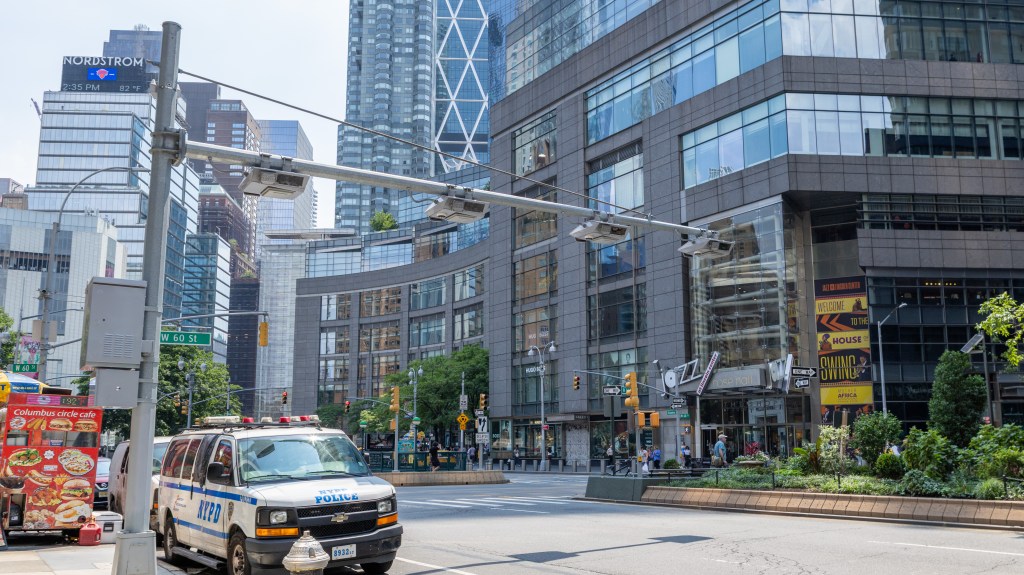
It didn’t get any easier or harder to find parking after New York implemented congestion pricing tolls on trips into Manhattan below 60th Street — including in areas just outside the toll zone where some residents and elected officials worried that drivers would flood their neighborhoods to avoid paying the new toll, according to a new study.
The report released by the city Department of Transportation on Monday found congestion pricing had no impact on the availability of curbside space for car and truck drivers — and cautioned against using the toll to justify introducing a residential parking permit system.
“One of the concerns about congestion pricing was that it would encourage ‘park-and-ride’ behavior, making it more difficult to park in certain New York City neighborhoods,” DOT Commissioner Mike Flynn said in a statement. “After the largest parking data collection DOT has ever undertaken, we didn’t see that happen.”
Using timelapse photography, car-mounted cameras and manual surveyors, DOT researchers looked at parking activity on 4,319 distinct block faces, defined as one side of a street between two intersections. Researchers analyzed blocks in three distinct areas: the congestion relief zone south of 60th Street, the east and west sides of Manhattan between 60th Street and 84th Street, and 14 other transit-rich areas outside of the tolling zone.
Their investigation found parking availability remained mostly unchanged. Before and after the toll started, an average just 15 percent of any given block’s parking space sat unoccupied, the report said.
DOT researchers also studied whether congestion pricing led drivers to avoid the toll by parking their cars near subway stops north of 60th Street (to save a total of $3). That type of toll shopping did not happen in other cities with congestion pricing, but Manhattan elected officials still spent the years in the run-up to the launch of the Big Apple’s toll fretting over the possibility it might and pushing residential parking permits as a solution.
Yet despite the pre-launch fears, DOT found that even in areas outside of the congestion pricing zone where more drivers parked than before congestion pricing, increases in demand weren’t concentrated in the hours when the toll peaks at $9 — indicating that the increased parking demand had more to do with differences between the seasons and other citywide economic trends than congestion pricing.
The one exception was a handful of blocks just outside the toll zone on the Upper West Side, which saw midday increases in parking demand. But rather than proof of a park-and ride-phenomenon, researchers theorized that some truck drivers parked at metered spaces and completed deliveries on foot to avoid the higher truck toll, officials said.
“Greater economic activity likely drives more demand for curb space, not just in the CRZ but across the city,” the agency wrote in its report.
DOT went out of its way in the report to reject residential parking permits, especially as a response to a toll that its researches concluded did not impact parking availability.
Residential parking permits would not solve the problem of parking unavailability, officials road. They could also make it harder to implement many of the policies that the city is currently engaged in like trash containerization, bus and bike lanes and open streets.
“RPP reinforces the notion that vehicle owners have a primary claim to the curb space in their neighborhood. However, the curb is a shared public resource for multiple users beyond drivers, including local businesses, bus riders, pedestrians, community groups, and cyclists,” the report said. “Implementing RPP could make repurposing curb parking for other uses more difficult and would raise questions about fairness and equity for those without cars.”
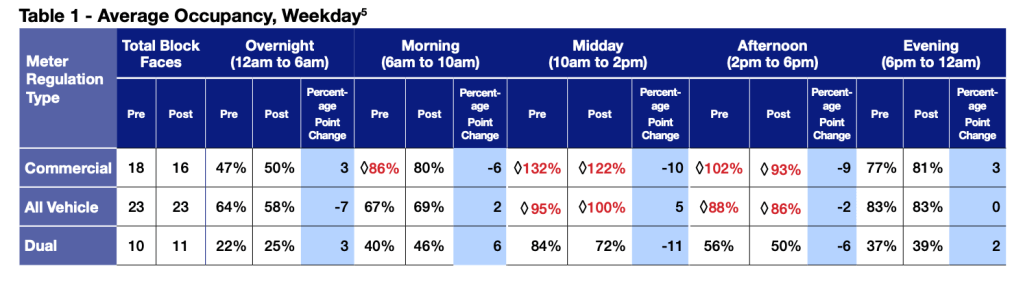
DOT focused its analysis on the toll zone itself on metered parking spaces for commercial vehicles, metered spaces for all vehicles and metered spaces that start as commercial-only and transition to all-vehicle spaces later in the day — in order to determine if the toll itself made it easier for drivers to park on commercial and retail strips.
Previous studies have shown that congestion pricing resulted in fewer cars and trucks entering Manhattan. Despite the resulting drop in parking demand — and 10 percent drop in double parking — “commercial” and “all vehicle” spots were still well above 100 percent occupancy, as indicated by the number of illegally parked vehicles, DOT found.
Commercial parking availability in the tolling zone increased at mid-day, but otherwise barely budged:
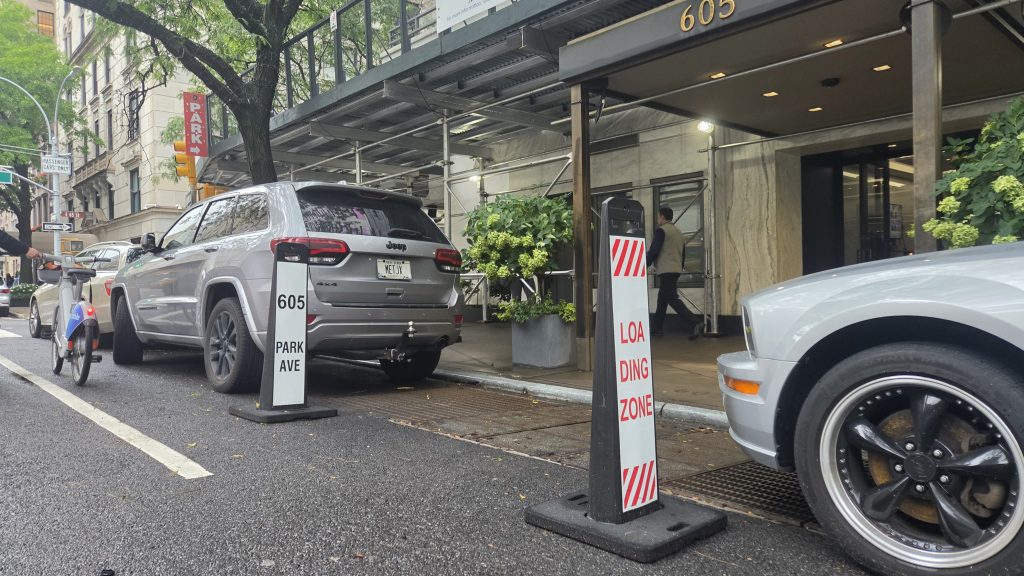
Outside of the congestion pricing zone, DOT looked at metered parking and “free” parking spaces before and after congestion pricing. In both types of spots, the agency found limited parking availability, with upwards of 90 percent of parking spaces in a given area taken up by vehicles before and after the toll went into effect.
Crucially, however, DOT also found that metered parking spaces were frequently available throughout the day. Free parking drove the lack of available spaces:
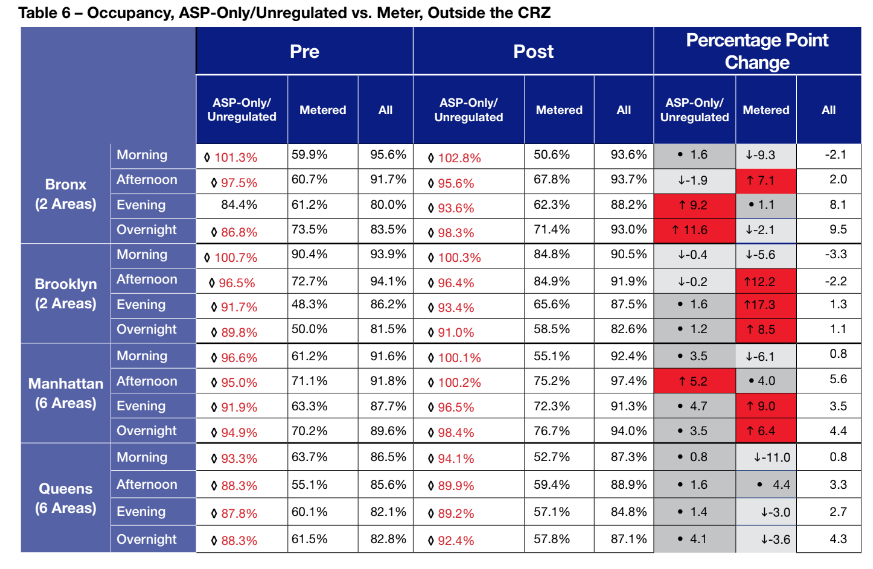
While parking was hard to find everywhere at mid-day, space was scarce at all hours in Manhattan outside of the tolling zone, where drivers are less likely to have to pay to park, researchers said. But that was true before and after congestion pricing launched.
“Overall, the data collected for this report confirms what most New Yorkers already know: that on-street parking availability is low across the dense areas of New York City surrounding the [congestion relief zone] and that free curbside parking is particularly hard to find,” the report authors wrote. “This is a reality that predates congestion pricing and persists independent of it.”

Read More:
Streetsblog has migrated to a new comment system. New commenters can register directly in the comments section of any article. Returning commenters: your previous comments and display name have been preserved, but you'll need to reclaim your account by clicking "Forgot your password?" on the sign-in form, entering your email, and following the verification link to set a new password — this is required because passwords could not be carried over during the migration. For questions, contact tips@streetsblog.org.