‘Seventh’ Heaven: Four Candidates to Succeed Rep. Nydia Velazquez Court Streetsblog Readers
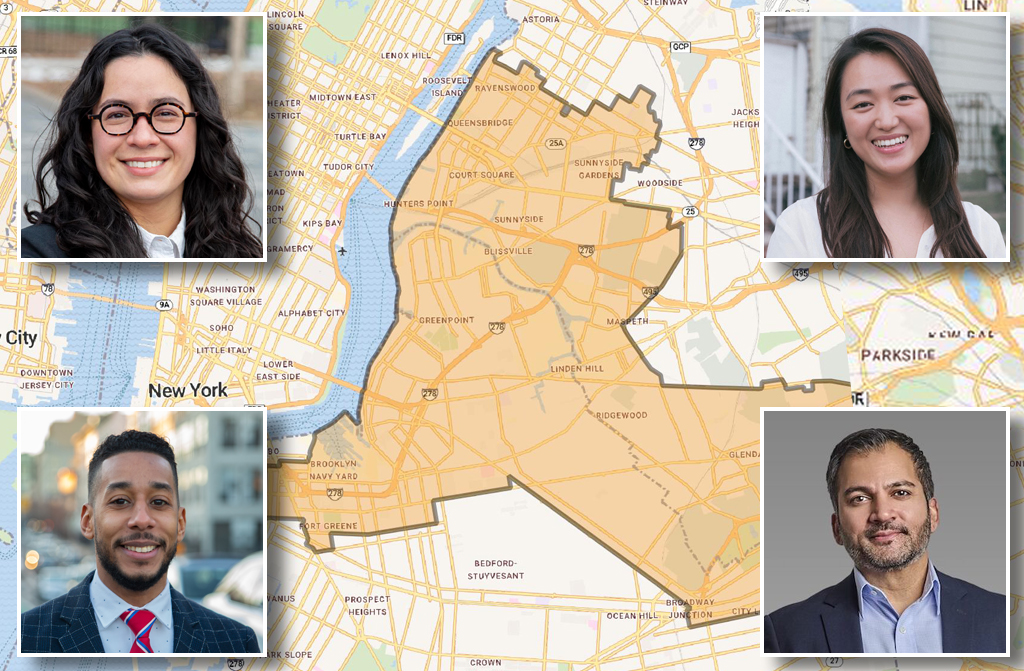
Every two years at this time, we ask Congressional candidates a series of questions to determine if they truly support the livable streets movement or are merely paying lip service. Today, let’s hear from four candidates in the June 23 Democratic primary for the Seventh congressional district, a seat long occupied by Rep. Nydia Velazquez. The candidates are Vichal Kumar, a public defender; Brooklyn Borough President Antonio Reynoso; Council Member Julie Won; and Assembly Member Claire Valdez.
1. What can you do — as a lone member of Congress — to make the federal government more responsive to the needs of cities?
Vichal Kumar: I don’t own a car. I usually take the train or bus, and sometimes I bike. If I am in my neighborhood, I walk. That’s how most people in NY-7 actually live, and it’s how many people in dense metro areas live. The federal government has not caught up to that reality.
For 50 years, federal transportation, housing, and infrastructure dollars have flowed to the people who already have the most political power: highway lobbyists, real estate developers, and suburban interests. The reason most American cities don’t have the transit New Yorkers do is not that demand isn’t there. It is that for fifty years we have chosen to fund highways instead of buses, parking instead of platforms, and exurban sprawl instead of dense urban housing. The evidence is clear that when we actually fund transit, people use it. Ridership grows where service is frequent, reliable, and affordable, and it stagnates where we starve it. Those are the funding choices Congress has prioritized, and they must change.
In Congress, I will fight to flip the priority list: federal dollars for transit before highway expansion, a massive expansion of Section 8 funding so that the federal housing voucher program actually meets demand instead of leaving working families on years-long waitlists, and tenant protections before developer subsidies. I’m running because the people who actually use buses, trains, and sidewalks should have someone in Congress who does, too.
Antonio Reynoso: I intend to never operate alone. At my core, I’m an organizer, and I intend to bring that with me to Washington. There are centrist and moderate Democrats all across the country who feel like we in NYC don’t understand what they’re going through. Some centrists from suburban districts may be tempted to respond to actions like Trump’s DOT cutting funding for cycling and transit and try to moderate, but as a member of the NYC delegation, I will not let that happen.
The country is shifting toward a more progressive mindset, and that includes planning our built environment for cities and people, not cars. I feel that I can help bring folks together to show that we share so many issues, that there are practical ways for us to collaborate, and in turn that will help build more broad support for progressive goals.
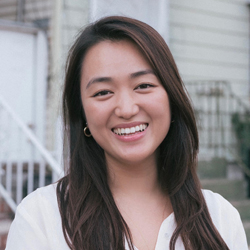
Julie Won: A single member’s primary “lever” is the oversight function: dragging agency heads before the Transportation and Infrastructure Committee with specific, documented demands, i.e. “Why did this grant take 18 months to obligate? Where is the bottleneck? What’s the written timeline for correction?”
Other tools: using appropriations riders to attach conditions to funding, building coalitions with other urban members to create leverage on the floor, and creating a public record that makes it politically costly for an agency to walk away from a commitment. Contrary to what we’re seeing from the current body, Congress does have the ability to get things done through deliberate applications of oversight.
But beyond the mechanics of government, the basic political and economic fact of the matter is that investing in cities is good for everyone. … When Congress underfunds the MTA, starves Safe Streets for All, and lets the surface transportation reauthorization become a highway bill by default, it is deliberately slowing the most productive economic region in the country. I would loudly and proudly make the case for investment in New York and other cities.
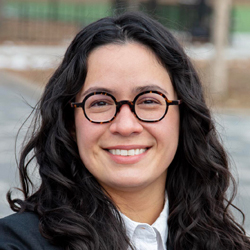
Claire Valdez: A single member of Congress has real tools. I’ll use all of them: the bully pulpit to make the case for cities directly to the public; coalition-building with representatives from other urban districts to vote as a bloc; close partnership with the grassroots organizers who actually win these fights on the ground; civil disobedience when the moment demands it; and withholding my vote from legislation that fails working people in NY-7 and cities across the country.
That work has to start with a basic understanding of who you’re fighting for. In the Seventh District, the vast majority of residents rely on subways and buses to get to work, to school, and to the rest of their lives. I’ll be a voice for them — and for people across the country who don’t want to be forced to own and maintain a car simply to exist.
It also requires a deep understanding of policy and where political choices are tucked into dry legislative language. The MTA carries 43 percent of the nation’s transit riders and receives 17 percent of federal transit formula funding — New York’s working class has been subsidizing the rest of the country’s transportation system while ours falls apart. Non-car projects get roughly $20 billion of a $117-billion federal transportation budget. State and local street designs can’t get federal dollars unless they conform to the MUTCD, a rigid federal manual that blocks the kind of safe-streets redesigns NY-7 fights for. And FHWA funding flows through state DOTs rather than directly to the big cities that generate the ridership. A representative for a district like NY-7 takes those fights into the weeds of appropriations and authorization. That’s how you actually shift federal priorities toward the places where most Americans live.
NY-7 has organized and struggled for years against the toughest odds to win critical street safety improvements like the McGuinness Boulevard road diet — a fight residents won despite a powerful lobby and a former mayor who tried to reverse course. Their representative in Washington should fight just as hard as they do.”
2. Tens of thousands of New Yorkers are injured in hundreds of thousands of reported crashes every year. What is the primary reason for that — and what should the federal government do to change that?
Kumar: We have spent 80 years building cities and federal vehicle regulations around the convenience of drivers instead of the safety of everyone else. This is a public health crisis, and Congress keeps treating it like it’s unavoidable. There are two major problems, both of which can be fixable.
The first is vehicle design. SUVs and pickup trucks have gotten taller, heavier, and deadlier with no serious federal regulation of vehicle front-end design. The average passenger vehicle has gotten about eight inches taller in the last 30 years, building on top of each successive redesign. The Insurance Institute or Highway Safety research shows that hood heights over 40 inches are 45 percent more likely to kill pedestrians than vehicles with hoods at 30 inches or less. This is simple math that leads to death. The National Highway Traffic Safety Administration can set front-end design standards to prevent this today.
Speed is the other critical piece, and it’s an easier fix. The single most reliable predictor of whether a crash kills someone is how fast the vehicle was going. Lower the speed limit and you have a real chance at saving lives. New York City should lower its default speed limit further in certain areas, and the federal government should stop standing in the way of cities that want to use automated enforcement and street redesign to make lower limits real.
The federal government can:
- Mandate vehicle hood-height and weight limits, and tax the externalities of oversized passenger vehicles
- Support cities lowering speed limits, including funding for automated enforcement and street redesign that makes lower limits self-enforce
- Tie federal road funding to Complete Streets requirements with real enforcement
- Fully fund NHTSA enforcement of automatic emergency braking and pedestrian detection standards
- End the tax code subsidies for oversized passenger vehicles. The Hummer loophole in Section 179 has been narrowed, but the combination of Section 179 caps and 100-percent bonus depreciation still effectively subsidizes heavy SUVs and trucks bought through businesses.
Reynoso: The simple answer: car culture. Our city is designed for cars. I know it all too well because Robert Moses rammed a highway through the community where I grew up, Los Sures, Williamsburg, and it had deep impacts on the neighborhood, not just safety issues but economic and social ones as well.
We as a city are moving away from car culture, but the change is happening too slowly. Congress must restore funding that the Trump administration cut for programs like the Neighborhood Access and Equity Program, which was part of the Inflation Reduction Act and included at least $750 million dedicated specifically to bike lanes, trails, and pedestrian improvements. And when this funding is restored, I will work with colleagues to ensure that programs such as the Reconnecting Communities grants cannot be misused by car-centric state DOTs across the country to fund highway expansions, rather than their stated intent of healing communities such as my own.
Julie Won: The primary reason is federal policy. Washington has spent decades funding a transportation network built around cars: 80 percent of every federal surface transportation dollar goes to highways, and the design standards local governments must follow to access federal money were written with drivers in mind. Meanwhile the vehicles themselves have gotten dramatically bigger and deadlier. The average pickup truck today sits high enough to completely obscure a child at a crosswalk. Other countries mandate that automakers meet pedestrian safety standards. We don’t, because NHTSA hasn’t required it.
Congress can immediately fix intersection visibility through uniform daylighting requirements. I’ve spent four years fighting to require daylighting across every intersection in New York City: no parking within 20 feet of a crosswalk, so drivers and pedestrians can actually see each other. One reason it hasn’t moved faster is that federal compliance requirements make daylighting more expensive for cities to implement. Reforming MUTCD to remove that barrier is something I can do in Washington that I can’t do from City Hall.
Beyond that: restore Safe Streets for All funding Trump gutted, push NHTSA to modernize vehicle safety standards, and protect the IIJA transit gains in reauthorization.
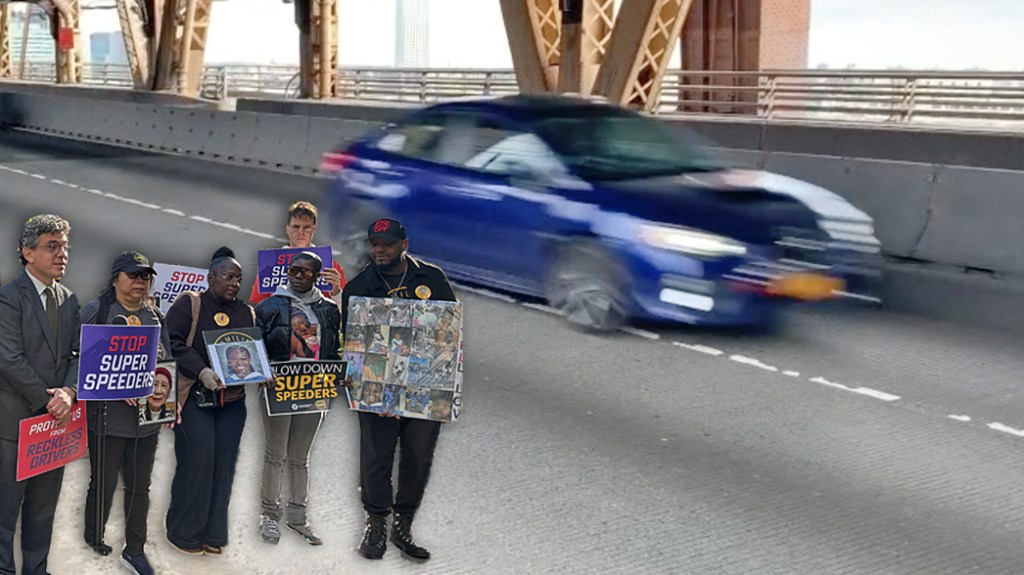
Claire Valdez: The primary reason is simply the number and size of cars on our roads and the dominance of vehicle-oriented infrastructure. Beneath that massive historic challenge are two more specific factors: vehicle speed and lack of visibility. To address this, I would vocally support city and state-level interventions, like implementing universal daylighting, Sammy’s Law, Super Speeders legislation, and redesigning our streets utilizing road diets and Low Traffic Neighborhoods. As I would on any important policy or piece of local legislation, I would partner with my state and city elected colleagues to support these measures and work to secure the necessary funding for proper implementation.
At the federal level, the design of cars and trucks is key to addressing the scourge of traffic violence. We have abandoned any meaningful design regulation and vehicles have only gotten more dangerous because of it. As automobiles get bigger and heavier, they are far more dangerous and injure and kill at a much higher rate. In Congress, I will push for regulations that explicitly prioritize pedestrian safety in vehicle design.
Ultimately, we must be invested in shifting the way this entire system works. As long as there are highways dividing our neighborhoods, as long as the design of our streets prioritizes cut-through traffic and speeding over connection and safety, we will continue to have traffic deaths and injuries. It is not radical to say we deserve a society with zero deaths from gun violence; it is my belief and commitment to fight for a society with zero deaths from traffic violence, too.
3. The federal government has broad regulatory oversight over many aspects of our built environment. What are the levers you can’t wait to get your hands on?
Kumar: There are dozens of federal levers that shape what our streets and cities look like. Four I would prioritize:
- Federal transit operating funding. The biggest barrier to better bus service in NYC is not capital cost, it is operating cost. Federal restrictions on operating support are a Reagan-era relic. Lift them. I want to help Mayor Mamdani with what he outlined in his platform for free buses and federal operating support can get us there at scale.
- Highway Trust Fund restructuring. The federal formula currently directs about 80 percent of Highway Trust Fund dollars to highways and 20 percent to mass transit. This split was set when federal transportation policy assumed every American family would drive everywhere. That assumption should reflect how Americans actually move, especially in dense metro areas. Restructuring this is one of the most consequential federal levers nobody talks about.
- Housing funding tied to land-use reform. Federal housing dollars should reward cities and states that build housing near transit and penalize ones that block it. Right now we mostly do the opposite.
- US DOT highway-expansion permitting. Highway expansion is approved by Washington every day in cities that don’t want it. Communities, especially Black and brown communities that have been bulldozed by interstates for generations, should have real veto power over what gets built in their neighborhoods.
Transit is the first answer for cities like ours. But most of the country still drives, and as long as they do, the cars they drive should not be poisoning their neighborhoods or emptying their wallets. The federal government should be using tax credits, procurement, and infrastructure dollars to accelerate the EV transition. And it should be using every one of those levers to require union labor and domestic supply chains, so the transition becomes a boost to American auto manufacturing rather than an excuse to offshore it. EVs are not the answer for New York, but they are part of the solution for the rest of America.
Reynoso: Two of the main pillars of my campaign are to abolish ICE and tax the rich, so I’ll start with those. ICE is terrorizing our communities, and I am absolutely going to support every effort to abolish ICE. I released a plan to go even further. On Day One in Congress, I will fight to dismantle, investigate, and rebuild after ICE. That includes creating a Truth and Accountability Commission to investigate ICE abuses and refer criminal conduct for prosecution where appropriate, as well as the creation of a fund for victims of their terror, and a clear pathway to citizenship. A democracy cannot heal by burying abuses committed in its name.
Second, the government has to take immediate action on taxing the rich to help us afford what we need for the social safety net. I relied on it growing up, and I want every American to have access to the help my family received, whether it’s housing vouchers, food subsidies, or affordable healthcare. I released a plan that would generate $6.8 trillion over 10 years without affecting 99.9 percent of Americans which would allow us to fund the social services we so desperately need.
I am a big supporter of the Interborough Express, and I am very excited to see the project begin environmental review. But we have to remember the project is only half-funded. And this is a project where getting the details right now is important. I will fight for federal support for the project to make sure it gets built quickly and without any design compromises or hiccups from the Federal Railroad Administration as we move forward with building passenger and freight rail side-by-side.
Won: Three levers that I will focus on immediately:
- MUTCD: The federal design manual that governs how streets get built hasn’t kept pace with what cities need. Right now, a local government that wants to daylight an intersection or narrow a lane has to fight Washington for permission to do it. and often loses. I’ve been fighting that fight from City Hall for four years; in Congress I can rewrite the rulebook directly.
- NHTSA vehicle safety standards: The federal government sets the rules for how cars and trucks are designed. It has not updated pedestrian safety standards to account for the fact that today’s vehicles are dramatically taller and heavier than they were twenty years ago. Europe has required automakers to meet front-end pedestrian impact standards for years. We haven’t, and people are dying because of it. This is a regulatory failure with a clear fix.
- Federal transit procurement rules: This one is wonkier, but I know it from two directions: a decade at IBM modernizing federal government systems, and four years as Chair of the Contracts Committee in the City Council, where I authored more procurement reform legislation than any sitting member. Federal rules governing how transit agencies buy equipment and contract for construction are outdated and slow. They are a big reason transit projects take twice as long and cost twice as much as they should. Reforming them doesn’t make headlines, but it’s the difference between an elevator upgrade that takes two years and one that takes seven.
Valdez: The federal government shapes our streets in ways most people never see. Three levers I can’t wait to get my hands on are the Manual on Uniform Traffic Control Devices, vehicle size, weight and design regulations, and the flow of federal funding.
The MUTCD is the federal manual that dictates what state and local DOTs can and can’t do on their own streets — and it is written, top to bottom, to prioritize moving cars fast over keeping people alive. Under current federal warrants, a neighborhood asking for a stop sign or a crosswalk often has to prove a threshold of crashes, injuries, or deaths before the intervention is approved. In other words: the federal standard is that people have to get hit first. That is indefensible, and Congress can change it — either by rewriting the MUTCD itself or by ending the requirement that state and local projects conform to it in order to receive federal funds.
American cars and trucks have gotten taller, heavier and more lethal year after year, while the federal agency responsible for regulating them — NHTSA chief among them — has done essentially nothing about it. The US doesn’t require pedestrian crash testing. We don’t cap hood height. We don’t tax weight. Europe and Japan do all three, and their pedestrian fatality rates reflect it. In my Assembly district alone, there were 1,396 crashes, 744 injuries, and one death in 2025. Those are lives changed forever because the federal government decided that the comfort and profit margins of automakers matter more than the people on the other side of the bumper. Congress has the authority to fix this. It has chosen not to.
Finally, right now, Federal Highway Administration dollars flow to state DOTs, which then decide what cities get. That’s how a city like New York — which generates the ridership, walks the most, drives the least, and pays the most in federal taxes — ends up at the mercy of upstate priorities and Albany politics. Big cities should receive federal transportation funding directly. It would mean faster project delivery, more accountability, and infrastructure that actually reflects how the people in those cities live.
These aren’t abstract policy fights. They are the difference between a kid getting home from school safely and a kid getting killed by an SUV that never should have been street-legal at that height.
4. Car owners dislike bike and bus lanes and would prefer to have that space for parking. What do you think?
Kumar: Drivers are a real but minority share of this district and we should not be designing public space around them by default.
Free on-street parking is one of the largest unpriced public subsidies in any American city, and we hand it almost entirely to car owners in one of the densest housing markets in the country. The real question is not bike lanes versus parking; it is what we do with that public space in a district where every plot of land could be housing, a bus lane, a bike lane, or a third space where neighbors actually see each other.
As a federal candidate I will not pretend that public space belongs to private vehicles by default. Bike lanes and bus lanes save lives, cut commute times, and reduce emissions. Housing built on land we currently use for parking puts a roof over someone’s head. Parking does neither.
Reynoso: Parking is a privilege, not a right, and we shouldn’t let car owners stand in the way of street safety. We have to treat bike lanes, bus lanes, and other traffic-calming measures as what they are, infrastructure. We don’t let communities stand in the way when we need to repair a sidewalk or put in a new traffic light, and we shouldn’t let them do it when we need a new bike or bus lane either. I’ve been on the record calling for reduced parking citywide, and I have been a big proponent of using streets not only for transportation, but also for other public uses like open streets and outdoor dining. Streets are for people, not for cars.
The Trump Administration has added ideological fuel to this issue when they made it explicit that they were rescinding any funding for projects they deemed “hostile to cars.” We can’t hide our support for people-oriented streets and hope it’ll fly under the radar as a sidebar issue, we need to be vocal and consistent.
Won: I fought the Adams administration and won to build the Queens Boulevard bike lanes, which reduced traffic fatalities on that corridor by 68 percent. I negotiated $79 million to relocate a DOT operations yard under the Queensboro Bridge and replace it with a waterfront esplanade and bike path. I secured $97 million to turn parking lots and city yards under that same bridge into over ten acres of public open space. And I introduced the most ambitious daylighting legislation in NYC history — to remove parked cars from crosswalk sightlines citywide — built a coalition of 41 co-sponsors, 90 elected officials, and 164 community organizations behind it, and have been fighting for it for four years. I have consistently chosen people over cars and will continue doing so in Congress.
Valdez: There is the adage, “To a group that has been in power, any measure of equality feels like oppression.” Our society has privileged and subsidized our public space for car owners at the expense of their neighbors for too long. Everyone deserves to get where they are going safely, to live in a community that isn’t abused by cut thru speeding drivers, and to make use of public spaces, including our streets.
But when you look at the neighborhoods of NY-7, you often see the opposite reality. Highways that divide people from one another, dangerous routes for pedestrians and cyclists, and miles of streets used as storage for private vehicles. Parking can be a heated topic, but we can change the tenor of conversation by changing the conditions; when it’s much easier and more convenient to get around by modes other than cars, there will be less attachment to using public space for parking. We need to invest in our transit system so train headways are shorter and every station has an elevator, and also build projects like the IBX and QueensLink so current transit deserts are better served. We need to invest in bus lanes so riding the bus isn’t seen as a last resort, but rather a fast and convenient option. And we need to invest in bike lanes and our streetscape overall, so our streets can become truly safe and enjoyable places to get around and spend time rather than just places for cars to speed through on the way to their destination.
5. How do you get around your district?
Kumar: Bike, on foot, bus, subway
Reynoso: Bike, on foot, bus, subway, private car
Won: Bike, electric bike/stand-up scooter, on foot, moped/motorcycle, bus, subway, private car
Valdez: Bike, on foot, bus, subway.
Early voting starts on June 13. Mayor Mamdani has endorsed Valdez.
Streetsblog has migrated to a new comment system. New commenters can register directly in the comments section of any article. Returning commenters: your previous comments and display name have been preserved, but you'll need to reclaim your account by clicking "Forgot your password?" on the sign-in form, entering your email, and following the verification link to set a new password — this is required because passwords could not be carried over during the migration. For questions, contact tips@streetsblog.org.