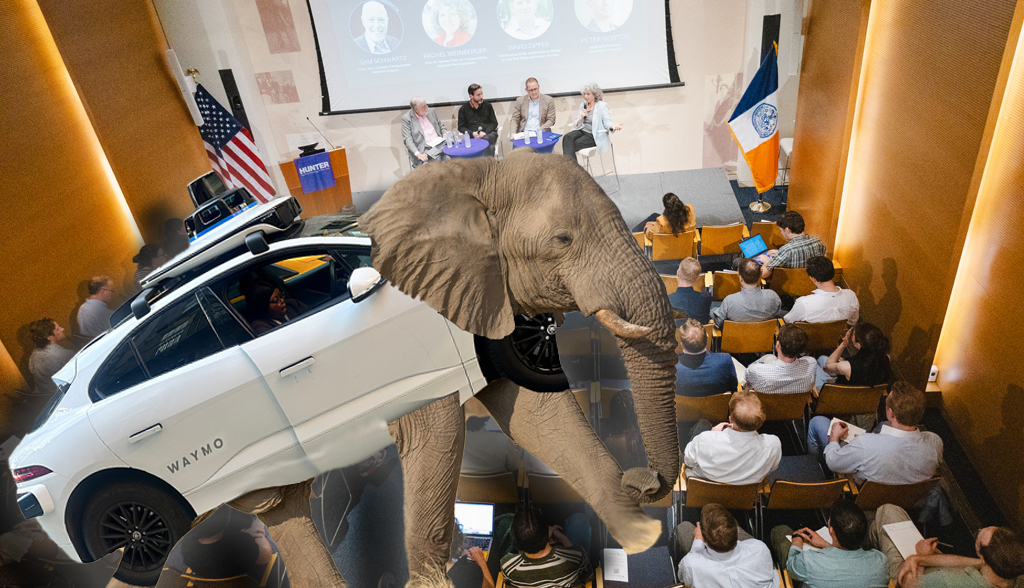
‘A Solution, But To What Problem?’ Experts Say AVs Are The Elephant In The Room, But There’s Still Time To Figure Out Their Role
Few op-eds that we’ve published over the years spurred more reader engagement than the Sam Schwartz-Kelly McGuinness-penned piece earlier this month about autonomous vehicles. We had commissioned the piece from the pair of experts after Gov. Hochul ended Waymo’s testing of AV taxis in New York City, mainly to ask the simple question, “What now?” Frankly, the piece was fairly anodyne — “What now? Society should have a serious debate about the role of AVs so we don’t end up with what happened in the 1920s, when we failed to have a serious debate about cars” — but reader interest was exceptionally keen. Fortunately, Schwartz and McGuinness were also leading a three-panel seminar last week, “The Future of Transportation,” at the Roosevelt House Public Policy Institute at Hunter College. Because of our readers’ — and society’s — obvious interest in the topic, we offer an excerpt from the Schwartz-led panel, “Autonomous Vehicles and the Hard Problems — Safety, Streets, and Tradeoffs.” Panelists were Peter Norton, author of “Fighting Traffic: The Dawn of the Motor Age in the American City“; Rachel Weinberger of Regional Plan Association; and journalist David Zipper.
Sam Schwartz: Okay, this is going to be exciting. We have a panel here of experts who’ve been studying this issue and have been raising some concerns, and they’re giving us a lot of history, and maybe we’ll start with Peter, and we can go on for a few minutes, and you tell us a little bit about your thoughts about autonomous vehicles, what’s being done right or wrong, or what should we be wary of? And then David, and then Rachel.
Peter Norton: We can’t talk about the benefits of robotic cars alone. We can’t talk about the risks of robotic cars alone, and we can’t talk about regulation alone. We have to have all of those things in the room together. I’ve been to some events like this, where it’s all pro robot cars all the way and I don’t think that that’s very helpful. In fact, I’m moved right now to be in the Roosevelt House facing a huge inscription behind you in the audience of the 1940 speech by Franklin Roosevelt on the four freedoms, the first of which is freedom of speech and expression, which is under greater threat than at any time since the time that he said this in this country. And I think this event is reminding us or the value of free expression.
David Zipper: I was just joking with somebody over the break that this panel should be titled, “And yet ….” I would think of autonomous vehicles as a solution. And I don’t know what the question is. We just heard a proposed question from Anthony Perez — is he still here, by the way? No, that’s a shame. I would really love it if these AV companies that say they want to be engaged in dialog would stick around and be present for the tough questions. I find that a little bit disappointing, but what he said was that we’re all about safety, safety, safety. Well, if that’s the driving purpose, then New York City should be pretty much the last place they want to go to. Last year, 205 people were killed in New York City in crashes. That’s the lowest number since 1910 — and there are no autonomous vehicles in New York right now. If the goal is to reduce crashes, there’s a lot of other things we could be doing.
But frankly, if the goal of the AV companies is to reduce crashes, they could potentially do a lot of good by going to rural areas. There are so many single-car crashes that take place in rural areas. There’s no real transit, there’s no real ride-hail. It’d be an incredible boost, not just of safety, but of mobility. Yet rural areas are nowhere on the expansion plans of Waymo or other AV companies. You know why? These aren’t nonprofits trying to save lives. These are corporations that are looking to make a lot of money. And I don’t actually have a problem with capitalism. Sometimes the public interest aligns with the private interest, and sometimes it doesn’t.
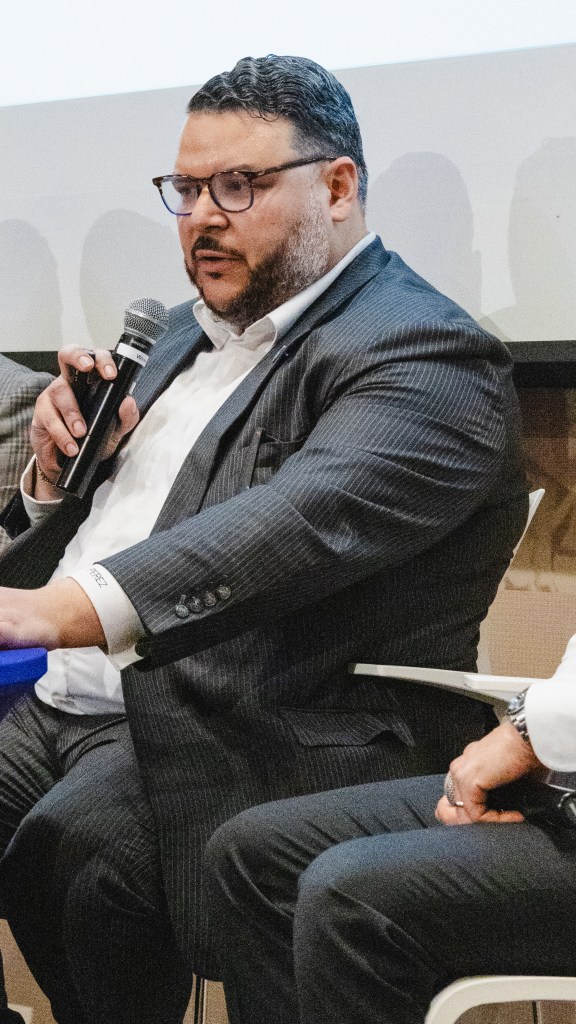
The other question that Anthony suggested during the Q and A when you guys pushed him a little bit was to talk about how Waymos reduce the need to own your private vehicle and connect people to last-mile. I am old enough to remember 15 years ago when we heard the exact same thing about Uber and Lyft. And we now know, after a decade-plus of research, that both of those promises were hollow.
First mile/last mile works in a very specific environment. You’re talking about commuter rail with very expensive parking downtown. Most of the time, people do not want to do it. But it’s not real. And in terms of car ownership, there’s no impact. In fact, there’s one study from Carnegie Mellon that found that car purchases actually rise when ride-hail enters the market. People don’t get rid of cars, but you do have some drivers that buy one.
So why exactly would robo-taxis be different from human-driven ride-hail when they basically are a substitute? I don’t have an answer to that.
Rachel Weinberger: I completely agree with David’s point that they were a solution to a problem that’s not defined. We haven’t decided what we want. And while we’re baffing about not deciding, we’re allowing a new technology that’s driven by the logic of capitalism to push in to our city with an expectation that we’ll accommodate. In Peter’s book, he really talks about how cars really pushed into the city. Now, if you think about the legacy of [Lewis] Mumford, and what is a city, and how it’s to maximize interactions, then when we continued to give space to individualized transport, we were giving away too much space. We’re over-relying on individualized transport today. If we continue to think about individualized transport as the privileged mode, then we really need to think about how we’re allocating space. There is a 100-year legacy. In any case, this is a real technology that has real applications and we need to get real about it.
Schwartz: The governor [of New York] made a decision not to continue the test program. Is New York City that different from all other places? It’s in Austin, it’s in San Francisco, which has pedestrians. Are we that different? Did the governor make the right decision?
Zipper: I actually would love to see a serious exploration of AVs in rural America, but if we’re talking about New York City, specifically, New York is exceptional. Sixty percent of all transit rides in the entire country take place in New York City. Relatively few trips are being taken by car. So getting back to first principles, what are the goals of transportation in a place like New York, if we’re talking about efficiency and we’re talking about safety, which I think are two pretty good goals to have for transportation. This is place that has such limited space and such strong bones for transit in particular, that the path forward is to improve transit because it’s just too inefficient to have individuals inside a big box of a car. I don’t care how it’s operated. That’s just not how what you scale to make New York City a faster, more-efficient and safer place.
Norton: Many of you know, Uber was in the robo-car business and wanted to open in California. California said, “Our people are not your experimental test subjects,” at which point the governor of Arizona raised his hand on Twitter and said, “We have open roads and open minds. Come here.” And months later, Elaine Herzberg was dead. So we have a difference, not just in the city, but also in the responsiveness of the government officials to the will of the people relative to the will of the businesses who have a business agenda.
Schwartz: Peter, you’ve written a terrific book, and I know you’re a big believer in the George Santayana quote that if we don’t learn from history, we’re doomed to repeat it. What could we have done differently in 1900? And are there any lessons there for us as we embark on a new transportation revolution?
Norton: Some of you may know, in 1971 Mayor John Lindsay said, “Let’s take a segment of Midtown Manhattan and exclude passenger cars from it. We’ll call it the red zone. You can’t go into the red zone if you’re driving a passenger car.” And there was a rather predictable backlash. What maybe you don’t know is that 50 years earlier, Nov. 2, 1922, the traffic magistrate of the City of New York, William McAdoo, appalled at the fact that New Yorkers, especially New York children, were being run down, injured or killed every day in the city of New York, said, “Well, we’re going to have to remind motorists that the streets do not belong to motorists, and we’re going to begin by banning pleasure cars” — a term I’d like to revive south of 14th Street: “No pleasure cars south of 14th Street.”
That statement triggered a panic attack in motordom. And within days, there was an editorial in Engineering News Record by a road builder who said the obvious solution was only a “radical revision” of our conception of what a city street is for. He wanted us to get to a place where people think of streets as primarily for cars. McAvoy was channeling a national aspiration, maybe best exemplified in Cincinnati in 1923 when 42,000 Cincinnatians signed petitions saying, “We want every car to be required to have a mechanical speed governor such that it could not exceed 25 miles per hour.”
These were the democratic alternatives that we did not take, not because they weren’t popular, but because they provoked people with a business interest in selling cars and roads to push hard for that “radical revision” of our conception of what a city street is for.
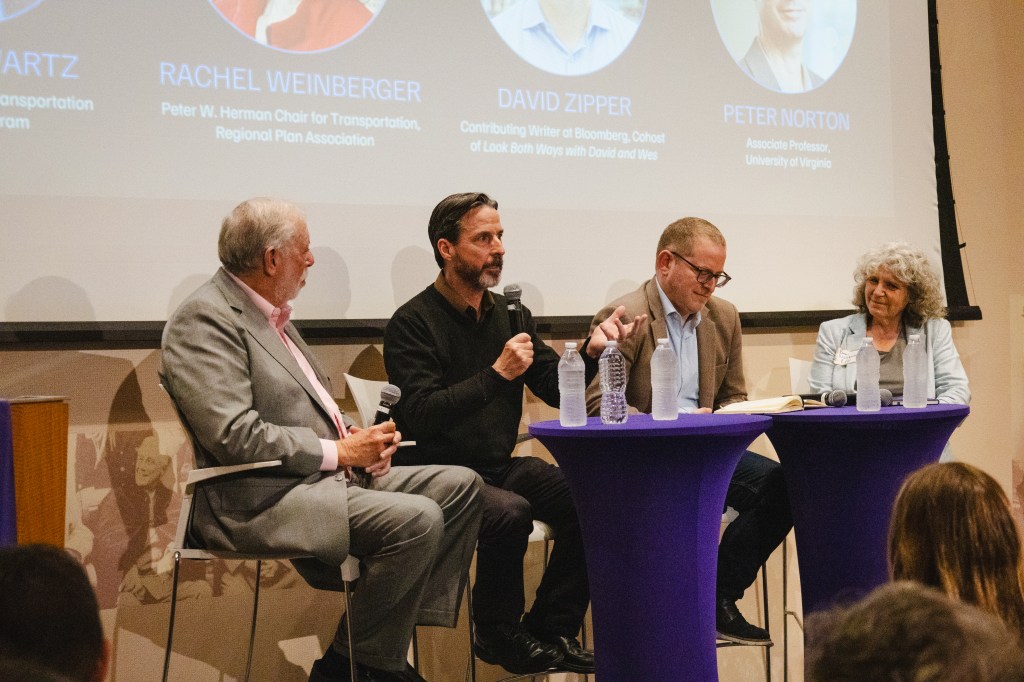
Weinberger: The safety question is actually a distraction, and I think for exactly that reason: we have the technology to make motor vehicle travel much safer. I might think my kid has a right to play in the streets, but I hate to come home at the end of the day and he got run over playing Skelly, right? So the I think the way you framed it was that the cars won by conquest. Ben Hamilton Bailey once said, “If you want to make your street safe, put your children in them.” But we’re not willing to take that specific risk. And so because of that, it actually became very dangerous to be in the streets.
But we have speed governors, we also have all kinds of technology now that tells you when you’re swerving far back and forth in the lane. So we could get a lot of the so-called safety improvements by using the technologies that we have and keeping a person at the wheel. I don’t want this to just be the “bash autonomous vehicles” panel. But there’s a lot of these possibilities.
Zipper: Somebody asked a question to the earlier panel [full disclosure, that was Streetsblog Editor Gersh Kuntzman] and pointed out that the safest thing is to get more people on transit because transit is 30 times safer than individualized automobile traffic. So the safety thing is kind of clear. And it’s worth remembering that Oslo and Helsinki have gone a full year without any crash deaths whatsoever. Anybody know how many autonomous vehicles there are in those two cities? Exactly zero. So you know, it’s not like this stuff is impossible without futuristic technologies.
I want to give a shout out to the woman in green — I believe it’s Sophia Lebowitz from Streetsblog — who asked the question to Anthony from Waymo, who isn’t here: “Yeah, but in any of these cities where Waymo is active are you seeing an overall decline in crashes?” He didn’t really answer that. I’m not sure he knows, but that is the right question. We shouldn’t be asking only like, “Hey, are robotaxis safer than humans on a per-mile-driven basis?” because there’s a real risk that AVs induce people to take a lot more car trips or to replace transit, which is so safe for all the reasons Rachel was just saying. We could end up with a lot more driving. And even if every individual, self-driven mile is safer, if you have that much more driving, you have more crashes overall.
Weinberger: So the inevitable question is, “Why are we over-reliant on individualized transportation?” We have had this bizarre idea in this country that the sum of individual decisions actually adds up to the best possible collective decision. And the example that I love to use is when you hold the train because you need to get on, you yourself are going to get to where you’re going faster, but you have compromised the entire system. Same thing with the cars. As early as the 1920s, car manufacturing executives were noticing that all of the fun of using an automobile is ruined by the number of people who want to use it. So we got down this rabbit hole, and now we’re trapped in it.
Last week or week before, there was a big article in The New York Times about how prohibitively expensive it is now to own a car. Well, it turns out that if you took the $15,000 that AAA estimates it cost to own and operate a car every year, and you divided that by 365 days, that’s 13 trips on the subway every day. So it doesn’t have to be so expensive to get around. It’s only so expensive to own a car. And yet we don’t have good alternatives in most places because we have deprived ourselves of those opportunities. And if we continue just letting autonomous vehicles replace the system that we have, we’re going to just be for ourselves.
Schwartz: So, Rachel, what do you see happening in the city by 2050?
Weinberger: What do I see happening in the city? I see the city kicking the can down the road on so many things. I see the BQE falling down. I don’t know how the city gets out of that trap. So that is my sad and depressing answer.
I’ll tell you what I think the city should do and what it should look like. I think that we need to have a “radical revision” of what the roads are for.
And we need to improve transit. Over the last 25 years, European cities have been doubling and tripling down on transit. We have better ways of moving around the city: active transport. Micro-mobility. Mass transit. And that will limit the trips in an individual vehicle to, like, when you just bought a couch. There’s a role for that, and let’s not forget about freight. So, so we really do need to rethink the use of that space. It is a tremendous resource that that we’re just sort of, you know, leaving on the table, as it were.
Schwartz: David, Elon Musk has said that any journalists writing negatively about AVs are killing people. David, are you killing people? I hope not.
Zipper: No. This is not just Musk, but I do hear it from a lot of AV boosters that I am literally killing people by pointing out gaps in AV information. And I just find it kind of fascinating. I wish I had that kind of power. You can’t compare anything we do as journalists to how much money is being spent on supporting AVs and lobbying for AVs, including some of the stuff Anthony was saying before.
If you talk to academics, they will say, “We have no idea if AVs are actually safer than human drivers.” Does anyone follow what’s happening in Austin, where Waymos keep driving right past “Stop” arms on school buses? Waymo did a recall, and they’re still doing it. They can’t seem to stop it.
It’s really important to recognize that there’s money, a lot of money at stake here.
Schwartz: Peter, let’s say, by some miraculous way, one of these companies decides to hire you and listen to your advice. What would that advice be?
Norton: Some of what Anthony had to say at least sounds right: if you integrate robot cars into the system and make it one component in a system, it may conceivably serve useful purposes there. But of course, Anthony’s a smart guy and knows this audience, and that’s not the same message Waymo gives elsewhere to other audiences, where they’re presenting robotic cars as solutions.
But, in short, I would say, we have to remember the distinction between a tool and a solution. Tech companies deliberately obfuscate the distinction. They make a solution about the superior tool. These are actually contradictory terms. They are antonyms. A tool empowers the user, whose autonomy grows because the tool extends your capacities. So the tool expands the capacities of the human user. While a solution purportedly, though never, actually, substitutes for the user and de-responsibilizes the user.
When we have systems that purport to solve all your problems for you, they’re also implicitly saying, “You’re no longer a responsible party. Here, you can turn over everything, every sense of responsibility of your own.” The real prophet of this message, I think, was Rachel Carson, back in 1962, in “Silent Spring.” She pointedly did not say, “Insecticides are necessarily destructive.” She said misperceiving insecticides as something you don’t have to worry about — you just dump them in large quantities everywhere —is the problem.
That’s exactly analogous with high-tech driving. It certainly can be useful. We can use it in ways that we know will prevent crashes in the defective system we’re stuck with for now. But it is by no means the deliverance that the marketing would have us believe.
Zipper: I don’t think I’d have anything to say to a company like Waymo, because Waymo is doing exactly what Waymo is designed to do, which is to scale and to return the maximum amount to its investors. They’re doing what they’re designed to do. So people’s question is, “What would you ask Waymo to do?”
But I say, no. If the genie gives me this right to be able to offer advice that someone would actually listen to, I would say it shouldn’t be to Waymo, but to Congress. It would be to NHTSA. It would be to Gov. Kathy Hochul. NHTSA, for example, has completely abdicated its obligation to think ahead on behalf of all of us and on behalf of the industry, to protect us from some bad outcomes that will come in the future. They need to ensure that the industry evolves in a way that doesn’t reward bad actors.
Look at Tesla. Tesla has paid no penalty whatsoever for pushing the envelope and exaggerating its “autopilot” system. The real failure here is on the regulators.
Question from the audience: These companies come in and say, “We can make all the problems go away.” And city and state government have a lot on their plates, and legislators maybe don’t fully know all the information, and so they just take them at the word. So I’m curious what you all think about that?
Zipper: It’s so tempting to be able to off-load the civic duty of a policymaker and say, “Oh, look, this company is going to be the deus ex machina of coming through to fix it for us.” Cities need to talk about more. “If we’re really worried about safety, what is the most cost-efficient and effective way of saving lives and pursuing that?” rather than simply saying, “Oh, look, there’s a company pitching me on saving lives. I’m just going to go along with it.”
It’s on us to hold policymakers accountable, but also back them up and say, “Look, if you have a good idea for safety through policy, we’re going to support you. We’re not just going to throw rocks, because I think that’s part of it is like people get bruised as public officials.”
Weinberger: In New York City, we had such a battle just to lower the speed limit. We have not had the political will to implement speed governors in vehicles. So I think that’s the problem. It’s the lobbying. It’s the political campaign contributions. It’s wanting to get re-elected. I think there’s a lot of problems in how government works, and so I think that’s why we haven’t done these things.
Norton: I think everyone in this room should see an article co-authored by Sam Schwartz and Kelly McGuinness in Streetsblog where they say very wisely, that if your city does not have the capacity to rise to the occasion and insist on the rules that the residents of that city need, then you’re going to end up with rules by default written for you, largely by the companies themselves.
I want to offer you the fact that a century ago, street capacity was recognized as a public resource to be allocated in the public interest, which meant, for example, if you were a street railway, you got to have a monopoly of street service by rail in that city, but in return, the city demanded that you serve the whole city, including unprofitable districts, and that you serve day and night, that you take care of the street between the tracks, that you pay taxes and lots of other rules.
They recognized was that street capacity is not available on a first-come/first-served business. They had to agree to a public service-public benefit arrangement. We have not been holding companies like Waymo to that principle that the street is a public utility. It is not an open season to anybody who wants to make a buck off of our resources.
Question from audience member Nicole Gelinas: What do you say to people who say, “You’re just not very smart because if you were smart, you’d be working for a tech company and making millions of dollars. And you would understand all these reams and reams of data that they put out. Their goal here is to make everyone’s lives better, and you are just standing in the way.”
Norton: I would remind such people that smart is a means to an end, and the end is wisdom. And the smarter you are, the more dangerous you become when you lack wisdom.
Zipper: I also have a quick response. Anybody remember the David Halberstam book about the Vietnam War? What was it called? “The Best and the Brightest.” Anybody know the book about Enron? “The Smartest Guys in the Room.” That’s my response.
To watch the panel, click here.

Read More:
Streetsblog has migrated to a new comment system. New commenters can register directly in the comments section of any article. Returning commenters: your previous comments and display name have been preserved, but you'll need to reclaim your account by clicking "Forgot your password?" on the sign-in form, entering your email, and following the verification link to set a new password — this is required because passwords could not be carried over during the migration. For questions, contact tips@streetsblog.org.