Upstate County’s New Bus Service Will Turn A Transit Desert Into A Rural Network
Jefferson County was one of the few counties in New York without a bus service. Now job seekers and students will have previously unfathomable options in their North Country communities.
Streetsblog provides high-quality journalism and analysis for free — which is something to be celebrated in an era of paywalls. Once a year, we ask for your tax-deductible donations to support our reporters and editors as they advance the movement to end car dependency in our communities.
If you already support our work, thank you! If not, can we ask for your help?This year’s fundraiser includes a special gift for our biggest supporters. Don’t miss out.
Together, we can create a more livable, walkable, bikeable, equitable and enjoyable city for all. Happy holidays from the Streetsblog team!
Jefferson County and its 116,000 residents will get long-overdue public bus service in 2026 and officials are bullish on what it means for residents pursuing employment and education.
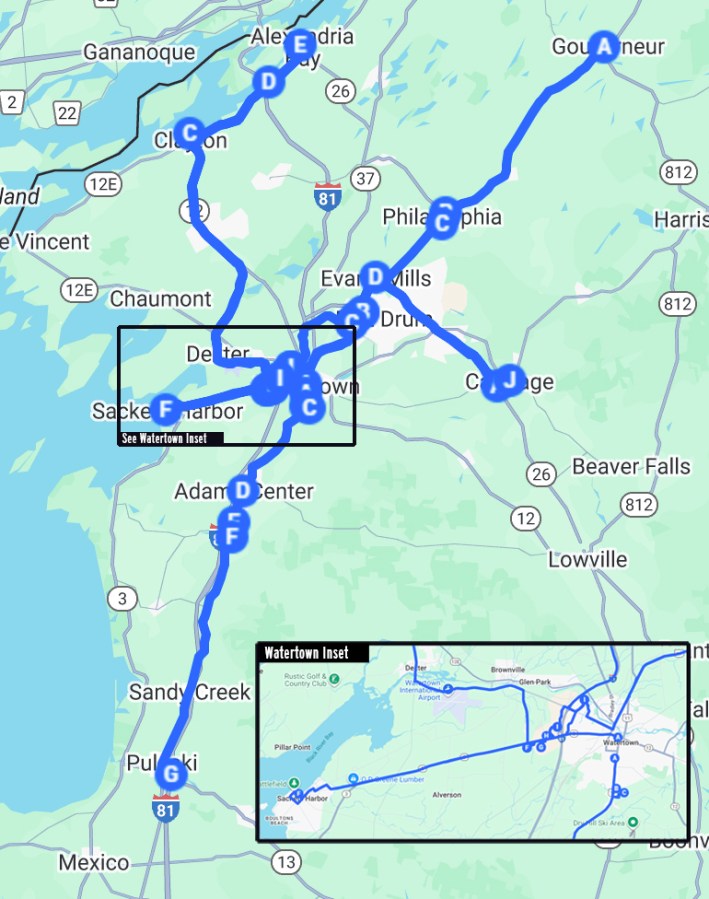
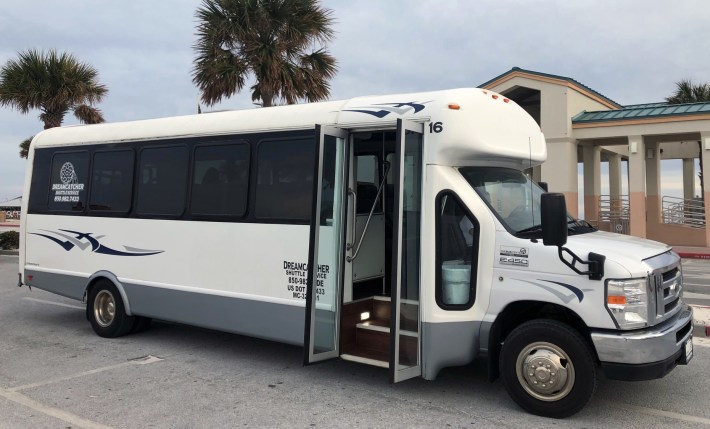
The county will create four bus routes — spokes from the hub of a county seat, Watertown — with plans for a central transfer site down the line.
“It’s a pretty big deal,” said Jefferson County Planning Director Hartley Bonisteel Schweitzer.
To understand how big a deal, you have to break down each line and its purpose:
The Northern Connector hits Fort Drum, Evan Mills, Antwerp by request and Gouverneur in St. Lawrence County and has an expected daily mileage of 342 miles.
The Southern Connector hits Adams Center, Adams and Pulaski in Oswego County with an expected daily mileage of 341 miles.
The East-West Route hits Carthage, West Carthage, Evans Mills, Fort Drum and Sacket’s Harbor in Jefferson County with an expected daily mileage of 385 miles.
The Thousand Islands Connector hits Clayton, Alexandria Bay, Depauville and Dexter with an expected daily mileage of 318 miles.
For cosmopolitans unfamiliar with the northern reaches of the Empire State, the route rubs against the St. Lawrence River and the handful of postage stamp-sized islands along the border with Canada. The routes puts you within spitting distance of SUNY Oswego (go Lakers), has stops all over Fort Drum which houses the 10th Mountain Division (and could be the future home of a ballistic missile defense system) and gets within 30 minutes of the well-kept vacation getaway secret Lake Bonaparte.
The bus lines aim to benefit job seekers and students the most, and planners built the stops around sites where ridership should be high, such as schools and senior housing, and basic necessities such as grocery stores and job centers. The routes also connect with neighboring bus routes in St. Lawrence and Lewis counties. Riders will be charged a $2 cash fare.
The cute CitiBus logo. Graphic: Watertown CitiBus
Watertown operates a public transit system called CitiBus, but it doesn’t go beyond the city, leaving residents without a car no good access to opportunities outside Waterton except expensive taxis or sparse rideshare options. Many people who move to the county are shocked to find that there is no public transit.
“I think where in bigger cities, people have the opportunity to choose to take public transit, like it’s a greener solution, or it’s easier, and in Jefferson County, right now, it’s more of a need-type thing,” said Brandi Smith, transit director for CitiBus. “There’s just no options for people to get to places for the necessities of life.”
Who will this help?
Jefferson County residents’ lives are largely built around the military installation, where, according to the Army, nearly 15,000 military service members and about 3,700 civilian personnel work and 16,000 family members live on or near.
The county seat Watertown, population 25,000, has leading employer Samaritan Medical Center, estimated to have more than 2,000 staff, and a large workforce in state and local government. Regional education opportunities present themselves at Jefferson-Lewis BOCES, a cooperative education service that provides career and technical instruction and specialized classes that schools may otherwise be unable to provide; and Jefferson County Community College, which has approximately 2,500 students.
The county’s Coordinated Transportation Plan, adopted in 2021, had found that even outside of a population centers like Watertown, pockets of the county need transit.
That’s based on a overlapping concentrations of seniors, people living below 185 percent of the poverty level, housholds without a vehicle and people with disabilities — groups shown to benefit greatly from public transit availability.
So using one of the six buses made available next year, a nurse living in Pulaski could conceivably make a 10 a.m. shift at Samaritan Medical Center in Watertown. A homemaker living on base at Fort Drum could visit the Walmart in Evans Mills to grab odds and ends in time for dinner. It would be possible to do this without a bus service, but with more cost, far more planning and less safety.
Seniors, low-income residents, Medicaid recipients and people with disabilities can utilize the Volunteer Transportation Center, which offers rides to healthcare centers or grocery stores. But Executive Director Sam Purington said volunteer drivers, at best, are a supplement for a transit desert.
“Volunteer drivers are perfect for medical appointments and grocery shopping, but there’s too much demand,” Purington said. “And what we’ve seen in adjacent communities is that volunteer drivers can supplement the public transit system very well by providing first-mile last-mile service.”
The Volunteer Transportation Center plans to send a proposal for the first-mile last-mile service. Though the four routes in the county would be a welcome addition, the additional service would ensure maximum transportation coverage. Residents who don’t live directly in the path of the bus routes or have destinations just outside their path could receive rides to connect them. That way, they can still make use of the bus service.
Big bang for the buck
Jefferson County received federal transit funding under the Federal Transit Administration’s 5311 Rural Transit Program and will receive $1,123,080 in federal funds for management and operating assistance, but the final cost of the program, including the local share, will be confirmed only after operators for the bus service and first-mile/last-mile service are selected.
The Jefferson County Legislature first approved sending in a grant application in 2022, an indication that the need has long been clear. Prior leadership of the county didn’t prioritize a bus system because the lack of public pressure made it easy to ignore the larger problem, especially when there was already a bus system operating within Watertown, Schweitzer said.
“Maybe there was a collective thought process that the people who needed a bus service were already being served by the city’s bus system,” she said.
Jefferson County Legislator Jim Nabywaniec (R-Calcium), put the impetus for delivering public transit down to a bit of FOMO.
“Jefferson County was one of the few counties that hadn’t gotten in it, and our neighbors were doing it, and it was being successful in the other counties,” Nabywaniec said. “We looked at that and said, ‘OK, it’s time for us to do it as well.'”
After breaking its own records for bus use with 159,000 trips in 2024, St. Lawrence County is expanding its fleet. Lewis County has also expanded its service and now includes routes to Watertown and Fort Drum.
The full North Country service will eventually give people connections to long-range transportation, such as Amtrak. Long-range connections spanning multiple counties wouldn’t be the shortest journeys, but they would be cheaper than Trailways. Plus, they often didn’t exist before.
“Connecting St. Lawrence, Jefferson, Lewis, Oswego and Oneida counties, we are the last missing puzzle piece of this broader North Country transit system,” Schweitzer said. “So again, we are very excited.”
Before becoming Albany Bureau Chief in late 2025, Austin C. Jefferson was a state politics reporter for City & State NY, covering state government, elections and major legislative debates. His reporting has also appeared in the Daily Freeman, Chronogram Magazine and The Legislative Gazette. Having grown up in the Hudson Valley, he's always happy to argue about where Upstate New York truly begins.
Streetsblog has migrated to a new comment system. New commenters can register directly in the comments section of any article. Returning commenters: your previous comments and display name have been preserved, but you'll need to reclaim your account by clicking "Forgot your password?" on the sign-in form, entering your email, and following the verification link to set a new password — this is required because passwords could not be carried over during the migration. For questions, contact tips@streetsblog.org.
In their latest video, the current and former NYC public school students of the Joint Transit Association have some concerns about Mayor Mamdani's plan to rebuild the BQE.