Streetsblog provides high-quality journalism and analysis for free — which is something to be celebrated in an era of paywalls. Once a year, we ask for your tax-deductible donations to support our reporters and editors as they advance the movement to end car dependency in our communities.
If you already support our work, thank you! If not, can we ask for your help?This year’s fundraiser includes a special gift for our biggest supporters. Don’t miss out.
Together, we can create a more livable, walkable, bikeable, equitable and enjoyable city for all. Happy holidays from the Streetsblog team!
If you can’t enforce it, expand it.
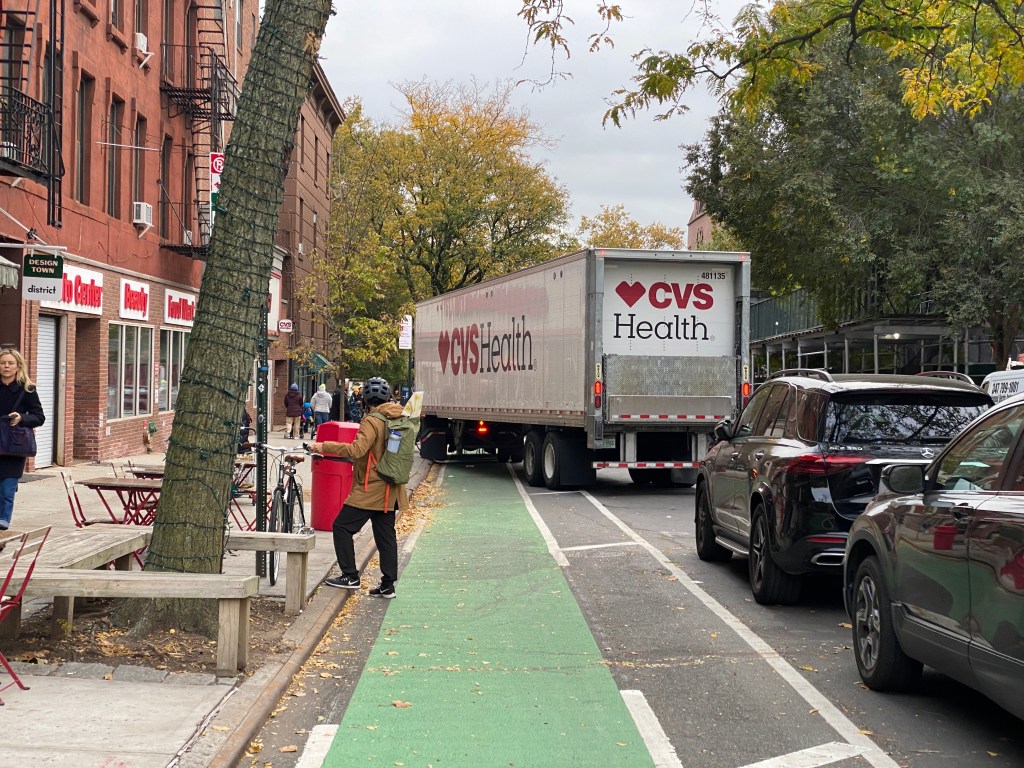
The city Department of Transportation wants to address rising e-commerce deliveries and freight traffic by adding more miles of truck routes to neighborhoods already plagued by a rapid increase in so-called “last-mile warehouses.”
The department’s long-overdue Truck Route Network Redesign report shows the city has essentially given up on enforcing existing routes — and offers an alarming solution: Bring the trucks into route compliance by adding around more than 45 miles to the existing network.
This was not what environmental advocates had in mind when they advocated for a revamped freight network.
“We were envisioning reducing truck traffic on local roads, increasing safety, and moving towards our climate mandates,” Kevin Garcia, senior transportation planner with the Environmental Justice Alliance, told Streetsblog. “It doesn’t feel like this report will do that. What DOT is laying out is more permission for trucks to traverse the city on more roads in more residential areas.”
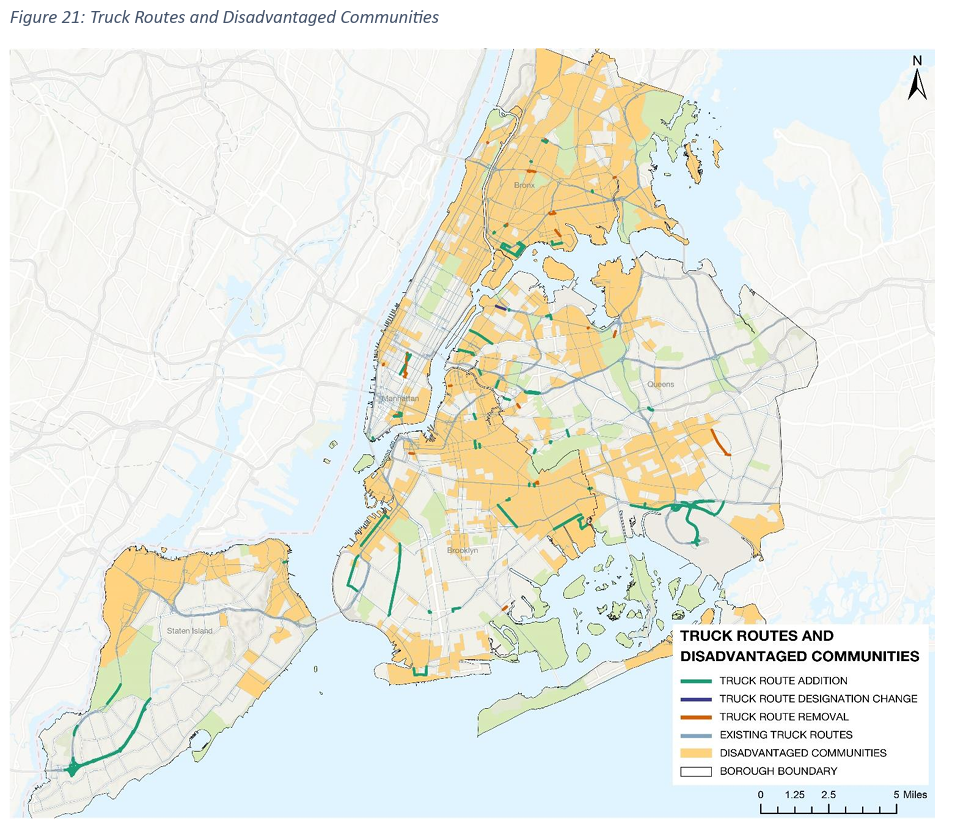
DOT’s proposal would add 13 miles of new truck routes in Brooklyn, 16 new miles in Queens, and 14 new miles in Staten Island — the three boroughs where Industrial Business Zones have accommodated an increasing number of “last-mile” warehouses that allow e-commerce companies like Amazon to fulfill promises of next-day delivery.
Manhattan and the Bronx will receive just two and four new miles of truck routes, respectively. The DOT also wants to remove approximately four miles of existing routes throughout the city.
The DOT branded its legally mandated report as a “redesign,” but the changes to the city’s 1970s-era truck route map are fairly minimal.
“It’s not a redesign,” said Margaret Newman, an architect and planner and former chief of staff of the DOT. “It needs a different title. It’s more of a report on the state of the truck movements in New York City and the maps reflect more of what’s actually going on.”
Truck route additions, removals, with an overlay showing disadvantaged communities. Graph: DOT
Lax policing of trucks
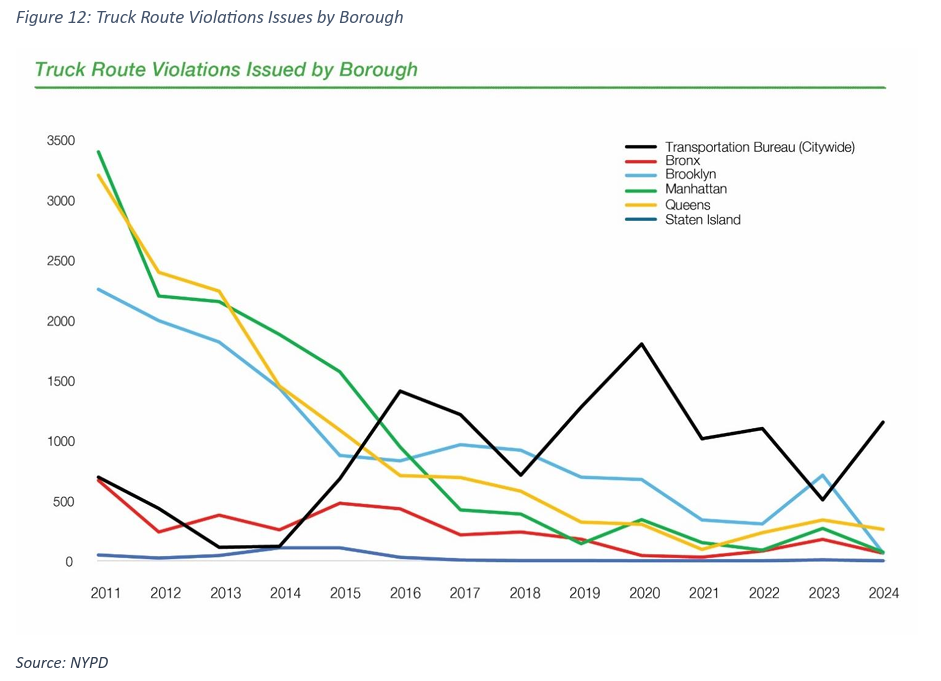
In 2011, cops wrote roughly 9,700 truck route violation tickets citywide. That ticket count nosedived in the following years, a trend that granted truck drivers more leeway to stray from designated routes.
Enforcement of truck route violations has plummeted. Graph: DOT
The NYPD contested this analysis, and told Streetsblog that it has not let up on enforcement despite its own published data, but has shifted to a “more targeted, impact-driven” approach “rather than a reduction in overall truck compliance efforts.”
“The department’s overall truck enforcement activity has increased and broadened,” said the spokesperson who did not provide a name.
In fact, the effort has not increased from that 2011 peak: Total off-route violations were just 1,036 in the first 11 months of 2024 — which represents a more than 85-percent decrease. (Ticketing for off-route violations is up to 1,302 tickets over the same period this year, the spokesperson said, but is still off by 80 percent overall.)
The DOT says its new Department of Sustainable Delivery has 45 “peace officers” who will help police truck traffic starting in 2028 — but the agency later DOT clarified that its workers will remain focused on regulating micromobility vehicles used by delivery workers.
Competing ideas
The redesign report attempts to address two competing ideas: the current network of truck routes is long overdue for an upgrade, and the city should shift freight traffic away from trucks and toward safer and more sustainable modes of transportation.
“I applaud this effort, but you’re between a rock and a hard place here,” said Newman. “Until we have an alternative to trucks, I don’t know what’s going to change. It’s rather intractable.”
The city is exploring or piloting a patchwork of solutions to modernize its freight system. There’s the “blue highways” initiative, which would bring more maritime freight to city shores; a “microhubs” pilot, which lets trucks park in designated areas and dispatch delivery workers by foot or e-bike; the off-hour deliveries pilot, which encourages deliveries to be during less busy times; and lockerNYC, which lets residents pick up their packages from a central location, rather than getting door-to-door delivery.
But all of these initiatives are still in early stages, and the “redesign” doesn’t plan for any reduction in freight volume. “I don’t think that this report is addressing the issues. It feels like we’re adding more lanes for where trucks can go. Similar to a highway widening, it creates relief for a couple weeks or months but [then] we go back to congestion and slow travel times,” said Garcia.
But DOT said that the massive increase in post-pandemic residential deliveries requires a change that keeps through trucks out of residential communities and puts them where traffic enforcement agents can find them.
“Designated truck routes enable law enforcement to monitor and manage compliance, further ensuring community safety and reducing negative environmental impacts,” the report says. “Updates to the truck route network … provid[e] dedicated truck routes for neighborhoods where there are currently limited or no existing truck routes, making it easier for law enforcement to know when trucks are legally using dedicated corridors or misusing the roadway network.”
The agency said 80 percent of households receive at-home deliveries weekly, with 20 percent receiving four or more deliveries per week.
Confusion in Brooklyn
Some aspects of the redesign left advocates scratching their heads. One example is its treatment of Sunset Park in Brooklyn. The new map adds a truck route to Second Avenue while preserving the existing route on Third Avenue. Garcia said this proposal missed an opportunity to divert truck traffic to First Avenue, which is closer to the waterfront and has less foot traffic.
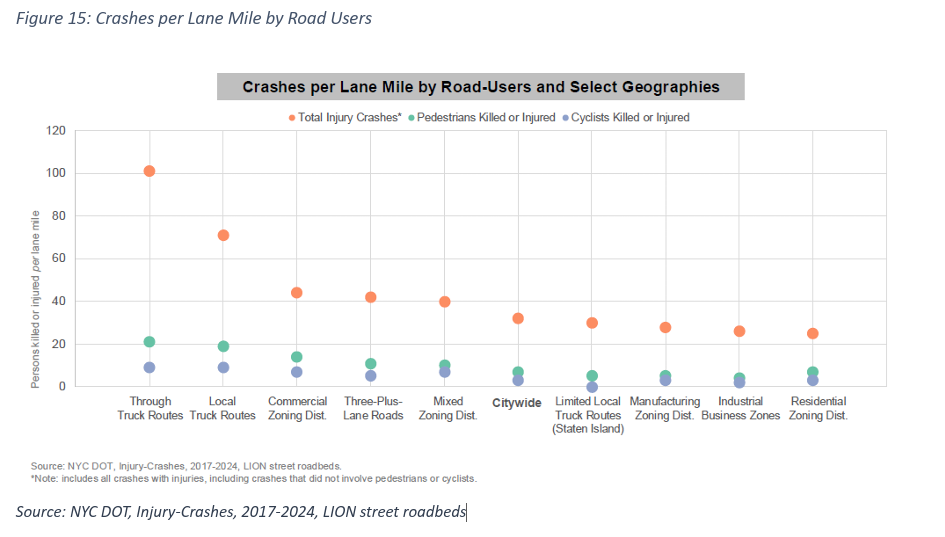
The report noted that installing bikes lanes and other improvements along truck routes make these corridors safer for all users. But the DOT halted a planned street redesign on Third Avenue over the objections of local businesses. Indeed, the reports says DOT “will implement safety improvements … on new and existing truck routes to increase visibility,” but it doesn’t commit to anything specific.
Truck routes are dangerous. The DOT knows how to make them safer, but is stalling implementation on Third Avenue. Graph: DOT
“If there was a way where city DOT was pairing this with redesign of streets, either making it so vehicles are abiding by speed limits, but also other modes – biking dedicated bus routes with state of the art bus shelters – that would’ve been a major victory. Instead what we’re just seeing is additional truck routes,” said Garcia.
Streetsblog has migrated to a new comment system. New commenters can register directly in the comments section of any article. Returning commenters: your previous comments and display name have been preserved, but you'll need to reclaim your account by clicking "Forgot your password?" on the sign-in form, entering your email, and following the verification link to set a new password — this is required because passwords could not be carried over during the migration. For questions, contact tips@streetsblog.org.
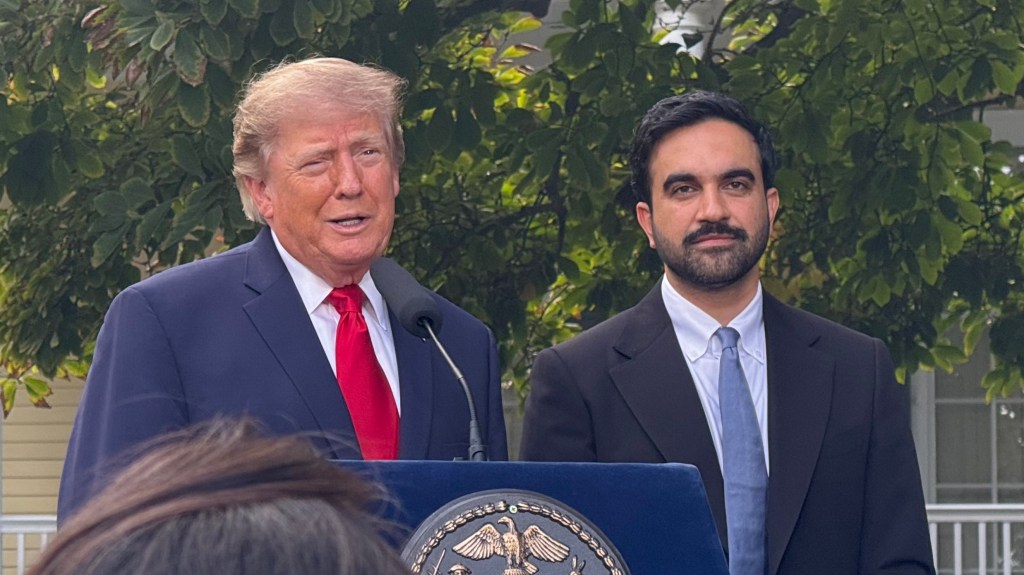
President Trump sort of inadvertently made an argument for banning horse carriages from Central Park on Thursday when he critiicized the City Council's 40-7-2 vote to end the Central Park horse carriage industry with an ill-conceived analogy to cars.
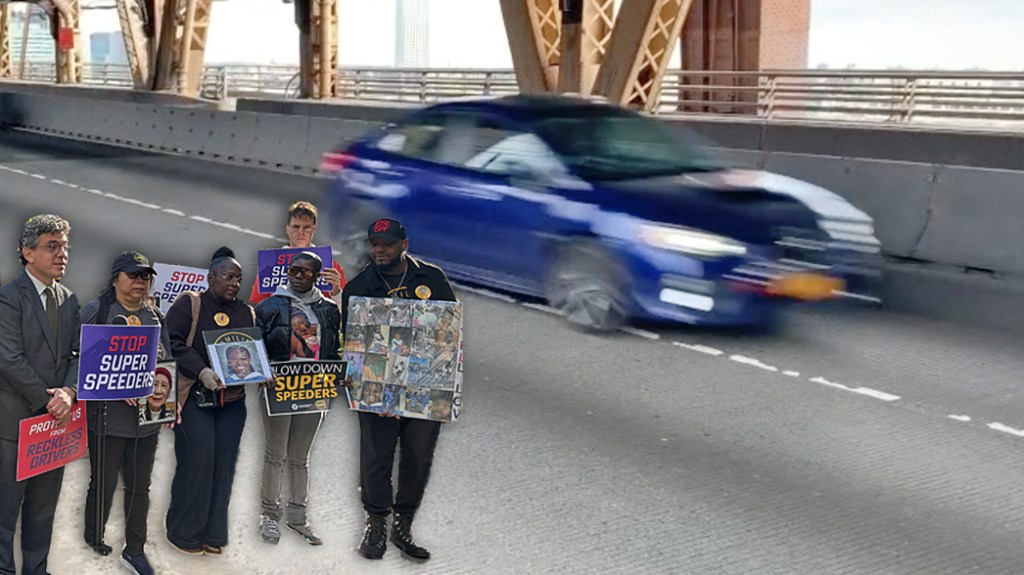
The city's much-anticipated program to require speed-limiting devices inside the cars of repeatedly reckless drivers will launch next year, though questions remain.