How Cheap Technology Could Fix New York’s E-Bike Enforcement Mess
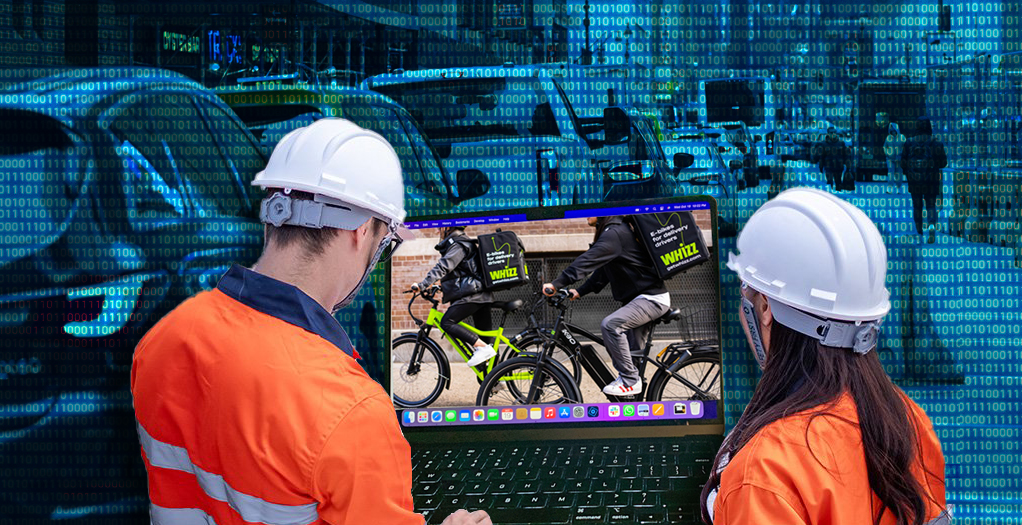
Cyclists have transformed post-COVID New York. But two issues — deadly battery fires and the chance of a collision between a pedestrian and a cyclist — threaten to erode the public’s support for them and the infrastructure on which they depend. How can the city ensure that our bike boom continues, while protecting New Yorkers from harm?
As the co-founder of Whizz, which operates the largest fleet of delivery e-bikes in the United States, I have an informed perspective of these twin problems — and a potential way to solve them.
In the years following the pandemic, a spate of residential fires caused by exploding lithium-ion e-bike batteries shocked the city, in large part because those fires broke out in predominantly residential neighborhoods, where unscrupulous residents had improperly stockpiled dozens, and sometimes hundreds, of batteries. At the same time, fast-moving e-bike riders alarmed New Yorkers who were more accustomed to the lower speeds of non-electric bikes.
In response, city officials passed several laws and regulations designed to contain the threat of fires and collisions. These included mandatory UL certifications for bikes and batteries; a modest trade-in program aimed at delivery workers with unsafe bikes; a requirement that delivery platforms help workers finance safer bikes; and reduced speed limits.
But most of these interventions require ongoing enforcement, a task at which the city has never excelled. With more than 65,000 riders in the five boroughs, manually checking every bike for compliance, every day, would be nearly impossible or extremely expensive. And riders know it.
Another weak point is bike sellers, who every month sell thousands of bikes in small shops across the city. Those sellers cannot control what their customers do with their new bikes after they leave the shop. Those buyers can easily remove speed limiters; some shop owners even assist them with doing so. These merchants are not required to carry any liability insurance, so they have little reason to care.
Rental companies like my own are a different story. These companies own the bikes, service them, and retain responsibility for their condition. That’s why the city finds it easier to enforce rules on us. And we comply, because it’s in our own best interest. It’s also the right thing to do.
Yet this arrangement, in which rental companies follow the law but individual bike owners frequently skirt it, creates an uneven market. If a rental fleet must cap speeds at 15 mph while private owners can go 45 mph, many riders naturally migrate to the gray market; they buy unregulated bikes, disable their speed limiters, and endanger pedestrians and fellow cyclists. The prevalence of platforms like DoorDash and UberEats, whose customers tie tips and star ratings to fast deliveries, makes this migration almost inevitable.
The problem with ongoing enforcement is equally apparent in regulating batteries. Battery fires are the result of amateur operators storing and charging lithium-ion cells where they shouldn’t be, like residential basements. Rental companies like ours have had exactly zero fires. This is because rental companies are motivated to keep their bikes safe. They maintain them, replace bad batteries, train riders, and use technology to monitor everything.
But rental fleets make up only about 10 percent of the market in New York. For most city riders, it’s still easier to buy a bike from a shop, disable the speed limiter, and ride away.
So how do we make the entire market safe without banning ownership or over-regulating honest riders? No single policy can totally avert tragedy, but it’s clear that technology — not just regulation — is the answer.
Specifically: Commercial delivery e-bikes in New York City should be connected through a small, simple device connected to the Internet that can record and disseminate real-time data on location, speed, and battery health. The term of art for this system is the “Internet of Things,” or IoT.
Whizz already uses this technology. We can see our entire fleet on a map, monitor the safety of individual bikes, and disable them when they’re stolen. The same technology prevents riders from disabling their bikes’ speed limiters, and turns theft into a non-issue.
For this technology to scale to every delivery rider, the city needs to define a standard data format so that private companies can fabricate IoT modules that comply with it, in much the same way companies manufacture e-bikes that comply with speed and battery regulations. Bike shops would still sell bikes, but only those with certified IoT devices built into them.
This would apply only to commercial delivery bikes. Platforms like DoorDash and UberEats could require an active IoT signal, connected to the rider’s smartphone, before assigning an order. No signal, no delivery. On a technical level, this is simple and could be implemented within months.
With that one step, enforcement becomes automatic. If a bike goes too fast, the system knows. If a battery overheats, it’s flagged before it catches fire. If a non-certified battery is used, it’s visible immediately. It’s really that simple — just require every e-bike in the commercial space to be connected.
New York doesn’t need to reinvent the bicycle wheel. Other components of the city’s transportation grid have depended on connected-vehicle systems for years. Every yellow cab in the city has a digital meter that connects to the Taxi and Limousine Commission, which tracks trips, locations, and fares in real time, as mandated by the commission’s data rules. Micromobility operators like Lime and Bird are obligated to transmit live trip data, including speed, under the rules of the city’s shared e-scooter program. Citi Bike has publicized rider data since its inception in 2013.
Delivery companies already collect this type of data — for car drivers. Uber began collecting data about their drivers’ speed and hard braking in 2016; DoorDash followed in late 2023. Indeed, much of the data necessary for enforcement is already tracked by e-bike delivery riders’ smartphones. But an IoT module would still be necessary to track battery health.
E-bikes aren’t going anywhere. They’re essential for New York’s delivery economy. But the city needs to modernize how it manages them.
If New York builds a connected e-bike framework, one where every delivery bike has an active IoT module, the market will adapt quickly. In a year, the city could move from chaos to order, from hundreds of fires to almost none, and from frustration to safety.

Read More:
Streetsblog has migrated to a new comment system. New commenters can register directly in the comments section of any article. Returning commenters: your previous comments and display name have been preserved, but you'll need to reclaim your account by clicking "Forgot your password?" on the sign-in form, entering your email, and following the verification link to set a new password — this is required because passwords could not be carried over during the migration. For questions, contact tips@streetsblog.org.