Pols Want Covered Bike Parking at Parks, City Buildings
The Parks Department would have to provide sheltered bicycle parking throughout the so-called Emerald Empire under a new bill introduced in the City Council on Wednesday.
Under the bill by Manhattan lawmaker Chris Marte, the city would have to install between one and five weather-proof enclosures with six to eight spaces apiece, depending on the size of the park — a potential game changer for better bike parking that could catch up with the recent surge in cycling in the Big Apple.
“If we want to get off the reliance of people commuting by car, we have to offer them alternative ways to get there,” Council Member Chris Marte (D–Lower Manhattan) told Streetsblog. “I think we should do a lot more.”
Another piece of legislation that Marte introduced with Northwest Bronx Councilman Eric Dinowitz would require some city-owned buildings, including public schools, to offer bike storage for municipal workers and visitors.
Marte’s parks bike legislation would require at least one bike shelter with around six to eight spaces in green spaces that are 2.5 acres or larger — about the size of Thomas Paine Park outside the Lower Manhattan courthouses.
The proposal, which gives the Parks Department three years to install the facilities, mandates additional parking for bigger parks, up to a minimum of five shelters at green spaces that are 250 acres, which is roughly half the size of Prospect Park.
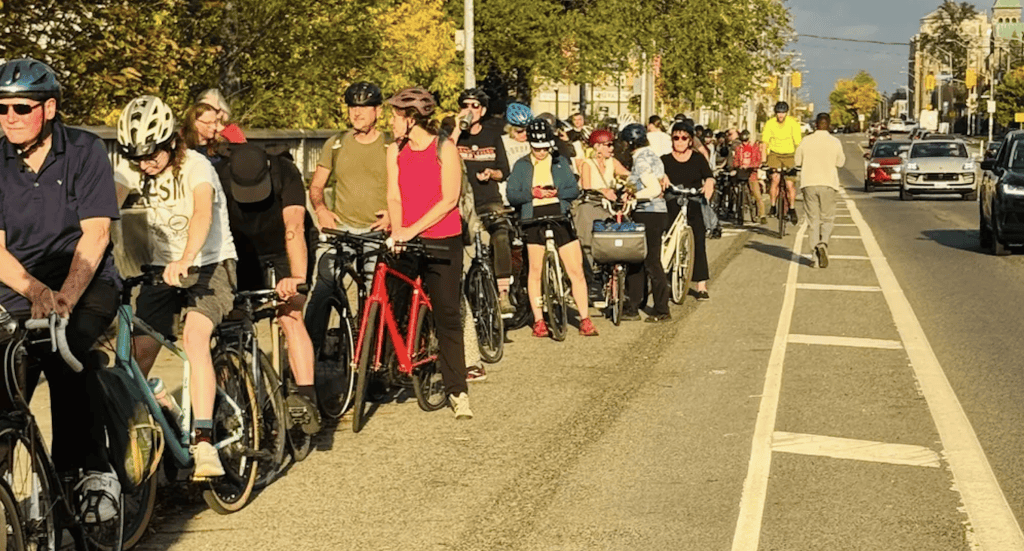
“Every summer or spring you see people go to Prospect Park or Central Park and have to walk around with their bikes because there’s no place to park it,” the Manhattan pol said.
The Parks Department can decide not to install the parking if it’s not practical, according to the bill, but the commissioner would have to post the agency’s reasoning on its website.
City-owned buildings that are 10,000 square feet or more would also have to provide bike storage for workers and visitors, with some exceptions. That would cover public housing properties, the city’s public hospital system, and CUNY’s senior colleges.
The amount of bike storage would be up to the Department of Citywide Administrative Services, which manages city properties, and the Department of Education for public school buildings. The DCAS commissioner and the schools chancellor will have to report to the mayor and Council speaker where they were able to set up bike storage and where they deemed it impractical within a year of the law passing.
Current city policies allows tenants at municipal buildings to request indoor bike parking if no outdoor parking exists, as long as the building doesn’t have a court function, according to DCAS spokesperson Dan Kastanis, who added that they will review the proposal.
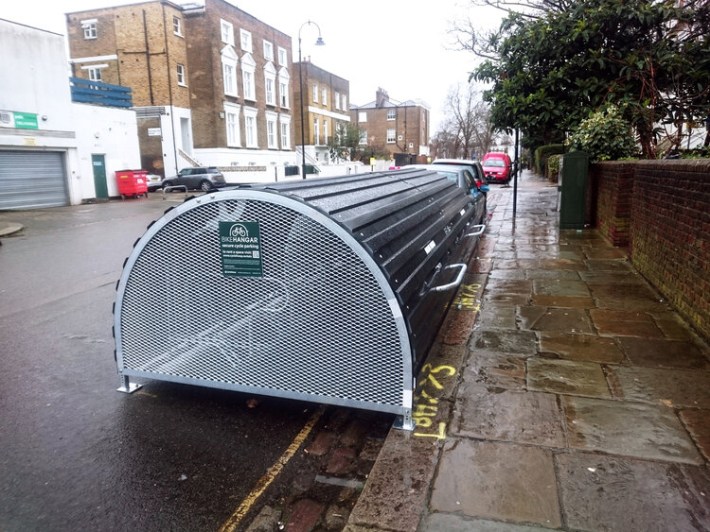
Marte said he was inspired by London’s cycle hangars, thousands of which the English capital has installed in recent years near transit stations and elsewhere with funding by the city’s transportation agency.
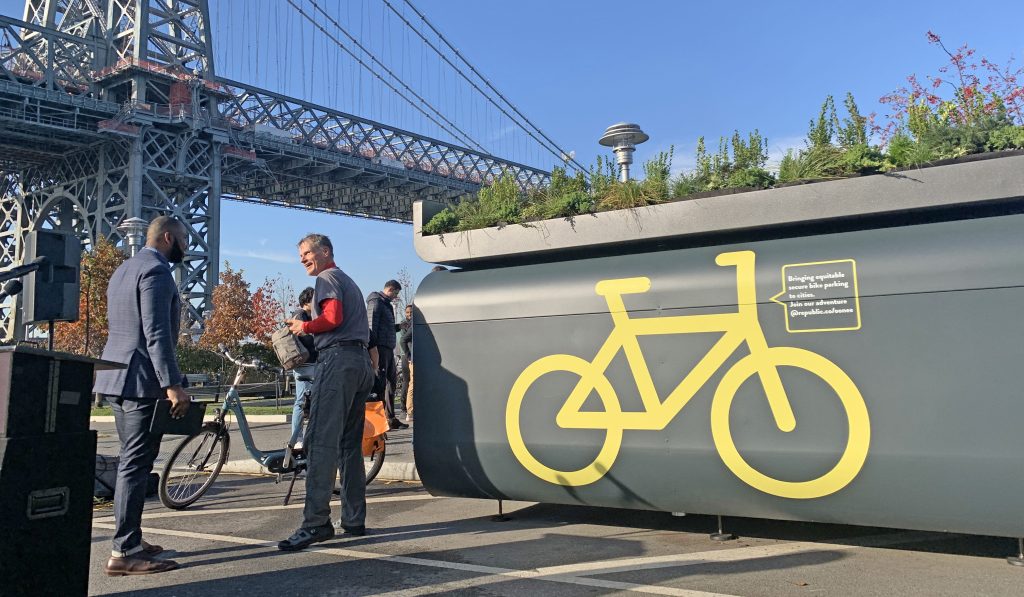
Efforts to roll out enclosed cycling storage across the Five Boroughs have not gone far beyond a small pilot and a handful of facilities set up by private companies like Oonee at the MTA’s Grand Central Terminal, and at Port Authority properties like its Midtown Bus Terminal, near the Holland Tunnel entrance, and across the river in New Jersey.
Mayor Adams once championed an Oonee pod in Williamsburg during his final months as Brooklyn Borough President in late 2021, but since moving to City Hall, his administration has not made notable progress on expanding secure bike parking.
The Department of Transportation did install more than 7,000 bike parking spots last year, though mainly with racks, and the agency wrote it is continuing to “explore secure bike parking,” according to its annual Streets Master Plan update released late Friday.
New Yorkers made a whopping 610,000 daily bike trips in 2022 — nearly twice the rate of a decade earlier, according to the latest numbers in the DOT report.
Parks spokesperson Gregg McQueen declined to comment on the bill, but said the agency is reviewing the legislation.

Read More:
Streetsblog has migrated to a new comment system. New commenters can register directly in the comments section of any article. Returning commenters: your previous comments and display name have been preserved, but you'll need to reclaim your account by clicking "Forgot your password?" on the sign-in form, entering your email, and following the verification link to set a new password — this is required because passwords could not be carried over during the migration. For questions, contact tips@streetsblog.org.