Council Moves Final Outdoor Dining Bill as Seasonal Program
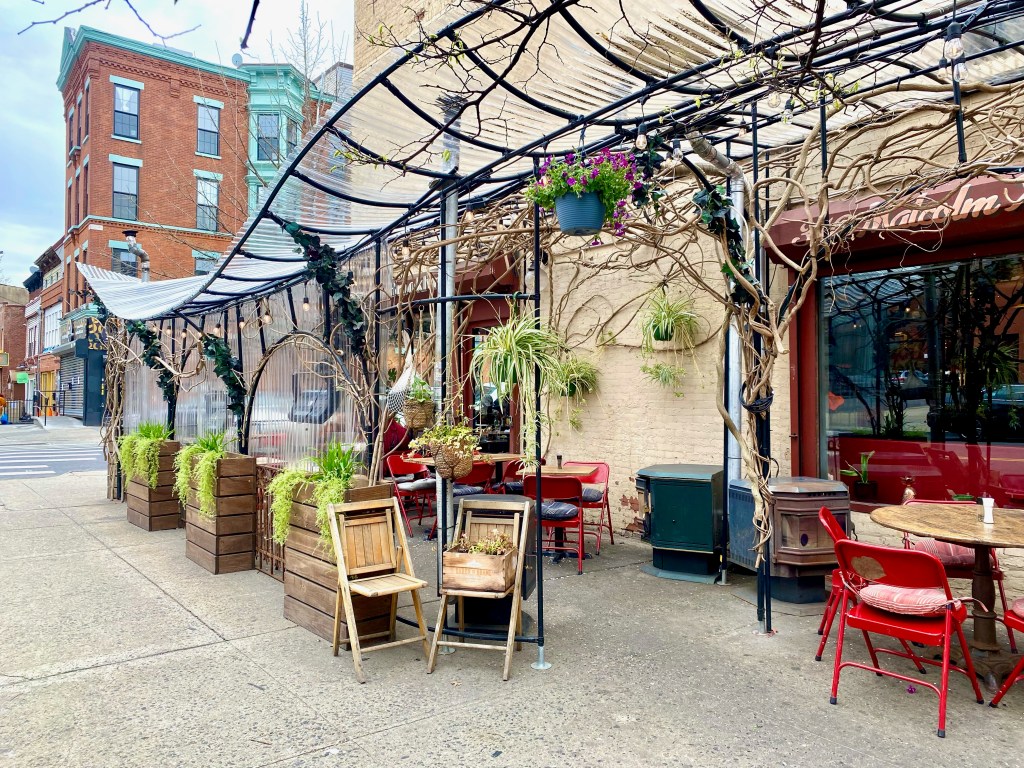
The City Council will finally move forward with plans for a permanent outdoor dining program that would restrict “streeteries” in the roadway to eight months out of the year, according to new legislation released on Thursday.
Dining along the curb will only be allowed from April through November, while setups on the sidewalk can stay open all year, according to an updated version of the Council bill first introduced more than a year ago. Restaurants that built elaborate structures during the three-year-old temporary program will have to take those down by late next year.
The long-stalled legislation’s released confirmed reporting by Streetsblog in February that city lawmakers wanted to scale back the pandemic-era street structures, which repurposed a historic amount of car storage and helped restaurants survive the health crisis. The new plans enraged city business owners.
“That is so stupid. It is destroying small business and it is ruining them,” said Charlotta Janssen, owner of Chez Oskar, a bistro with an ornate dining structure along Malcom X Boulevard in Bedford-Stuyvesant, Brooklyn.
“We tried to serve our community and it’s like a punch in the gut.”
Mayor Adams in a statement called the bill a “big step” toward a permanent program, which he described as a “year-round” initiative, despite that only applying to seating on the sidewalk.
The part-time inclusion of roadway dining comes despite initial opposition from Council Speaker Adrienne Adams, who last year said outdoor dining shouldn’t be in the roadway but later said she would try to strike the “right balance.”
Advocates cheered the bill — which comes a week after the federal Covid-19 emergency had expired and made the program more vulnerable to legal challenges by opponents — but also called on city leaders to allow an option for year-round roadside dining.
“Warming winter temperatures will continue to make outdoor dining feasible for most of the year and we believe giving the option for restaurants to participate year-round would offer the most value to businesses, diners, and City coffers,” said Sara Lind, co-executive director at Open Plans, which shares a parent organization with Streetsblog.
“But with the clock ticking on the need for a permanent bill, City Council’s action is welcome news.”
Council officials did not confirm when they plan to vote on the bill, but two insiders expected it come up for a vote next month.
Speaker Adams did not respond to a request for comment, but the Council’s press office told City & State in a vague, unnamed statement that “most of the conversation has been hijacked and focused on the outdoor dining component, and not about the cost,” adding that the bill could pass within weeks.
The bill’s sponsor, Marjorie Velázquez (D-Bronx), said the new proposed law came out of “thoughtful conversations” with businesses and among the Council.
“We have created a program that will continue to serve our restaurants, residents, and visitors,” Velázquez said in a statement.
Restaurants will have to apply for separate licenses for sidewalk and roadway cafes with the Department of Transportation and pay annual fees to the city that will vary by location and depend on the size of their al-fresco setups, according to the bill.
Each license will last four years and cost $1,050 per period, and businesses will also have to pay so-called revocable consent fees, which is basically annual rent to the city to use the street or sidewalk, the bill said.
Those fees will be calculated by multiplying the square footage of the outdoor dining space by a rate that differs by location, starting as low as $5 or $6 in most of the city and rising up to $31 in pricier precincts like Manhattan below 125th Street.
Business owners will have to send their petitions for outdoor dining to DOT, the Council, the borough president, and the local community board, the latter of which will have 40 days to give recommendations on whether to approve the applications.
If the business is in a historic district or adjacent to a landmark, it will also need to get the approval from the Landmarks Preservation Commission.
The Council can review petitions and hold a vote on whether to approve them.
DOT will keep overseeing the program after running the temporary operation that started in 2020, taking over from the Department of Consumer of Worker Protection that managed the much smaller sidewalk cafe licensing pre-Covid, following a push by the mayor to keep outdoor dining in the Transportation agency.
The roadway cafes will have to consist of “readily removable tables, chairs, and other removable decorative items,” in front of the restaurant, per regulations DOT will set up over the coming months.
Structures that businesses set up during the temporary program and don’t comply with the new rules the agency will set will have to come down by Nov. 1, 2024.
DOT aims to establish more specific rules governing the permanent program by the end of the year, according to a notice in the City Record on Wednesday.

Read More:
Streetsblog has migrated to a new comment system. New commenters can register directly in the comments section of any article. Returning commenters: your previous comments and display name have been preserved, but you'll need to reclaim your account by clicking "Forgot your password?" on the sign-in form, entering your email, and following the verification link to set a new password — this is required because passwords could not be carried over during the migration. For questions, contact tips@streetsblog.org.