Could Bogota’s Model for Congestion Pricing Work in the U.S.?

Editor’s note: this article originally appeared on Government Technology and is republished with permission.
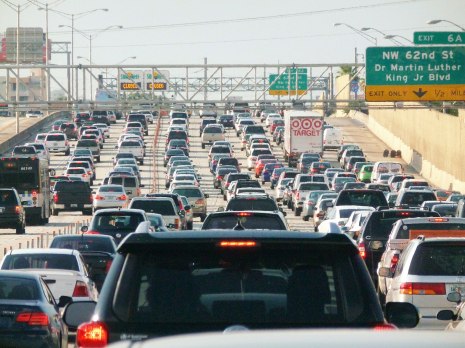
A congestion-pricing project in one of South America’s most congested cities could emerge as a possible solution in U.S. cities eying similar traffic management solutions.
Bogota, Colombia, is nearing completion of a pilot project with ClearRoad, a U.S.-based transportation and technology company that using smartphones as the link to monitor movement along select streets within a congestion-pricing district.
The pilot project, which began in March and will wrap in early July, represented the first time the company had deployed its congestion-pricing solution at scale. The project represented the first public testing of congestion pricing “with real users,” said Frederic Charlier, CEO of ClearRoad.

Some 90 percent of users surveyed were satisfied with the product and “felt comfortable sharing their personal information, as well as their location information,” said Charlier. “From our perspective, that was very encouraging feedback that we received from the users.”
The city evaluated factors like user acceptance, access to data and the level of enforceability. The city plans to move forward with a wider deployment of the ClearRoad congestion-pricing system, said Laura Iguavita, project manager in Bogota.
“[City officials] want to do a transition between the full deployment of our product, and what they have right now,” said Iguavita, who remarked traffic congestion is “one of the main topics” of discussion among residents.
The ClearRoad technology does not involve roadside units, the photographing of license plates or any of the other technology common to conventional highway and bridge tolling. Instead, ClearRoad “relies on technology already in vehicles,” said Charlier. “In this case, we demonstrated with a smartphone app.”
Drivers participating in the Bogota project were required to have a smartphone in their car, which was only for demonstration purposes and did not collect fees.
The system is tied in with Bogota’s existing street camera network to identify vehicles in the congestion-pricing district not reporting participation on the app platform, opening a path to enforcement for drivers who may want to turn off their phones to fly beneath the congestion-pricing radar.
Company officials demonstrated that with the app-based system it could deploy a “sophisticated” congestion-pricing plan.
ClearRoad has partnered with U.S. transportation departments in Oregon, California and other areas. In Oregon, the company deployed a road usage fee system where drivers pay a fee based on how many miles they drive. The approach is seen as an alternative to the gas tax.
New York City is involved with a plan to cordon off a section of Manhattan as a congestion-pricing zone. Other cities like Los Angeles and San Francisco are also flirting with the idea, signaling an openness for private-sector innovation in this area.
“There’s still a bit of time before we see significant progress in the U.S. But I think now is the right time for us to start sharing information because it’s a big uphill battle against the traditional way of seeing congestion pricing,” said Charlier.

Streetsblog has migrated to a new comment system. New commenters can register directly in the comments section of any article. Returning commenters: your previous comments and display name have been preserved, but you'll need to reclaim your account by clicking "Forgot your password?" on the sign-in form, entering your email, and following the verification link to set a new password — this is required because passwords could not be carried over during the migration. For questions, contact tips@streetsblog.org.