ANALYSIS: So Should We All Be Deflating Our Neighbors’ SUV Tires?
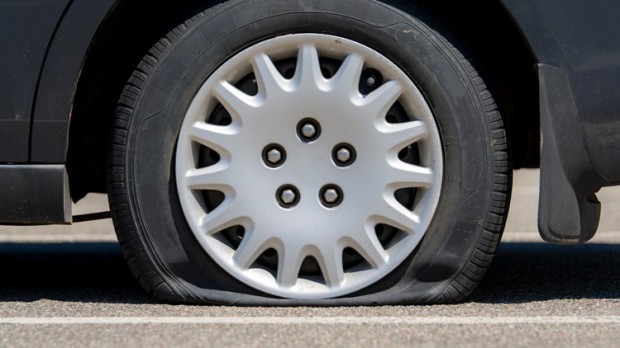
A secretive network of activists is deflating SUV tires in urban neighborhoods around the world to force drivers to find less-dangerous and polluting ways to get around — and in the process, they’re prompting a conversation about the role of illegal direct action in the movement to end car dependence.
On Tuesday, a group identifying itself only as a the “Tire Extinguishers NYC” claimed responsibility for temporarily disabling 40 SUVs on the tony Upper East Side and leafleting their windshields with a helpful explainer about how megacars are harming communities around the world.
The New York City incident wasn’t the first time the Tire Extinguishers left their mark on a U.S. city – similar leaflets were reported in northern Colorado in March — and similar tactics have been used abroad for far longer.
In 2007, a group of Swedish activists — including How to Blow Up a Pipeline author Andreas Malm, who chronicled the event in his 2021 book — claimed responsibility for “disarming” 1,500 SUVs in six months, followed similar campaigns in subsequent years that outlets like the BBC say helped slash megacar sales in the country. Imitators have since sprung up across the United Kingdom, Austria, Germany, Switzerland, the Netherlands, Sweden, and New Zealand, each accompanied by a flurry of articles from local media obsessing over the motivations of the mysterious “eco-vigilantes.”
Putting their own lives in danger for no good reason. https://t.co/yqVU8Vov6C
— jump aside (@JodiesJumpsuit) June 28, 2022
Stateside, the group’s actions are being met with a mixed response from sustainable transportation advocates, some of whom praised the tactic as a symbolically powerful last-ditch response to America’s megacar crisis, even as others worried about its potential downsides, particularly for activists themselves.
Since it can (and, in at least one case, has) lead to drivers losing control of their vehicles when they choose to drive a disabled vehicle anyway, the act of deflating a stranger’s tires legally qualifies as “criminal mischief” in many U.S. communities, and is punishable by hefty fines and even jail time — to say nothing of the possibility of other violence from (often armed) drivers and (even more heavily armed) police.
Some advocates argue that even Tire Extinguishers who aren’t caught in the act still risk infuriating more people than they’ll inspire to change their behavior, particularly when the drivers they leave stranded actually do face difficulty “getting around without [their] gas guzzlers, with walking, cycling or public transit,” as the group’s windshield flier suggests. The group discourages its members from targeting “cars clearly used for people with disabilities, traders’ cars (even if they’re large), minibuses and normal-sized cars,” but there’s no way for eco-activists to know how an individual motorist or her passengers might be impacted by an unexpected flat — particularly in heavily car-dependent communities outside the Big Apple.
Still, the Tire Extinguishers argue these occasional dangers pale in comparison to the mass individual and planetary death that’s guaranteed to continue if the megacar crisis goes unchecked — and that until governments embrace systemic solutions, “we must protect ourselves.”
Or, as Malm put it in his book: “When do we conclude that the time has come to also try something different? When do we start physically attacking the things that consume our planet and destroy them with our own hands? Is there a good reason we have waited this long?”
—
Streetsblog reached out to Tire Extinguishers NYC over email to learn more. This interview with the group’s anonymous representative has been edited for clarity and length.
Streetsblog: Let’s just start with the obvious question: why are you deflating New Yorkers’ SUV tires, and why now?
Tire Extinguishers: SUVs produce “luxury emissions.” They’re flaunted by the wealthy, are a climate disaster, cause deadly air pollution, and make our roads more dangerous. Yet governments have done little to regulate their use in order to promote climate justice, clean air, and safe streets.
Specifically on the climate front, we know that our governments are failing to limit climate pollution: even deep blue New York State enacted no meaningful climate legislation during this past legislative session, while federally, Congress is completely gridlocked and the forthcoming West Virginia vs. EPA SCOTUS decision will likely gut the federal government’s ability to regulate emissions.
During this moment of climate emergency, when cutting down on emissions is a matter of life or death, and stability or chaos, for billions of people, then ordinary citizens will have no choice but to take matters into our own hands to prevent emissions. Politely asking for climate action, clean air, and safer streets has failed.
SB: Are you concerned about, or have you experienced, violence from SUV owners catching you in the act?
TE: We haven’t experienced any violence from SUV owners catching us in the act yet. We are always trying to ensure a safe experience for any action participant, making sure we remain highly aware of our surroundings and leave situations that seem risky.
SB: Are you concerned about, or have you experienced, police violence, or legal ramifications from this effort?
We haven’t experienced any police violence or legal ramifications so far. While we take precautions to ensure a safe, secure experience, we also make sure that each participant knows the potential legal risks.
SB: Your leaflet tells drivers they will “have no difficulty getting around without your gas guzzler, with walking, cycling and public transit,” but that’s, sadly, not true of every neighborhood, or even every driver on every day. Do you make efforts to target individuals for whom this statement is more likely to true, as opposed to those who live in transit/bike lane/sidewalk deserts, who are carpooling with multiple small children, who rely on cars as mobility aides, etc.?
TE: We are deeply concerned with social justice and equity. [Specifically], the grossly unjust nature of the climate crisis, in which poor and marginalized people have produced the least emissions while suffering the most harms from climate change, is a huge reason why we are so passionate about ending the use of SUV emissions.
That’s why we’ve specifically chosen to target SUVs in the Upper East Side in our first actions, and will continue to target wealthy neighborhoods. The UES enjoys ample public transit infrastructure, and, as the home to the greatest concentration of individual wealth in NYC, residents there are more likely to be able to easily deal with the cost of inflating a tire or hopping on a train or cab instead of using their SUVs.
We are aware that large SUVs can transport wheelchairs and other mobility aides more easily than sedans. That’s why we expressly avoided disarming any vehicle with handicapped signs. We also know that not every person with a disability requiring an SUV as an accommodation registers their vehicle, and regret that there could have been a chance that we deflated the tires of someone who owned a vehicle out of that necessity.
However, 1) if there is anywhere in the city in which residents have the time and knowledge to be able to navigate the bureaucracy of registering for handicapped status, it would be in the highly privileged UES, and 2) in the chance that a UES resident with a disability didn’t register their vehicle, they would still be far more likely to be able to easily deal with the cost of inflating a tire or hopping in a cab instead of using their SUV.
SB: What, specifically, do you hope will happen as a result of your tire-deflating campaign?
TE: We hope that SUV sales will decline as more people either grow concerned that their would-be SUVs may become the next target of a Tire Extinguisher action, or because the publicity we are generating around the harmful climate, health, and safety impacts of SUVs start resonating with more people.
We also hope that our campaign will generate media coverage on the urgent dangers of climate change, polluted air, and dangerous streets. That coverage, in turn, will hopefully fuel and fortify other advocacy campaigns on these matters and pressure governments to take more action against luxury emissions and dangerous vehicles.

Read More:
Streetsblog has migrated to a new comment system. New commenters can register directly in the comments section of any article. Returning commenters: your previous comments and display name have been preserved, but you'll need to reclaim your account by clicking "Forgot your password?" on the sign-in form, entering your email, and following the verification link to set a new password — this is required because passwords could not be carried over during the migration. For questions, contact tips@streetsblog.org.