Trump’s Road Grants Favor Red, Rural Projects
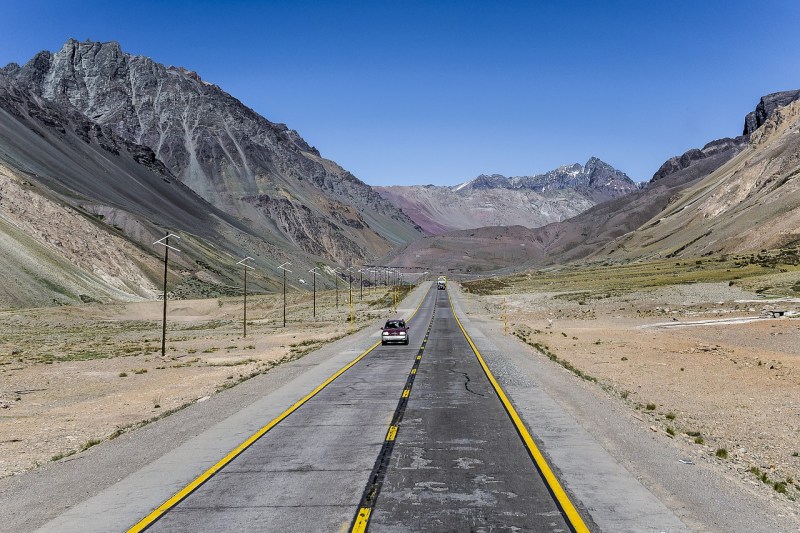
The Trump administration continues to transform one of Obama’s signature transit-boosting programs into a cash cow for rural highways — and this year’s grants heavily favor states he won in the last election, too.
This week, the Department of Transportation announced this year’s BUILD (Better Utilizing Investments to Leverage Development) grant recipients to construct or repair surface transportation infrastructure. Back when it was called the TIGER program during the Obama era, the grants traditionally bolstered multimodal travel, but the Trump administration quickly shifted funds towards highway projects when it renamed the grants in 2018. This year, more than 57 percent of projects — and 60 percent of the $1 billion in the pot — supported drivers.


The shift towards road spending coincides with the Trump administration’s focus on expanding rural access to transportation through its Rural Opportunities to Use Transportation for Economic Success (ROUTES) Initiative, which was announced last month. But it’s also not really a change at all. In its first year, the 2018 BUILD program also awarded a shocking amount of money to automobile-focused infrastructure — 69.3 percent. And last year, Secretary Elaine Chao’s department gave 68 percent of funds to roads, and zero dollars to bicycle and pedestrian improvements.
Once again, the modal selection of #BUILD grants under the Trump Admin skews heavily towards roads… #transportation pic.twitter.com/gZsEyp6ncN
— Jeff Davis (@JDwithTW) November 12, 2019
Shifting funds towards big rural road projects also has a political side effect that could be advantageous to the president during an election year: disproportionate dollars to red states.
A whopping 71 percent of BUILD grants will go to projects located in states that went for Trump in the 2016 election, compared to just 27 percent of projects in blue states. (The remaining 2 percent is attributable to a grant that was awarded jointly to St. Louis, located in blood-red Missouri, and East St. Louis, located in across the Mississippi River in deep blue Illinois.)
Notably, Kentucky was the only state to receive three separate grants. Chao has long faced allegations of corruption for favoring her home state; many believe it is no coincidence, given that her husband, Senate Majority Leader Mitch McConnell, is the Bluegrass State’s senior senator.
Most of the road improvements funded by BUILD grants will further entrench our national car culture — and lot of them are likely to be fairly major wastes of taxpayer money. The project list heavily favors highway widenings — which, countless studies have shown, do nothing to reduce congestion.
And 9 percent of projects will build new highways, despite the fact that we can’t afford to repair the ones we already have; the highway trust fund has been in default for nearly 12 years, and no legislator has succeeded in passing legislation to end the bleed-out. Blair, Neb.; Tulare, Calif.; and Castle Rock, Colo. are among the communities that are about to get new asphalt-laden liabilities.
Only 15 percent of car-focused projects will include any provisions for pedestrians, cyclists, and other road users who don’t drive.

The urban projects on the list, by contrast, are more heavily focused on non-driving modes: 54 percent of them (and 60 percent of project dollars) are devoted to building infrastructure for pedestrians, cyclists, transit users, and freight rail operators, as well as improvements to airports and flood prevention facilities. (In rural areas, 68 percent of projects will benefit drivers, and car-focused infrastructure will get 75 percent of the cash.)
Also on the bright side, at least this year’s round of grants includes a respectable $197 million for active transportation, compared to the zilch walkers, cyclists, and assistive device users got last year. But in the midst of a global pandemic that’s making active transportation more important than ever — not to mention making inexpensive transit improvements like bus driver partitions a moral imperative — it’s hard not to see Trump and Chao’s list as something of a slap in the face.

Read More:
Streetsblog has migrated to a new comment system. New commenters can register directly in the comments section of any article. Returning commenters: your previous comments and display name have been preserved, but you'll need to reclaim your account by clicking "Forgot your password?" on the sign-in form, entering your email, and following the verification link to set a new password — this is required because passwords could not be carried over during the migration. For questions, contact tips@streetsblog.org.