EYES ON THE STREET: Temporary Bike Lane on Smith Street is Great …
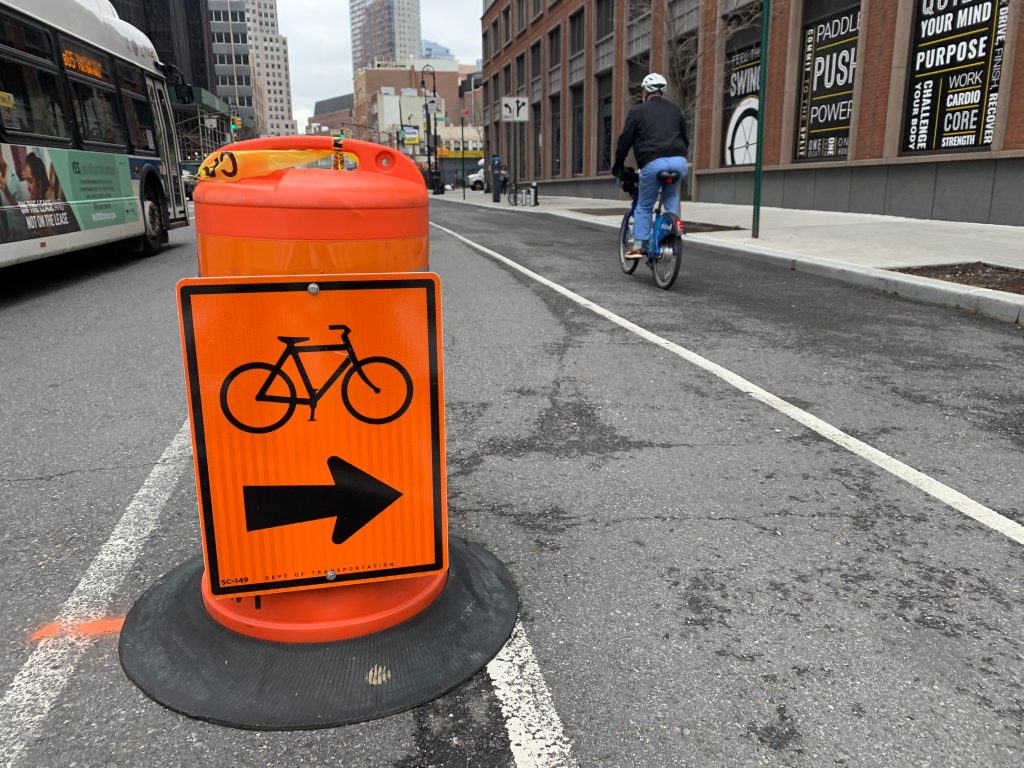
The temporary protected bike lane on Smith Street in Downtown Brooklyn is an unmitigated (well, almost entirely unmitigated*) success — a quick solution to a long-dangerous gap in the bike network that was undertaken efficiently by a strapped Department of Transportation.
As such, the only question is, “Can we get more of these, please?”
The answer to that is, for now, no. On Monday, the DOT declined to provide additional sites for temporary cyclist protection and declined to comment.
Now, the good news: Streetsblog took to the street over several days and can report that the barrel-and-tape-protected lanes along Smith Street between Atlantic Avenue and Fulton Street (plus the last unprotected block of Jay Street between Johnson and Tillary streets) is working as promised. (A similar temporary lane on Second Avenue in Manhattan is a failure, however, according to Streetsblog’s Julianne Cuba. Her full report is here.)
Smith Street
Context: The length of formerly busy Smith Street from Ninth Street to Atlantic Avenue has long featured a painted lane. But north of the intersection of Atlantic, all protection vanished, leaving cyclists competing with buses and many illegally parked police cars that frequent the area because of its proximity to the Brooklyn House of Detention and the nearby courthouses.
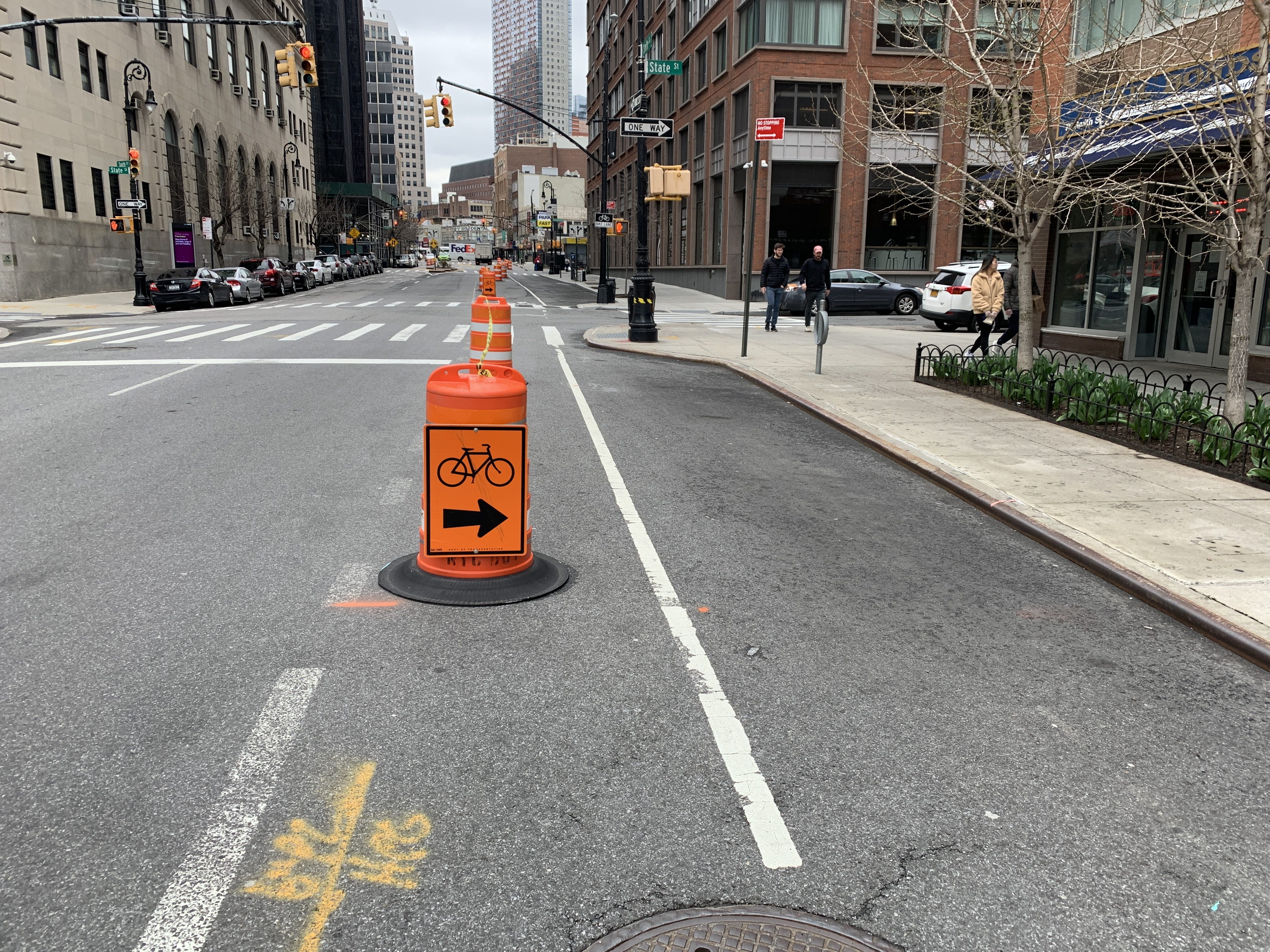
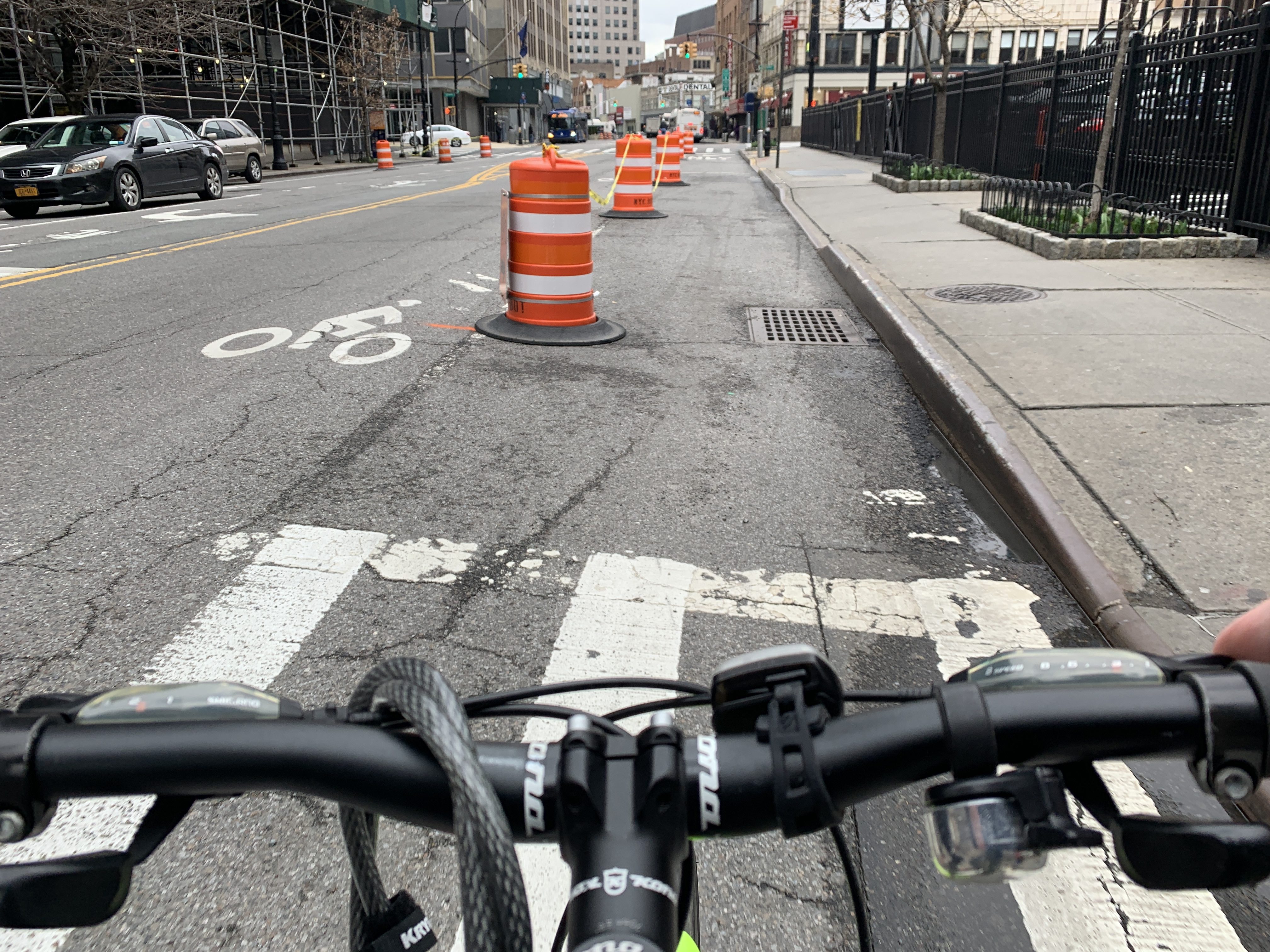
Now: As cyclists move north of Atlantic Avenue, they enjoy a blocked-off lane (albeit one that narrows a bit at the corner of State Street (photo above). The lane is similarly protected in the block between State and Livingston streets (photo below, featuring this reporter’s bike):
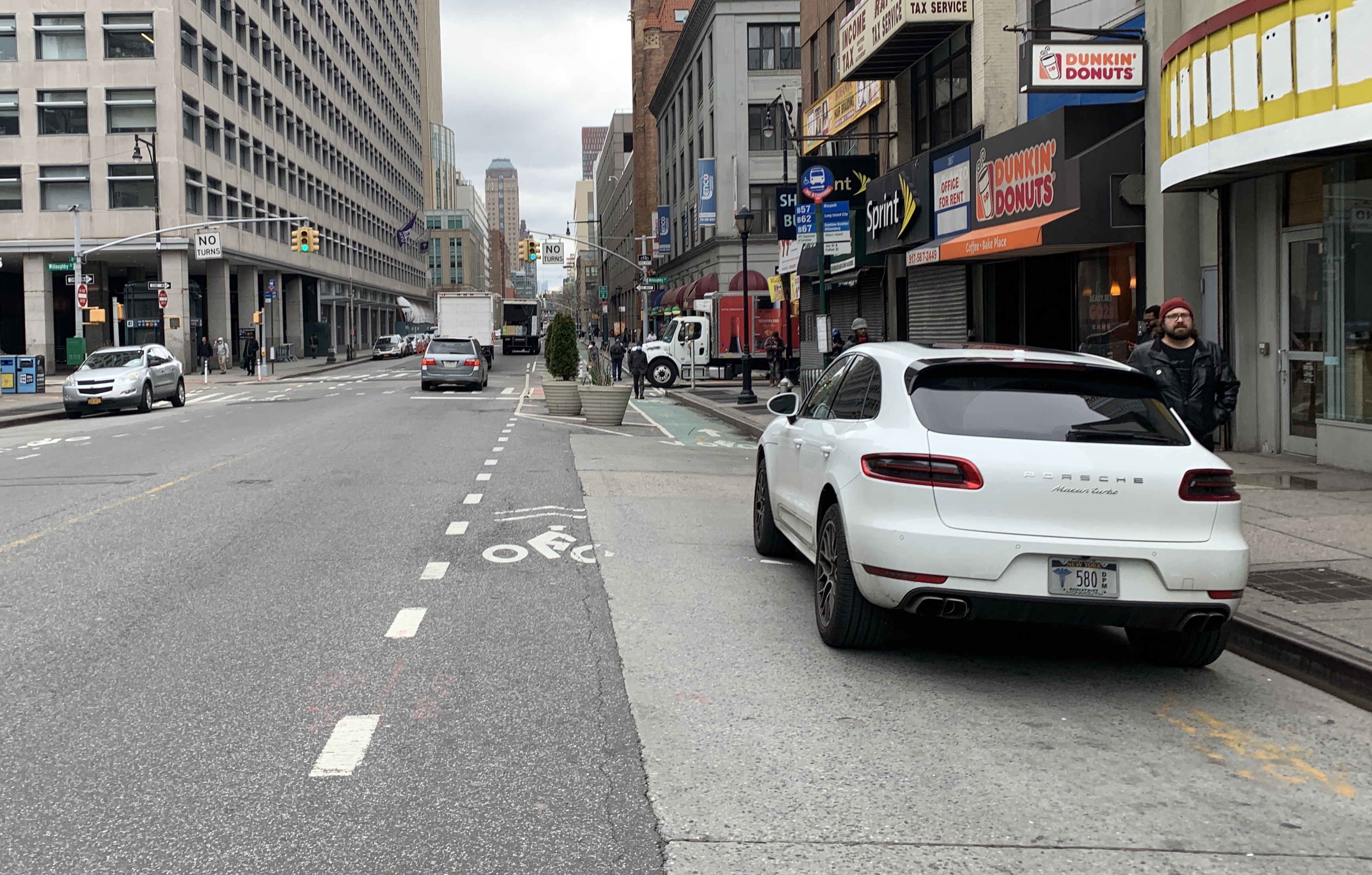
Protection disappears between Livingston Street and the Fulton Mall, which has long been a terminus for several bus lanes and, as such, will never ever be safe for cyclists. The same is true of the block north of the Fulton Mall for the same reason (see picture below, with a car illegally parked in the bus stop):
Above this point, cyclists return to a fully protected bike lane for three blocks where Smith Street changes its name to Jay Street. The protection abruptly ends at Johnson Street.
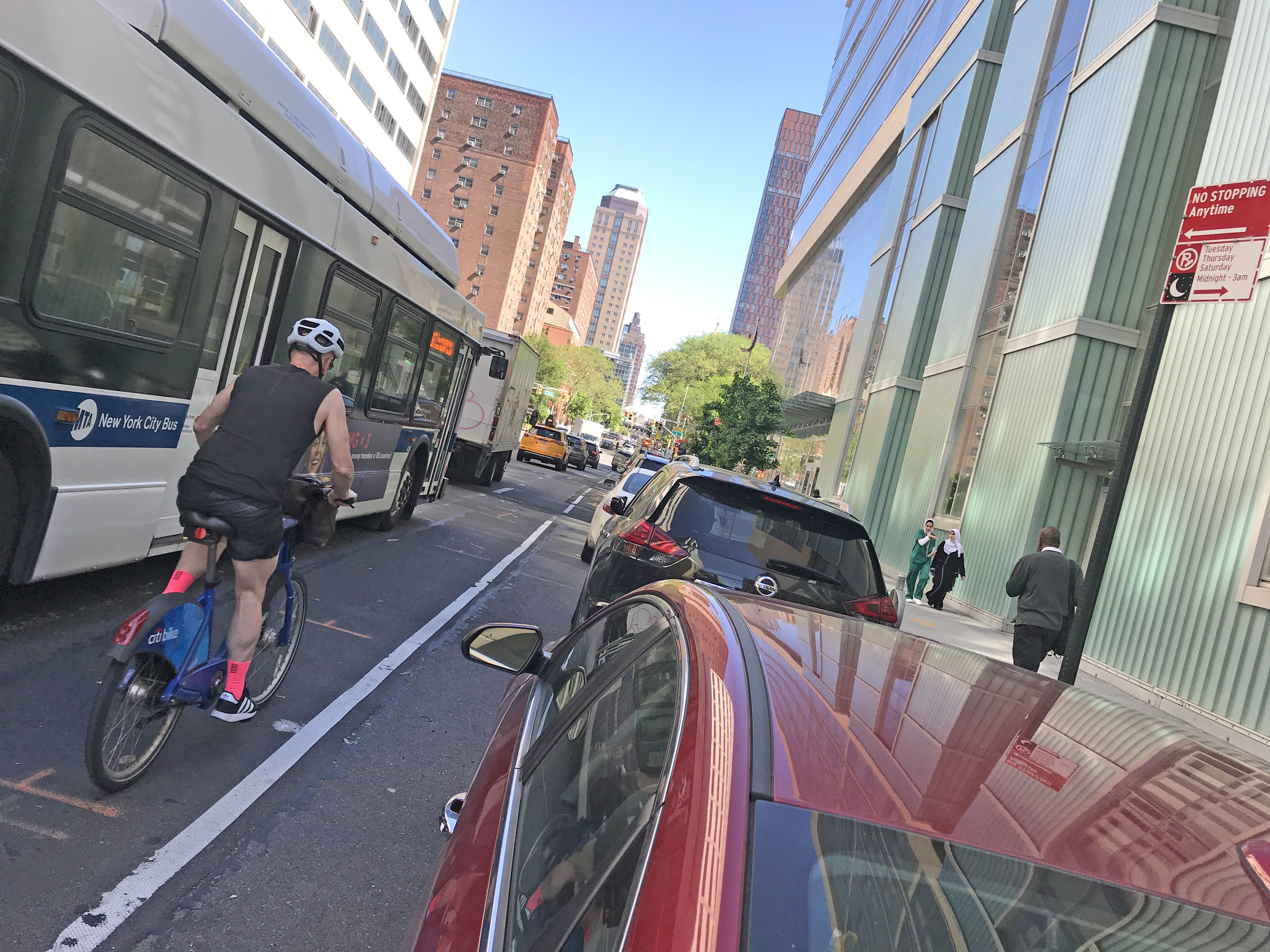
That “last block” of the downtown sluice has long frustrated cyclists because Jay Street between Johnson and Tillary streets is not only a key route to the Manhattan and Brooklyn bridges, but the block has long been marked “No standing,” yet is always filled with illegally parked or placarded police and fire vehicles. See photo below:
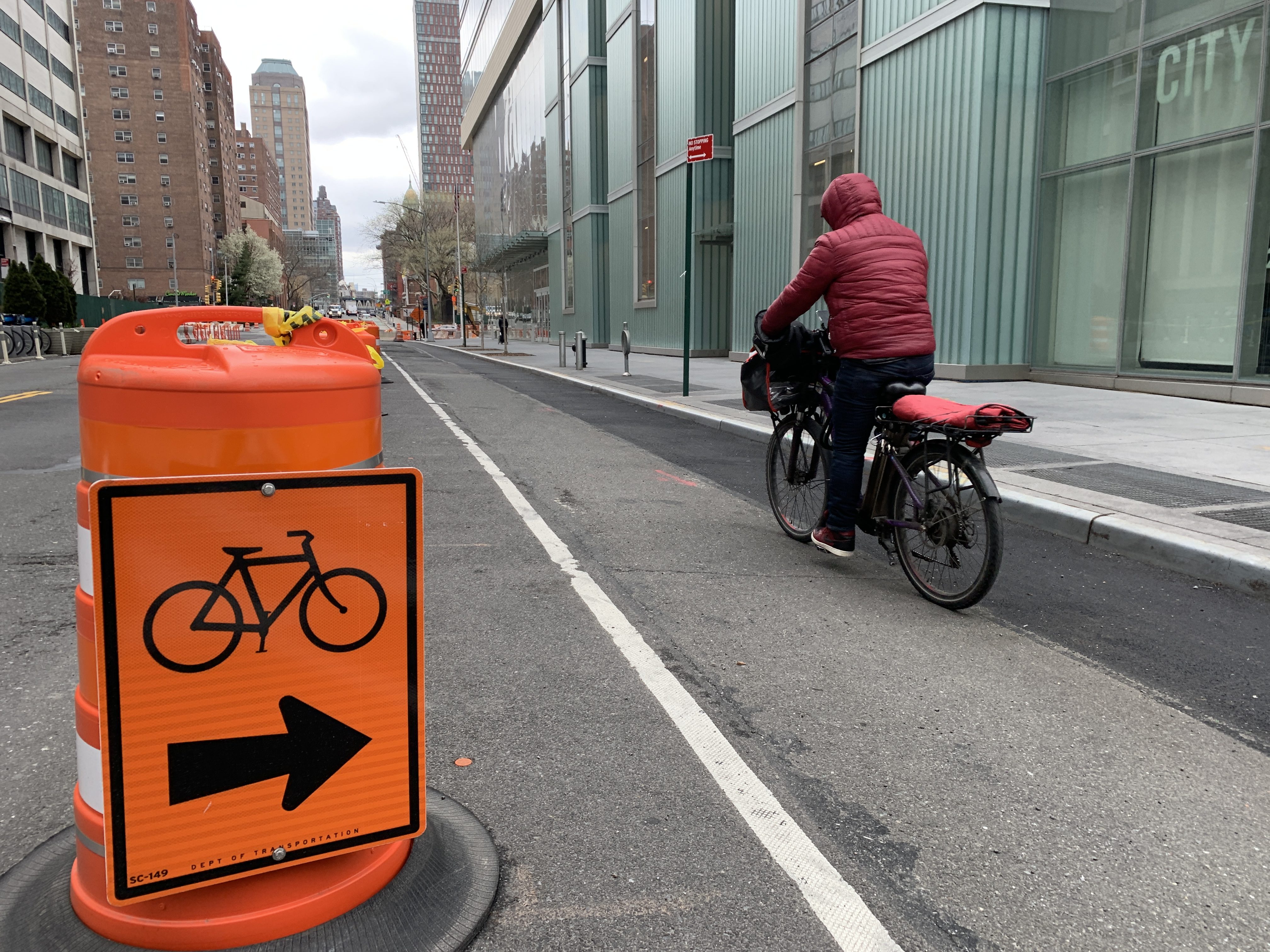
Thankfully, that strip now looks like this:
Conclusion: The bike lane is excellent, albeit still subject to human error in the form of police, who simply don’t care. (Hence that asterisk from the top of this story!)
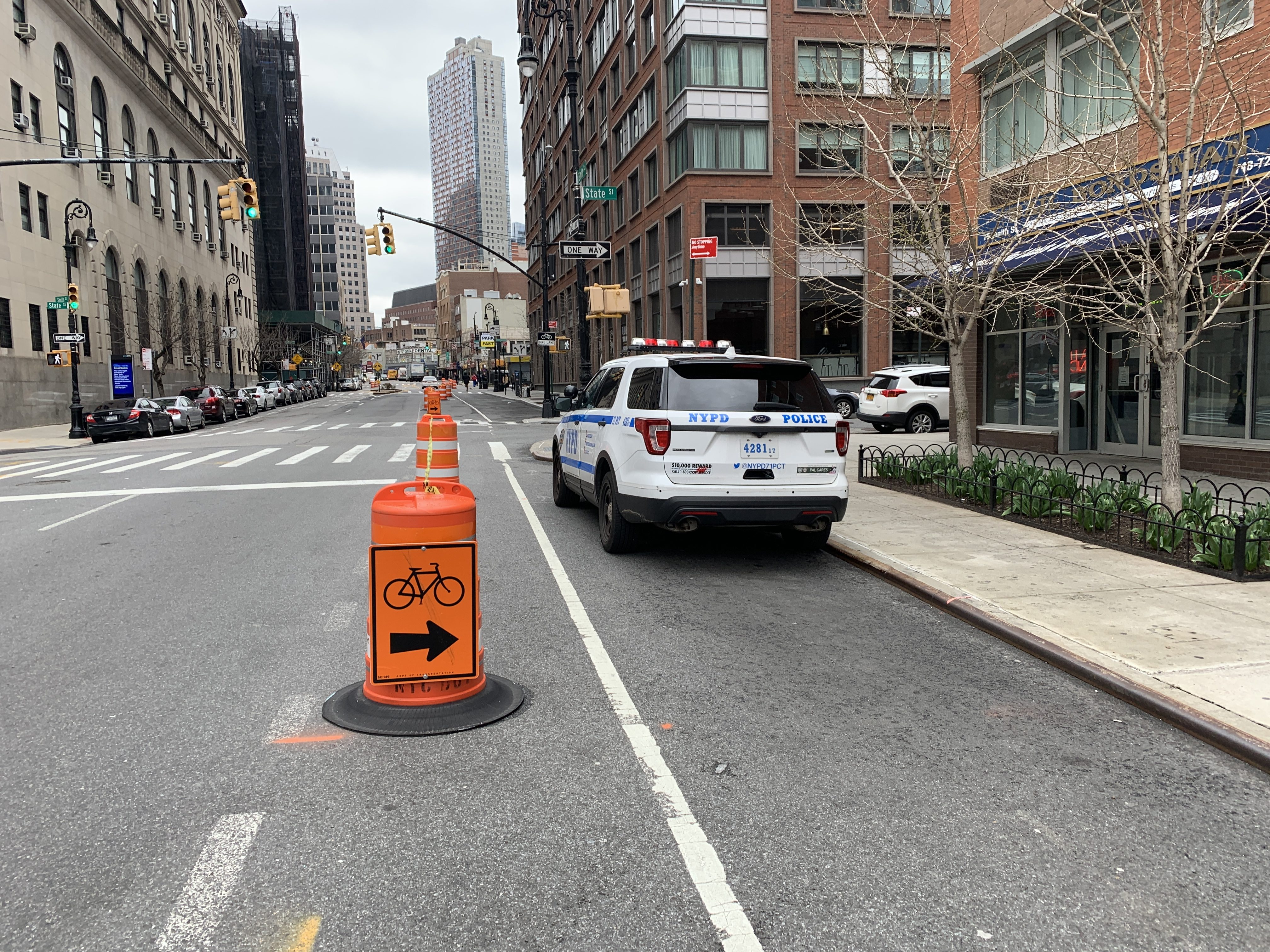
Also, for all the success and effort of the Department of Transportation, danger always lurks one block away from any street safety improvement because of the failure of the NYPD to enforce and follow basic rules. The “No Parking” zone on narrow Hoyt Street between Livingston and Schermerhorn streets, for example, is always clogged by illegally parked official vehicles (typically NYPD, but sometimes MTA), which make the roadway unsafe for cyclists.
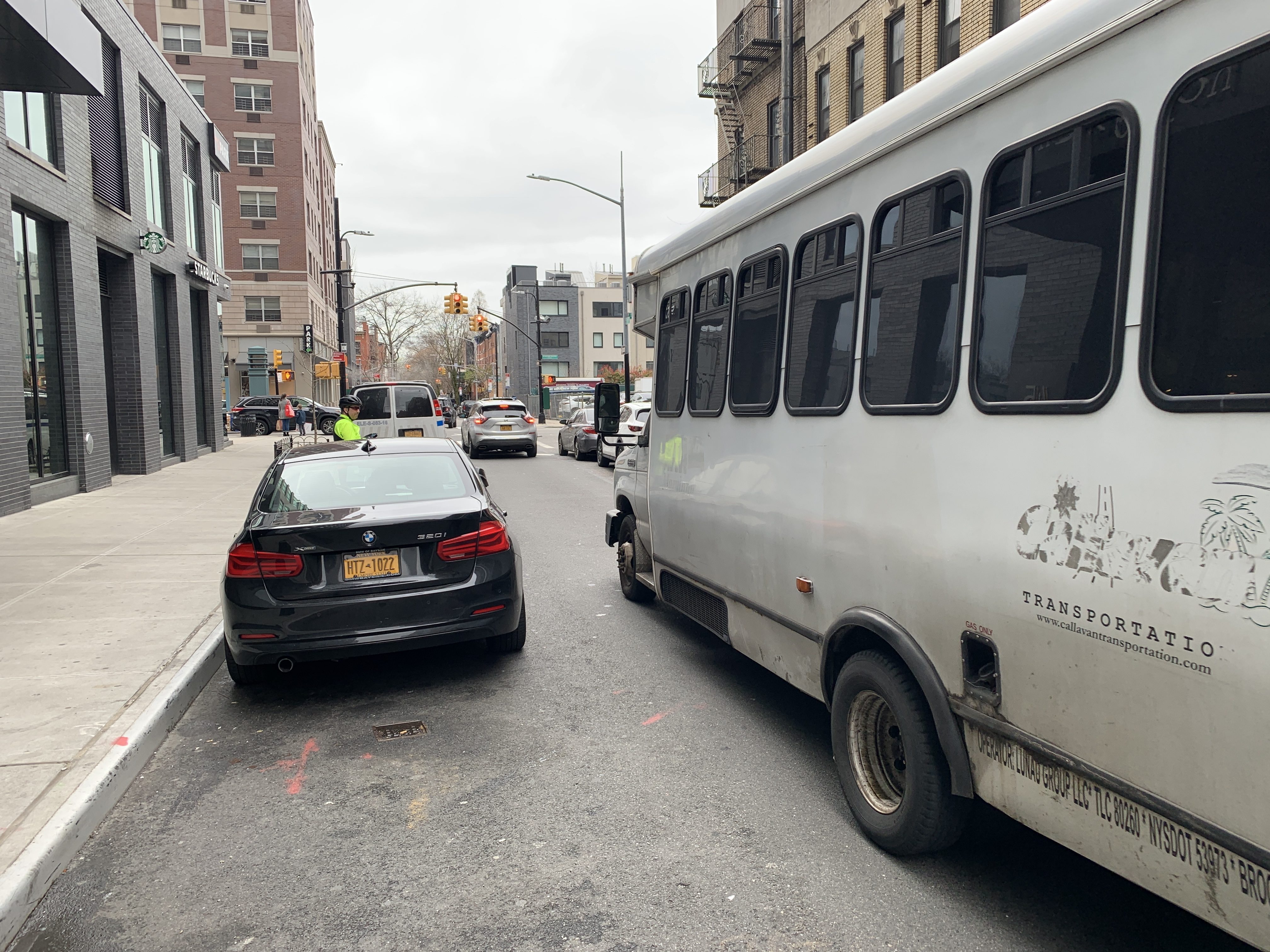
The NYPD has long promised to fix this problem, but it has failed to do so.

Read More:
Streetsblog has migrated to a new comment system. New commenters can register directly in the comments section of any article. Returning commenters: your previous comments and display name have been preserved, but you'll need to reclaim your account by clicking "Forgot your password?" on the sign-in form, entering your email, and following the verification link to set a new password — this is required because passwords could not be carried over during the migration. For questions, contact tips@streetsblog.org.