How Should the MTA Fix the Queens Bus Network? (No, Really, We’re Asking You)

Tell us what you want, what you really really want.
The MTA has started the public process for redesigning the entire bus network in Queens in 2020, holding the first of eight workshop sessions for bus riders to complain about bunching, crowding, bus lane scofflaws, stop locations and everything else that slows down service for the 700,000 long-suffering commuters every weekday.
“Queens is the third borough to undergo a bus network redesign, with similar efforts already having led to positive improvements in Staten Island where bus speeds have already increased by up to 12 percent,” the MTA said in a statement. “A draft redesign plan is also set to be released as early as next month following a similar public input process in the Bronx.
At issue, of course, is that the Queens bus network hasn’t changed much in decades.
“The people of Queens deserve better,” said New York City Transit President Andy Byford. “The reality is that as our city changes, so too must our bus routes.”
Byford added that Queens is a particularly “bus-dependent borough.”
The workshops come as the Regional Plan Association has put out a new climate change report [PDF] that calls on the MTA to ban diesel buses.
The agency is expected to purchase 1,700 buses overall in the next five years — 1,300 of which will be diesel-fueled.
“Diesel combustion releases fine particles and gases into the air commonly known as soot,” the report argues. “Diesel soot contains toxins that can be inhaled into the deepest parts of the lungs and enter the bloodstreams of people who are exposed to such pollutants. This can cause many health problems, including asthma, bronchitis, cancer and premature death.”
That said, diesel buses are far less dangerous than they were 20 years ago, as Streetsblog pointed out.
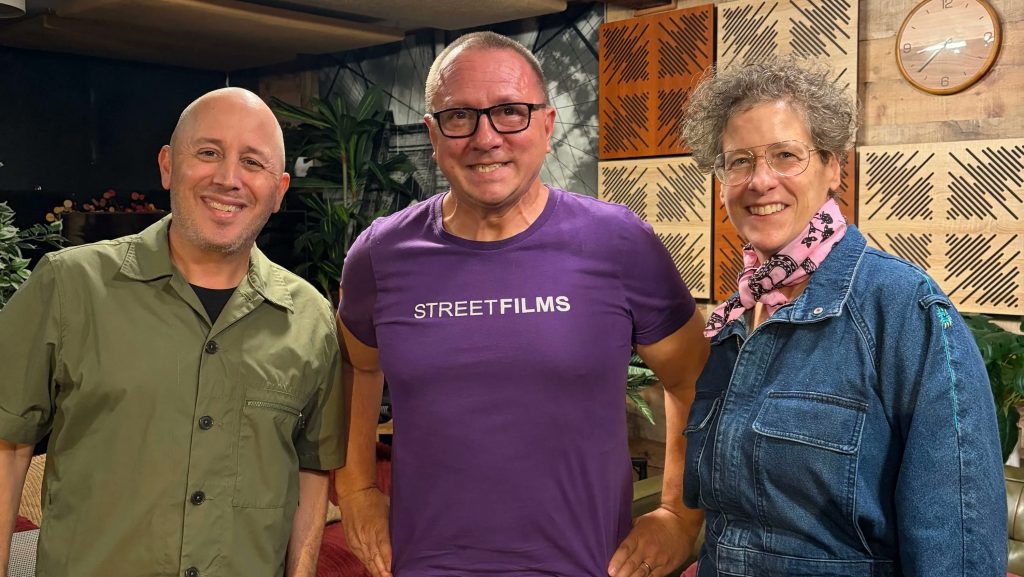
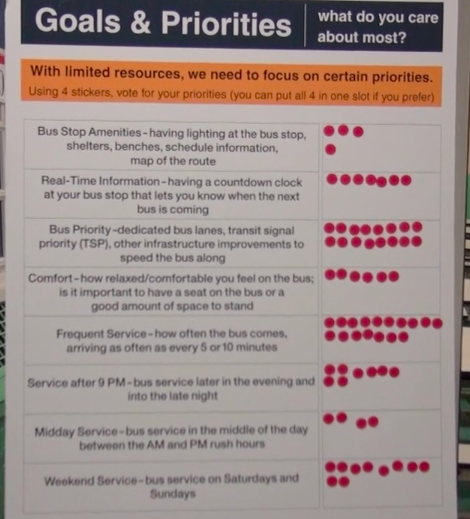
As Clarence Eckerson Jr.’s film for Transit Center shows, MTA staff and engineers attend the workshops to help residents make sense of Queens’s 107 local, limited and SBS bus routes — and take suggestions. Eckerson’s video was shot Monday night in Jackson Heights. It features a sparse crowd — evidence that not many bus riders have the time or luxury of attending community meetings at night (none of the eight sessions is during the day or on weekends).
There’s one more session this week and two more next week. All are at 6:30 p.m. and typically last two hours:
- Wednesday, May 15, PS 60, 91-02 88th Ave. in Woodhaven
- Monday, May 20, PS 112Q, 25-05 37th Ave. in Astoria
- Tuesday, May 21, Flushing Library, 41-17 Main St. in Flushing.
Upcoming open houses are on the MTA website. If you can’t attend a session, fill out a survey here.